Anna Malaika Tubbs Makes Memory a Method of Resistance

Anna Malaika Tubbs, Ph.D., was expecting her first child while writing her debut book. The subject matter for The Three Mothers: How the Mothers of Martin Luther King, Jr., Malcolm X, and James Baldwin Shaped a Nation was excerpted from the biographies of the nation’s most consequential civil rights…

Anna Malaika Tubbs Makes Memory a Method of Resistance
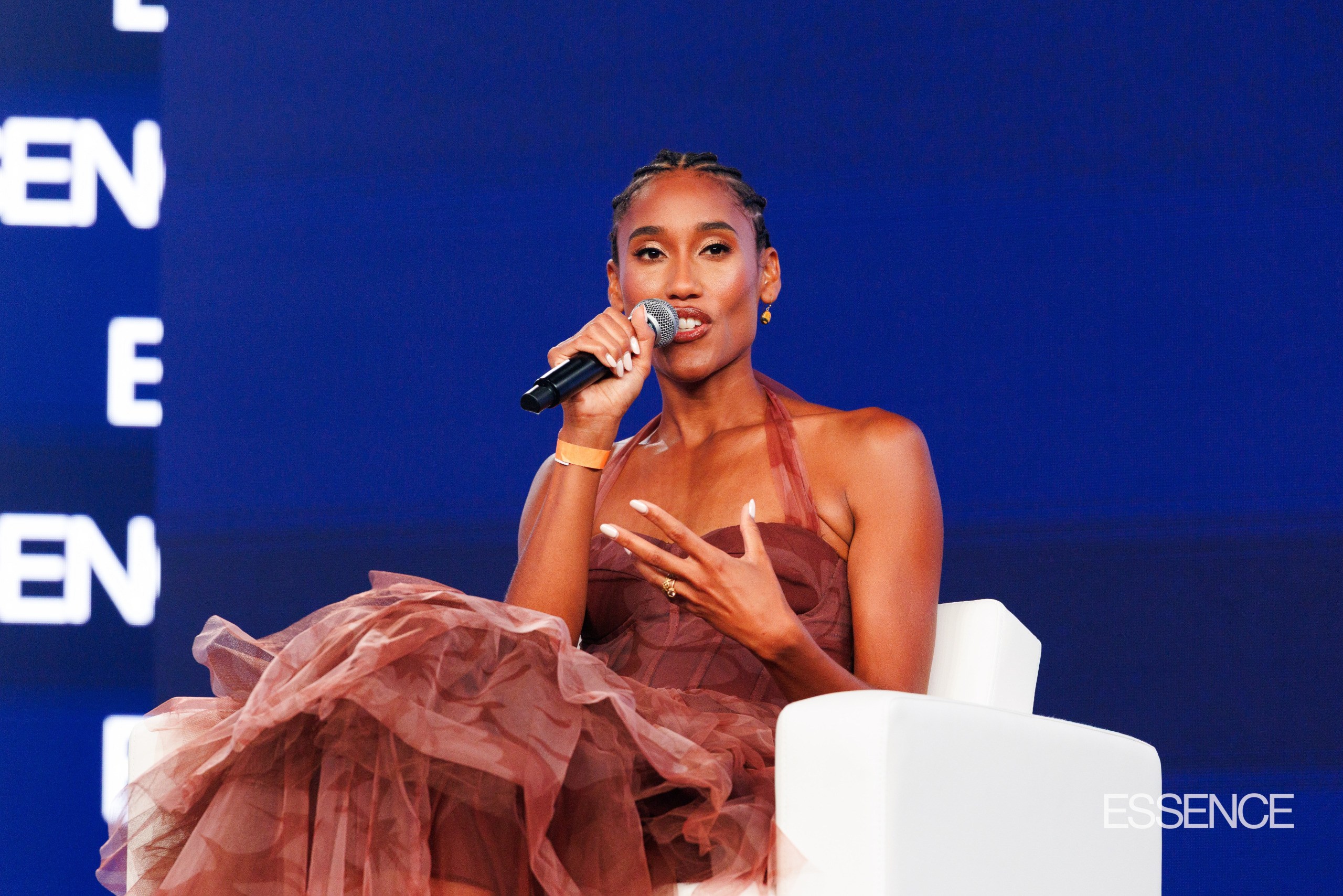
Anna Malaika Tubbs, Ph.D., was expecting her first child while writing her debut book. The subject matter for The Three Mothers: How the Mothers of Martin Luther King, Jr., Malcolm X, and James Baldwin Shaped a Nation was excerpted from the biographies of the nation’s most consequential civil rights figures, highlighting their mothers as unsung influences on the ethos of their seminal sons. As a first-time mother-to-be, Tubbs brought the stakes of historical remembrance into intimate focus, contemplating motherhood’s expansiveness while preparing to enter that state herself. The two-time New York Times bestselling author—one of the few Black women to achieve the distinction—specializes in evaluations on how power moves through gendered and racial hierarchies. Tubbs insists that as organizing structures of oppression operate, architectures of resistance emerge alongside them. This is the lens through which she contends with contemporary sociopolitical precarity and encourages people to draw lessons from the past to prepare for a more inclusive future. As she develops her next literary offering, Tubbs connects the labor of the under-celebrated to a syllabus against nihilism. The vigilant study of history—particularly of figures whom dominant powers have attempted to erase—offers a template through which injustice may be confronted. If the methods used to suppress, divide, and silence marginalized people are being recycled, then the methods through which earlier generations resisted them can also be retrieved. Tubbs recently discussed these topics at the 2026 ESSENCE Festival of Culture in New Orleans, where she appeared on the Convention Center Main Stage to draw parallels between historical erasure and today’s era of mis- and disinformation. Tubbs described confusion as a political strategy designed to make marginalized people distrust their own knowledge, retreat from public discourse, and feel powerless before consequential elections. Her message was not to simply remain informed, but to remain outspoken. Marley Dias, Lynae Vanee AND Anna Malaika Tubbs AT THE 2026 ESSENCE FESTIVAL OF CULTURE Tubbs’ understanding of narrative power began during a childhood spent moving among countries and cultures. Living across borders allowed her to see how nations narrated themselves into being. “I became very clear that the storyteller is the most powerful position to be in,” Tubbs said, “because whole nations were just telling stories of who the heroes are [and] who are the people that should be celebrated.” What caught her attention was not only who appeared in these stories, but who did not. Women were missing with enough consistency that their exclusion could not be attributed to chance. “These weren’t mistakes when a woman was erased from a story,” she said. “It was strategic.” The distinction is central to Tubbs’s scholarship. If women disappear from the stories a society tells about itself, their labor begins to look inconsequential. Their exclusion from historical memory then becomes a justification for their exclusion from public policy. Tubbs’s first book emerged from a refusal to accept that the lives of Berdis Baldwin , Alberta King and Louise Little could be treated as incidental prefaces to the lives of their sons. Tubbs wanted to place the women behind James Baldwin, Martin Luther King, Jr., and Malcolm X as intellectual and political subjects in their own right. All three women were born within five years of one another. Their famous sons were also born within five years of one another. Their lives unfolded simultaneously, as though conducting an unwritten conversation across the 20th century. ANNA MALAIKA TUBBS’ FIRST BOOK, “THE THREE MOTHERS” While researching the three women, Tubbs identified four principles that she calls the tenets of Black mothering. Together, they describe motherhood as a radical practice through which Black children are prepared to recognize the world without surrendering themselves to its cruelties. “As the mothers of Black children, we don’t have the privilege of wondering if we’re going to prepare them,” Tubbs said. “We have to, at some point, prepare them.” The mother names the danger, rejects its authority, assigns the child a role in changing it, and protects the child’s ability to imagine what does not yet exist. The child is not merely taught how to survive the present but how to conceive of a future beyond it. Readers of The Three Mothers repeatedly asked Tubbs how women so influential could have disappeared from the historical record. Her second book, Erased: What American Patriarchy Has Hidden From Us , became her answer. ANNA MALaika Tubbs holding her second book, “Erased” In this work, Tubbs articulates that the United States’ founding constructed a narrow category of legitimate political personhood from which women were excluded from full participation. Black women were placed outside even the restrictive category of femininity through which White women received conditional social protection. This foundational hierarchy continues to shape the nation not because American society has remained unchanged, but because political systems reproduce themselves through adaptation. In the four years between publishing The Three Mothers from Erased , the national atmosphere changed. The institutional embrace of racial equity that followed the uprisings of 2020 gave way to a coordinated backlash against diversity initiatives, reproductive autonomy, critical race theory, gender studies and other attempts to rectify inequality. The release of Erased made Tubbs a participant in the phenomenon she had diagnosed. Despite returning as a bestselling author, Tubbs encountered dramatically less mainstream media interest, reflecting a cultural retreat from explicit discussions of patriarchy, race and institutional power. Tubbs had written a book naming these structures at precisely the moment many institutions became newly uncomfortable acknowledging that the structure existed. In response turned toward independent Black journalists, feminist writers, podcasters, cultural figures and community spaces. “One of the strategies of resistance to erasure is to go to those who are the voices of our people,” she said. Tubbs and her collaborators created their own gathering before the book’s publication, bringing together influential Black voices and generating a cultural groundswell independent of traditional gatekeepers. That alternative network helped propel Erased onto the New York Times bestseller list despite muted institutional response. Tubbs became one of the youngest women to place consecutive nonfiction books on the list. Former president Barack Obama with Anna Malaika Tubbs Tubbs’s third book, expected in 2027, expands her study of erasure into an examination of incarceration, immigration enforcement, state repression and recurring strategies of oppression. She is particularly interested in the public tendency to describe current practices by Immigration and Customs Enforcement as unprecedented. The claim that Americans have never witnessed people taken from their communities, detained without due process or separated from their families reflects both historical amnesia and unequal proximity to state violence. “Historically, that is a repetition of what we’ve seen throughout American history,” Tubbs said. The insistence that the present is entirely new grants oppression an unnecessary advantage. It persuades people that they don’t possess inherited language for understanding the crisis or confronting it. The state appears newly omnipotent because the memory of those who previously resisted it has been obscured. Tubbs’s next project will identify the tactics being recycled by dominant institutions, but its more urgent concern will be the strategies through which people have secured freedom under carceral conditions. She also challenges the popular appeal to “save American democracy.” In her analysis, democracy is not a completed inheritance now facing sudden destruction, but rather an unfinished project carried forward by people once excluded from the nation’s definition of humanity. The people whom history attempts to erase are often the people who know most intimately how the world might be remade. Their disappearance leaves power looking natural and resistance unprecedented. Tubbs’s work reverses that illusion. She returns women to the movements they formed, mothers to the ideas they cultivated and survivors to the strategies they refined. Against a political order that depends upon amnesia, she offers memory as an organizing practice and insists there is always another way to be heard.
Need Support?

Find verified resources for reproductive healthcare, support services, and advocacy organizations.

Find Resources