This column first appeared in The Amendment, a newsletter by Errin Haines, The 19th’s editor-at-large. Subscribe today to get early access to her analysis.
When Alexis McGill Johnson took the helm as leader of Planned Parenthood in 2020, the nation’s largest provider of reproductive care and a major force in American politics was already at a critical juncture.
The organization’s last president had lasted just eight months; she followed Cecile Richards, the charismatic and connected leader who was in the role for a dozen years. The future of abortion rights looked potentially shaky, and Donald Trump was in his first term.
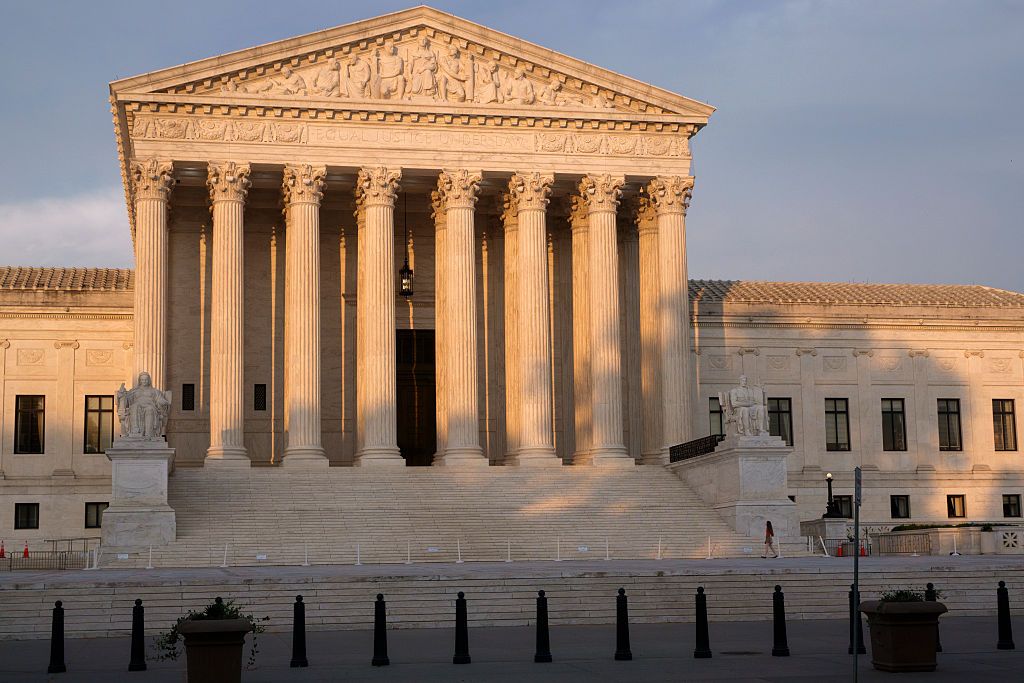
In the six years since, the U.S. Supreme Court ended federal protections for abortion, a major challenge both for providing care and for the organization’s political arm — then Trump won a second term and moved to take away federal funding, slashing a third of Planned Parenthood’s budget. Under the first Trump administration, Planned Parenthood had more than 600 health centers. Since the start of 2025, 53 have closed. More are threatened since Trump on July 4 signed into law a measure to block them from accepting Medicaid.
The end of federal abortion protections led to a surge in energy around the issue from Democrats and the left. It has faded since then as the president’s military actions and mass deportation strategy dominate attention — but McGill Johnson still has to figure out how to galvanize supporters; keep Planned Parenthood clinics serving patients; and elect Democrats in key races in states including Georgia, North Carolina and Ohio.
As one of the abortion rights movement’s key standard bearers, McGill Johnson is navigating expectations from activists, donors and voters who want a fighter and expect her to deliver. Their sense of urgency can obscure what it means to both lead the fight and provide essential care to millions of Americans in an intentionally overwhelming and chaotic news cycle.

“When I look at where Planned Parenthood is in this moment, we are navigating all of the chaos, but also looking for where the opportunities are inside that chaos,” McGill Johnson said. “Chaos is a strategy: throw everything at people so they don’t know where to look or how to fight.”
McGill Johnson describes her style as collaborative; those who know her best say she’s a master strategist, confronting a challenging political climate with courage, clarity and creativity.
The political climate in which McGill Johnson has led can really not be compared to any other past leader, said Fatima Goss Graves, president of the National Women’s Law Center.
“This isn’t something that’s happened over three decades; this has been the last six years,” said Goss Graves, who first met McGill Johnson in 2017 after Goss Graves became the first Black woman to head her organization. “Alexis was the right person at the right time. It is a big deal that surviving the level of attacks they have faced, that they are still here, they are serving patients, they are still committed, and they have had to make adjustments. The work is what she’s doing.”
Planned Parenthood is shorthand for dual entities: Planned Parenthood Federation of America, the nonprofit supporting affiliate clinics across two dozen states; and Planned Parenthood Action Fund, the group’s political arm, focused on organizing, advocacy and voter education.
McGill Johnson’s path to leading both came after a career working on voting rights and civil rights, and she approaches the work through a racial and gender lens. She is only the second Black woman leader in the organization’s existence of more than a century.
Her presence at the top of Planned Parenthood reflects a broader pattern in American institutions, in which Black women are often called on to lead in moments of crisis, with limited room for error and a lack of support.
McGill Johnson talked about the added weight of doing this work as a Black woman in a movement that has been largely White at the national level. She said that having lived and worked at the intersection of race and gender has been an asset in her current role.
McGill Johnson is familiar with leading in moments like the one Planned Parenthood is facing, “moments where our leadership is judged more harshly, where we may be granted more scrutiny, less grace.”
“Those are the places where I’ve had to find my center, to remind myself that I’m in this role to be unapologetic about fighting for the liberation of women of color, Black women, at the center of that liberation, because I think that actually transforms the liberation of everyone else,” she said.
Former Democratic U.S. Sen. Laphonza Butler, the first Black woman to head EMILY’s List, the political action committee focused on electing Democratic women, put it this way when asked about the challenges of leadership for Black women: “It is an expectation whose bumper sticker reads: ‘Fix it for us, please.’ When you look across the movement spaces where both crisis and care are on a collision course, it is Black women like Alexis who are stepping up.”
The Supreme Court’s 2022 decision in Dobbs v. Jackson Women’s Health Organization, which ended the nearly 50-year precedent of legal abortion access nationwide, angered many Democratic women and motivated them in record numbers in the 2022 midterm elections.
Then-Vice President Kamala Harris championed reproductive rights as a pillar of her 2024 presidential campaign — but her loss was criticized by some, in part, as prioritizing abortion access over the economy. Now, the Democratic Party’s uncertainty around whether and how to talk about abortion to voters adds to McGill Johnson’s challenges in this moment.
The stakes on the ground are still life and death for many Americans, but political strategists say the issue of abortion has proved less politically potent as the national spotlight has moved on.
“For someone fighting on this issue, the progressive movement that was so galvanized is less so because they’re focused on many of the other things that Trump is doing that are dangerous to the country,” said Democratic strategist Karen Finney.
Abortion can still be a motivating issue for Democrats — especially as it’s related to the two biggest issues at the moment, health care and affordability, said Democratic pollster Celinda Lake.
“It’s still motivating to voters for turnout,” Lake said. “Right now, everything is being pushed out by the war and the economy. I think it will reemerge as a much more powerful issue in 2028. Health is the number one issue, the number one pocketbook issue. When you talk about abortion and broaden it, it’s very powerful there.”
McGill Johnson worked to do just that, emphasizing Planned Parenthood’s presence particularly in communities with a lack of options for reproductive care. Politically, she has framed the issue as one of affordability and of democracy, and is focused on a message to voters about how the administration’s actions in recent years are impacting them.
“It may not feel as though abortion is as front and center as it was in the year or two after the Dobbs decision … but when you bring it to people and remind them that these things are happening, it taps directly into that rage,” McGill Johnson said.
She added that part of the job now also looks like acknowledging the concerns of those in the movement as a leader of a complex organization with little room for error. Supporters of abortion rights — and even supporters of McGill Johnson herself — have criticized her for not responding strongly enough to attacks on access, saying they don’t see her fighting in the way they want.
What does it mean when some on the left are more in the mood for a wartime general than a collaborator?
“In the day-to-day, it is a lot of navigating people’s frustrations, anxieties and hopes, and how to keep people focused on that hope and a strategy for how to get there,” McGill Johnson said. “We’re living in moments where philanthropy has pulled back from a number of institutions where there is a federal defund, which has impacted a lot of my colleagues. One day, you’re navigating ICE and the next day, the country’s at war, right? All within the same time period. I think my kind of special superpower is the ability to kind of keep myself at the 30,000-foot view to understand how all of these things are interacting with each other.”
McGill Johnson said the urgent question for her is: Who are we going to be now that we’re no longer defending Roe? It’s one that no other president of Planned Parenthood had to grapple with after the landmark 1973 case that made abortion the law of the land.
Since 2019 when she became interim leader, Planned Parenthood’s supporter base — which includes volunteers, donors, activists and email subscribers — has grown from 13 million to 20 million.
In addition to her focus on the campaign trail, McGill Johnson will also have to continue the work of reimagining Planned Parenthood’s network of clinics as part of the national health care infrastructure. According to the organization, 1 in 3 women in the United States has visited a Planned Parenthood clinic.
“I believe that Planned Parenthood could become the Cleveland Clinic of sexual and reproductive health care, because we have such great clinical excellence,” McGill Johnson said. “We are already a leader in standardizing best-in-class care, on sexual, reproductive health care, including abortion, so I think a lot about what it would mean for us to to focus on seeing as many patients as Planned Parenthood can, but to also export that influence into ensuring everybody else’s is standard of care is raised.”
To get there, McGill Johnson will have to endure and survive the current climate and the demands of the post-Roe era. Reproductive Freedom for All President Mini Timmaraju said meeting the multiple challenges at the local, state and federal level with diminished resources and competing areas of attention is daunting.
“We have to do more than we’ve ever done before, and the funding is not what it should be,” said Timmaraju, the first woman of color to lead her organization. “We are all scrambling to make sure that in the moment where abortion funds need funding, clinics need funding, we also have enough resources for advocacy at every single level, and that’s really challenging in an environment where donors are understandably a little frustrated with progressive entities right after 2024 so we’re having to prove ourselves again, and continually having to prove and reprove, over and over again, the salience of abortion electorally.”