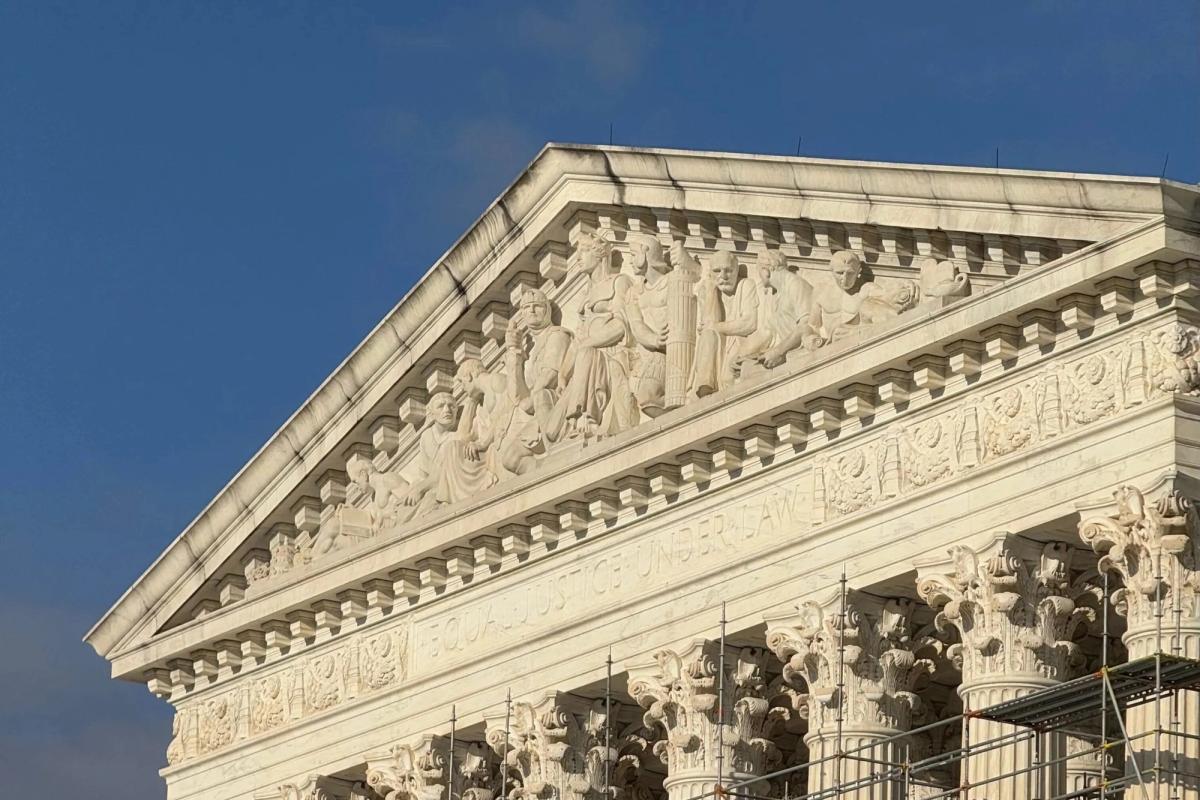
For generations, Americans have expanded the meaning of "We, the People"—not because our institutions did it on their own, but because ordinary people demanded it.
From U.S. Rep. Barbara Jordan's powerful reminder that the Constitution did not originally include everyone, to the hard-fought victories that secured civil rights, voting rights and reproductive freedom, our democracy has always depended on people pushing institutions to live up to their promises.
Today, the Supreme Court stands at the center of that struggle.
While courts remain an essential safeguard against abuses of power, public confidence in the Court has eroded amid ethics concerns, increasing politicization and decisions that have narrowed rights and weakened democratic protections.
If the Court is to serve as a guardian of liberty for future generations, it must be willing to change—through reforms that promote accountability, transparency and greater public trust.
As the nation marks its 250th anniversary, we should remember that our institutions are not fixed. The Constitution was designed to evolve, and the Court has changed before in response to the demands of the American people. Whether through term limits, stronger ethics rules or other structural reforms, the question is not whether the Court can change, but whether we will insist that it does.
A democracy that truly serves all of us depends on nothing less.
(This is part of a new series FEMINIST 250: Democracy’s Feminist Future, a special Ms. series examining the next chapter of U.S. democracy through a feminist lens. As the nation approaches its 250th anniversary, the series explores how women and marginalized communities have shaped democratic progress, what lessons history offers for the challenges ahead, and how a more inclusive, representative and equitable democracy can be built for the next 250 years.)
The post A Case for Court Reform appeared first on Ms. Magazine.