A new wave of election cases

Welcome to what will likely be a busy week at the Supreme Court. We’re expecting 17 more opinions by early July, and we know that there will be at least two opinion announcement days this week. Reminder: If you’d like to attend our July 8 term-in-review event at Johns Hopkins University Bloomberg Ce…

A new wave of election cases

Welcome to what will likely be a busy week at the Supreme Court. We’re expecting 17 more opinions by early July, and we know that there will be at least two opinion announcement days this week.

Reminder: If you’d like to attend our July 8 term-in-review event at Johns Hopkins University Bloomberg Center, register your interest here. The event will feature a fireside chat with the ACLU’s Cecillia Wang, who argued the birthright citizenship case before the Supreme Court; a live taping of the Advisory Opinions podcast; and a discussion of the historical framework of birthright citizenship from Johns Hopkins professor Martha S. Jones.

At the Court

Orders from the justices’ June 18 conference are expected this morning at 9:30 a.m. EDT.

The court has indicated that it will next release opinions tomorrow at 10 a.m. EDT. We will be live blogging that morning beginning at 9:30.

The court has also identified Thursday as an opinion day. We will be live blogging that morning, as well.

Morning Reads

Supreme Court faces new wave of cases over state election laws

Maureen Groppe, USA Today

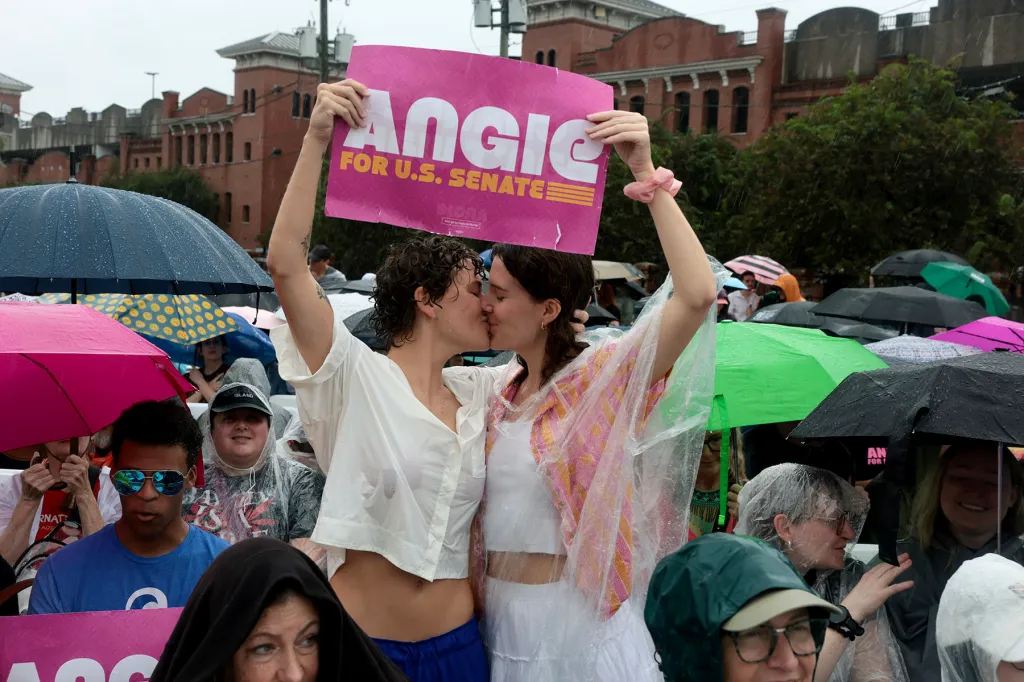
After hearing cases this term on campaign finance, mail-in ballots, and who has standing to challenge election rules, the Supreme Court could add more election cases “to its plate for the fall as the political parties continue to fight over whether various voting rules prevent election chicanery or disenfranchise voters,” according to USA Today. “The justices will be deciding in the coming days whether to review laws in Arkansas and Texas that voting rights groups say are illegally making it harder for people with limited English proficiency to vote. They’ve also been asked by the Trump administration to revive voter registration rules in Arizona that lower courts said suppress the vote.” And a fourth case addresses a Pennsylvania rule requiring residents voting by mail to date their ballot and not just sign it.

'They have nowhere to turn': Law students fight for workplace protections

Carrie Johnson, NPR

Emory University’s Supreme Court Advocacy Program is putting a spotlight on federal judiciary employees, including interns and clerks, who faced discrimination or other wrongful conduct in the workplace and then had “no clear way to complain or sue” in a neutral, independent forum over how they were treated. The program “recently petitioned the U.S. Supreme Court to take up a case that challenges the internal system the judiciary uses to police itself,” according to NPR. The petition for review asks whether that internal system “gives workers due process and equal protection under the law.” “The law student-drafted petition comes as misconduct in the judiciary is drawing renewed attention. This month, three federal judges in three different states came under scrutiny for their behavior off the bench.”

Judges Say Threats to Family Erode Confidence in Judicial System

Jordan Fischer, Bloomberg Law

During a panel on Friday on judicial security, judges shared how their lives and work have changed amid an uptick in threats against members of the judiciary, including Supreme Court justices. U.S. District Judge Beth Bloom noted that “there have been more than 340” threats to federal judges so far in 2026 and 564 total in 2025. “If the real goal is a long-term strategy to erode the trust and the integrity of the judicial system by discouraging people from entering into this particular part of our profession, the answer unfortunately is it’s getting close to doing just that,” said Judge Nancy Abudu, who sits on the U.S. Court of Appeals for the 11th Circuit. “Bloom said in her 32 years on the bench — including two decades as a state judge — she’s never seen the tone and frequency of violent threats judges now receive.” “Security for federal judges is largely provided by the US Marshals Service, which earlier this year requested an additional $34 million in funding to keep up with the increased need for protective details for government officials,” according to Bloomberg Law.

Federal judge sends Bayer's $7.25 billion Roundup settlement back to Missouri state court

Dietrich Knauth, Reuters (paywalled)

As Bayer awaits the Supreme Court’s ruling in a case on whether the federal law governing pesticide labels protects it from lawsuits over not including a cancer warning on Roundup weedkiller, the company is celebrating a win before a different court. On Wednesday, U.S. District Judge Henry Edward Autrey “sent Bayer’s proposed $7.25 billion Roundup settlement back to state court ... overruling objections from plaintiffs who had argued the state court had no power to implement a nationwide resolution of lawsuits that claim the company’s Roundup weedkiller causes cancer,” Reuters reported, noting that the decision “is likely to bolster Bayer’s efforts to win approval of the sweeping settlement.” Bayer has pursued the settlement even though a Supreme Court ruling in its favor “could undercut many of the lawsuits currently pending against the company.”

Analysis: What the missing center has meant for the Supreme Court

Joan Biskupic, CNN

In an analysis for CNN, Joan Biskupic explored how the court’s conservative bloc has changed in recent years, particularly after the addition of Justice Amy Coney Barrett gave it a 6-3 supermajority “for the first time in modern history.” “The spare vote for what’s needed to produce a majority emboldened conservatives,” according to Biskupic, leading to “reversals of milestone rulings” on such issues as abortion, affirmative action, and redistricting. This “emboldened” approach stands in contrast to the pragmatic approach employed by “conservative centrists” like Justices Lewis Powell, Sandra Day O’Connor, and Anthony Kennedy, who anchored the court and “regularly sought a middle ground,” Biskupic wrote.

Podcasts

Advisory Opinions

SCOTUS Rules on Illegal Drug Users Owning Firearms

Sarah Isgur and David French react to the Supreme Court’s opinions on appeal waivers and drugs and the Second Amendment.

Amarica's Constitution

Reverence and Radicalism: Remembering Gordon Wood

Tributes to late historian Gordon Wood have been pouring in, and Akhil Amar and Andy Lipka spent this episode reflecting on his peerless body of work. Professor Steven Calabresi, Gordon’s neighbor, friend, and colleague, joins them for the discussion.

A Closer Look

When Supreme Court Opinions Are Released

Since we are in the heart of opinion season, we thought it would be helpful to revisit past Closer Looks on how SCOTUSblog covers opinion announcements. A version of this piece was originally published on March 20.

As noted above, the court has indicated that it may announce opinions tomorrow and Thursday. You may be wondering where it made that announcement and (as we are frequently asked on the live blog) if we here at SCOTUSblog know which opinion(s) to expect.

The answer to the second question is no: The Supreme Court does not announce ahead of time which cases will be decided on a particular day. Indeed, even the parties don’t know in advance when they will get a ruling in their case. The only time we have a good sense of which opinions will be issued is the very last opinion day of the term (simply by process of elimination). Based on past practice, this day typically falls at the end of June, although we can’t say for sure. (In 2024, for example, the final opinion day was in early July.)

As for opinion days, the court announces these – typically several days in advance – on the calendar on its website, where they appear as dark blue “non-argument” days (unless they overlap with a red argument day). The court also indicates in its “Today at the Court” feature that it “may” announce opinions on that particular day.

Earlier in the term, from November through April, the justices schedule opinion days as needed, almost always on previously scheduled argument days or on days when the justices were scheduled to take the bench to address other business, like Supreme Court Bar admissions. While the court can schedule an opinion day between sessions, its general practice has been not to do so. During May and June, the height of opinion season, there is usually at least one opinion day per week.

During the COVID-19 pandemic, opinions were released only on the court’s website, but now, the justices are again in the courtroom to release them (although the courtroom audio is not available live). The court posts opinions on its website as the justices announce them in the courtroom.

As stated above, the court does not announce in advance how many opinions it will release. But the method it uses to number the opinions, known as the R-number system, serves as an unofficial but reliable signal that the court has released its final opinion for the day.

Here’s how the system works: When opinions are eventually published in the U.S. Reports, the official bound version of the court’s opinions, they are published chronologically, with the opinions for a particular day published in order of the justices’ seniority. The R number, which appears to the left of the opinion date/docket number/case name on the court’s website, refers to the order in which the opinion will appear in the U.S. Reports. But because opinions are announced in order of reverse seniority, the opinions on the court’s website can’t be assigned an R number until all of the opinions have been posted. So, the posting of the R numbers on the court’s website is a sign that it has finished issuing opinions for that day.

If a case is not decided by the end of the term, it will ordinarily be reargued, although it is rare for the court to order this. Reargument usually only occurs when the justices consider a second round of argument necessary for either clarifying a legal issue raised in the case or reaching a consensus. This term, the only case to have been reargued was Louisiana v. Callais, in which the court curtailed a major provision of the Voting Rights Act.

SCOTUS Quote

JUSTICE KAGAN: “Mr. Messenger, I'm not sure that Justice Scalia’s answer satisfies his own question.”

(Laughter.)

JUSTICE SCALIA: “What ­­– what was the question?”

Harris v. Quinn  (2014)

Need Support?

Find verified resources for reproductive healthcare, support services, and advocacy organizations.

Find Resources