When it comes to the last formal day of the term, when we know which cases are remaining, litigants and other interested parties have the chance to try to work their way into the courtroom to hear an opinion announced in a case of close interest.

But most of the known litigants and lawyers in the transgender sports, coordinated political spending, and birthright citizenship cases are not here today. (I didn’t put it past President Donald Trump to show up today knowing that the birthright decision was coming, but it is not on his schedule.)
An exception is the U.S. solicitor general’s office, which customarily attends opinion announcements. Solicitor General D. John Sauer again leads several members of his office into the courtroom, as he did yesterday. Sauer argued Trump v. Barbara, the birthright citizenship case that is the most anticipated opinion yet to be announced.
Principal Deputy Solicitor General Sarah Harris, who argued National Republican Senatorial Committee v. Federal Election Commission, for overturning the coordinated spending limits, is also here today. I’m not as sure about Hashim Mooppan, the other principal deputy solicitor general. He argued Little v. Hecox and West Virginia v. B.P.J., as an amicus in support of the two states (Idaho and West Virginia) defending their laws barring transgender girls and women from female athletics.
There are a few other familiar faces. Justice Brett Kavanaugh’s mother, Martha Kavanaugh; wife, Ashley Kavanaugh; and at least one of his daughters and possibly both, are in the justices’ guest box. Chief Justice John Roberts’ wife, Jane Roberts, also takes a seat in the box.
Predictions in the Press Room this morning lean toward Kavanaugh having perhaps the transgender sports cases and the political spending case and the chief justice having birthright citizenship. (Also, that France will defeat Sweden in the World Cup Round of 32 game this evening.)
It will mostly turn out to be a day of no surprises, though we’ll have to wait on the World Cup. And the day isn’t over yet.
When the court takes the bench for the last time this term, Justices Samuel Alito and Neil Gorsuch are absent. Alito was out yesterday. Some colleagues note that Gorsuch has a book event for his Heroes of 1776 children’s book (with co-author Janie Nitze) scheduled for today at George Washington’s Mount Vernon estate. There is a daylong schedule of events, though the book reading with the co-authors is not until this evening. Maybe they are traveling to Mount Vernon on horseback and had to get an early start.
Roberts announces that Kavanaugh has the opinion in West Virginia v. B.P.J. “and the consolidated case.” These are the transgender sports cases, and since the West Virginia and Idaho cases (Little v. Hecox) were argued separately, and the Idaho case had some thorny procedural side issues, there was some question whether there would be one opinion or two.
Kavanaugh begins with a discussion of Title IX of the Education Amendments of 1972, which bars sex discrimination in federally funded educational programs.
“Title IX has transformed sports,” he says, only slightly varying his opening observation of his written opinion that the law “promoted equal opportunity for female student-athletes and has facilitated the extraordinary growth of women’s and girls’ sports over the last 54 years.”
He looks to his family members. Kavanaugh notably coached his daughters in basketball and supported their other athletic pursuits.
Kavanaugh goes into some detail outlining the main holdings, first that Title IX allows schools to provide separate women’s and men’s sports teams “defined by biological sex,” and that West Virginia (the only case of the two raising the Title IX issue) has permissibly maintained female sports for “biological females” consistent with the statute.
Both states’ cases raise the question of whether their laws violate the 14th Amendment’s equal protection clause, and Kavanaugh says they did not.
He emphasizes a point he made at oral argument, that competitive sports are “zero sum” and “allowing a biological male athlete to compete on a girls’ team necessarily displaces or disadvantages a female athlete—replacing her on the roster, knocking her out of the starting lineup, reducing her playing time, depriving her of a medal.”
Kavanaugh says female athletes no less than males care deeply about sports, spending hours training, fighting through injuries, and scrapping for playing time in the hopes of putting “a trophy on the shelf.”
He sounds a bit like the coach he has been when he talks about athletes learning to “win with class” and “lose with grace.”
The two states here, along with 25 others, the International Olympic Committee, the NCAA, and other sports bodies “have concluded at this time that women and girls should be allowed to compete for those life-changing opportunities on an equal playing field, without fear of physical injury from biological males or being forced to compete against biological males,” he says.
Kavanaugh eagerly makes “one last point.” Most of transgender student-athletes involved in these disputes are teenagers “who want to play sports.” “Their desire to compete warrants respect,” and they should not be ostracized or vilified, he says.
He notes that Justices Clarence Thomas and Gorsuch have filed concurring opinions, while Justice Sonia Sotomayor has filed an opinion concurring in part and dissenting in part, joined by Justices Elena Kagan and Ketanji Brown Jackson. (Jackson has her own opinion concurring in part and dissenting in part.)
The “concurring in part” is a mystery that is soon answered by Sotomayor herself, delivering her third dissent from the bench in the past week.
She says she agrees with the majority on Title IX but on “narrower grounds.” The dissent is focused on the equal-protection question for the West Virginia transgender athlete who has come forward as Becky Pepper-Jackson but is addressed in the opinions as B.P.J.
B.P.J. is a teenager who cares about family and math and science and likes to play Minecraft and Overwatch, Sotomayor says, going into some detail of her desire to compete in sports starting in 5th grade even as she dealt with gender dysphoria.
Sotomayor stresses that no court below has ruled on the question of whether transgender female athletes who, like B.P.J., did not go through male puberty have an athletic advantage.
The majority’s opinion “is unencumbered by fact or law,” she says.
The majority “extends sympathy to those it favors” – cisgender female, she says, while it “inflicts a hardship on those it disfavors.”
She concludes, after nearly 13 minutes, by saying that she along with Kagan and Jackson “respectfully dissent.”
The chief justice announces that Kavanaugh has the opinion in National Republican Senatorial Committee v. FEC. Kavanaugh has a thorough, 10-minute summary of this case, which involves overruling a 2001 decision in Federal Election Commission v. Colorado Republican Federal Campaign Committee, a case in which Thomas wrote a dissent that now “has been vindicated.”
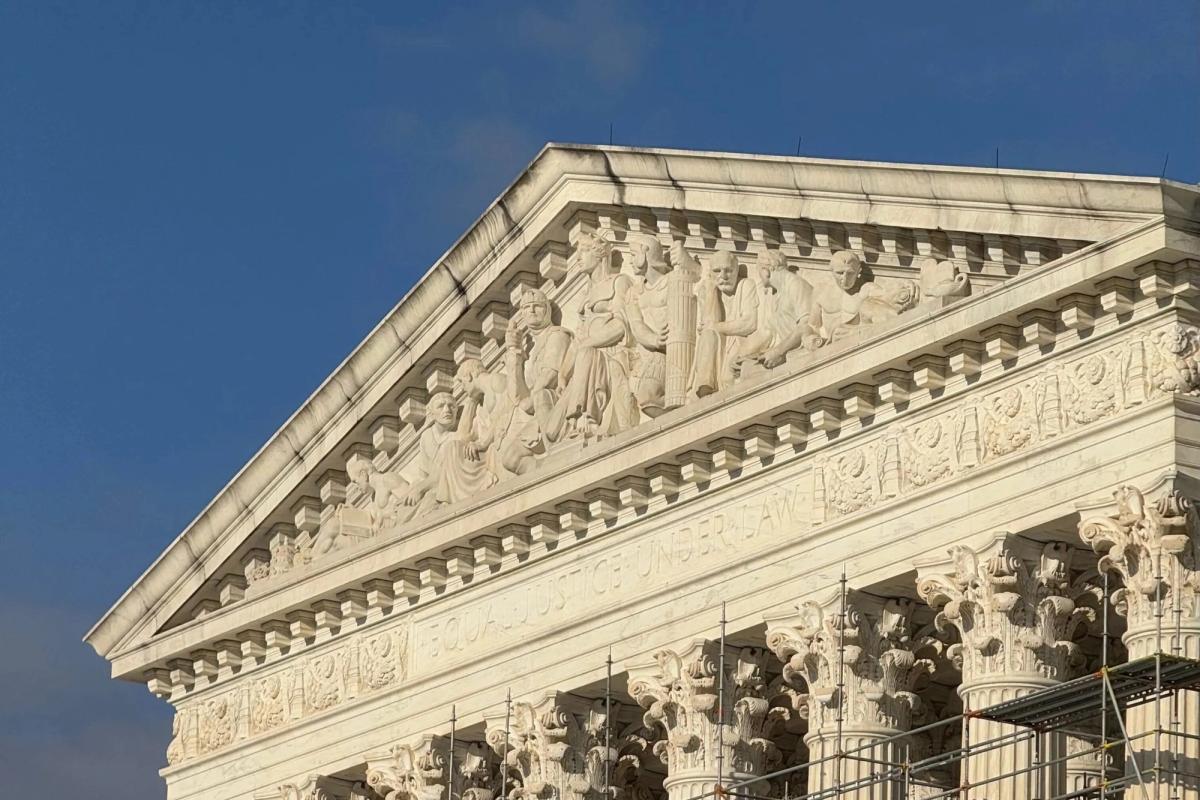
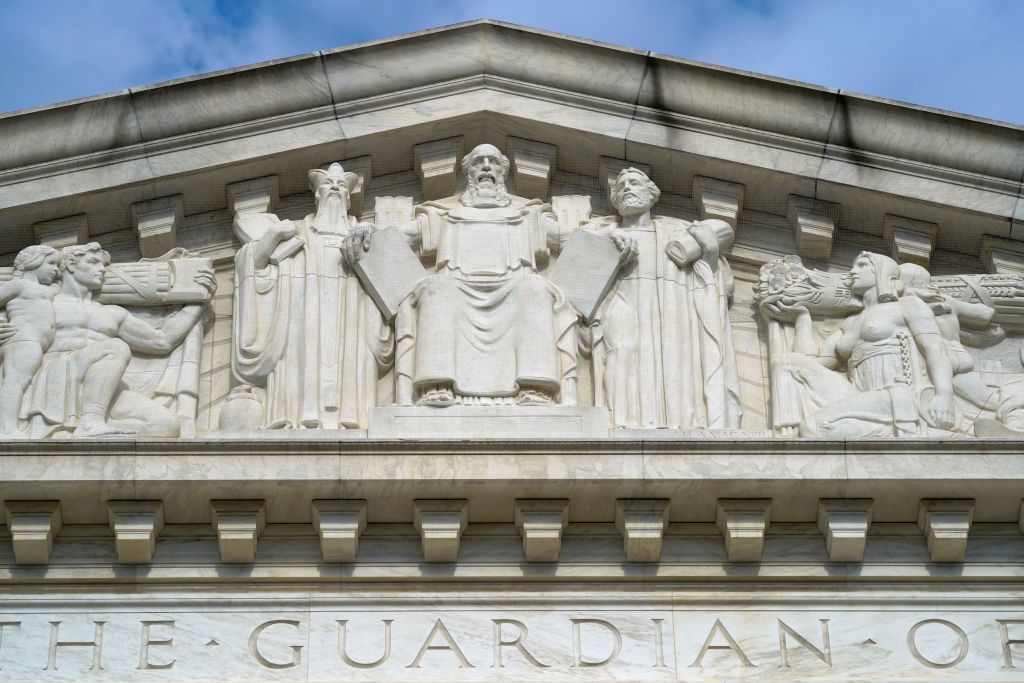
With the transgender decision still sinking in and the birthright opinion looming, some in the courtroom seem to be less than rapt in attention for this case, no matter its importance for campaign finance. Ashley Kavanaugh begins looking up at the courtroom friezes as her husband goes on, and she is not the only one.
Kavanaugh wraps up by noting that Kagan has the dissent, joined by Sotomayor and Jackson.
Roberts then announces that he has the opinion in Trump v. Barbara. No one is surprised.
He begins with another Semiquincentennial Minute, discussing how the story of citizenship in the United States begins with English common law and that before the American Revolution, the colonists were considered subjects of the sovereign.
The king’s claim of allegiance of the people was based on protection, and with allegiance came the status of natural-born subject.
“This view crossed the Atlantic” with the colonists and was adopted “after the Revolution,” he says.
But this view of birthright citizenship was “put in doubt” by the court’s “odious decision in Dred Scott v. Sandford,” Robert adds.
“The court had overruled the common law, but the people—eventually—would overrule the court,” he continues, noting that it took more than a decade and such Civil War battles as "Antietam, Gettysburg, and Chancellorsville” to finish the job.
To me, it appears that Roberts chokes up a little at the mention of these battles.
Roberts seizes the opportunity to cite Chief Justice John Marshall, in his 1812 opinion in Schooner Exchange v. McFadden on the scope of “jurisdiction.” He adds that the 1898 case ofUnited States v. Wong Kim Ark “confirms this rule” that children born here satisfy both elements of the citizenship clause: they are “born … in the United States” and “subject to the jurisdiction thereof.”
He spends a few minutes picking apart the government’s arguments, before concluding that “we break no new ground today.” (The line is apparently not in the written opinion.)
Roberts explains that Jackson has a concurring opinion in which Sotomayor has joined in part. Kavanaugh has an opinion concurring in part and dissenting in part. Thomas has a dissent joined by Gorsuch, while Alito and Gorsuch each have separate dissents.
Thomas’ 91-page dissent is a doozy, but he rarely has read a dissent from the bench, and he does not do so today.
Roberts moves on to closing ceremonies, noting that an orders list will be issued at noon today and then thanking the Supreme Court bar, the court’s staff and, per tradition, retiring employees. There are nine that he will recognize today, though none is a justice, despite the drama that will soon unfold over an errant news report about Alito retiring.
The chief justice recognizes “from chambers” La Randa Mayes, Amy Vargo, and Linda Stout; police Corporal Kevin Schlanger; and from the Office of Information Technology Kraig Krist and IT Director Charles “Chip” Gerald, who gets nods of appreciation from a few of the justices.
Second to last on the chief’s list is Ella Cole, who retired at the end of March after 39 years of service at the Supreme Court, “five more than John Marshall,” Roberts says to laughter.
Cole corralled reporters up to the courtroom for most of those years and is beloved in the Press Room. It would not surprise us if she had wrangled her fellow retirees to enter the courtroom single file today.
Roberts seems especially enthusiastic about the ritual this year, citing each name again preceded by Mr. or Ms. before wishing them well in their retirement.
With that, Marshal Gail Curley bangs her gavel and the seven justices here today retreat behind the curtains.