Composer Anthony Braxton is Honored at Nation’s Oldest Artists’ Sanctuary

The grass grows tall on the MacDowell residency’s 450 acres, making arrival on its grounds feel like trespass and invitation at once. In Peterborough, New Hampshire, the road gives way to a quiet grammar of field, wood, and studio all existing in harmony.
Composer Anthony Braxton is Honored at Nation’s Oldest Artists’ Sanctuary

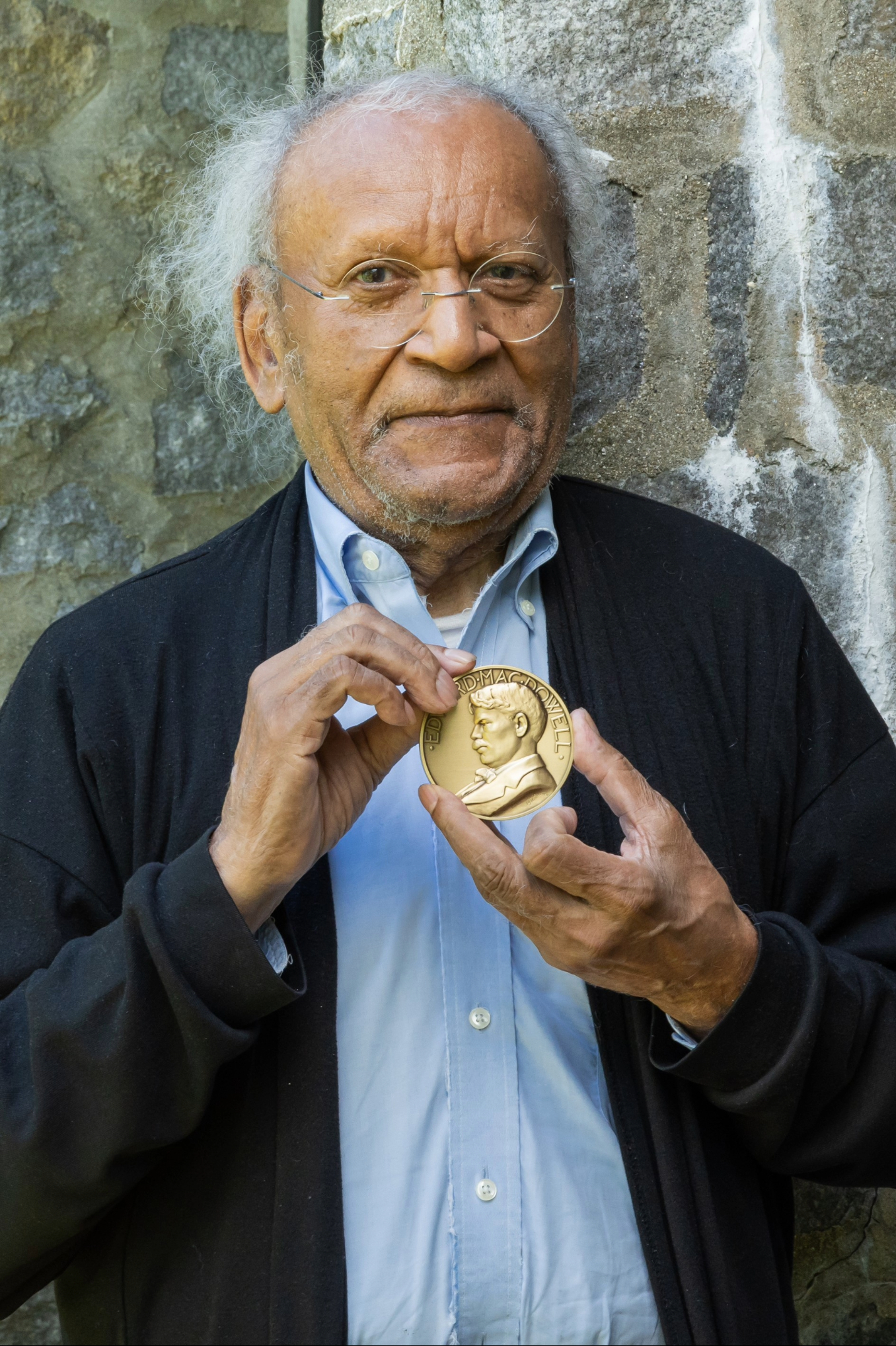
The grass grows tall on the MacDowell residency’s 450 acres, making arrival on its grounds feel like trespass and invitation at once. In Peterborough, New Hampshire, the road gives way to a quiet grammar of field, wood, and studio all existing in harmony. Together they comprise a landscape that asks what the nation owes to art, and what art may yet ask of the nation. Founded by the composer Edward MacDowell and the pianist Marian MacDowell, who bought a farm in Peterborough in 1896 after Edward found he could compose more freely there, MacDowell began as a private conviction that solitude could be made useful to others. Before Edward’s death in 1908, the couple had welcomed their first fellows, and over time, the former farm became one of the country’s central sanctuaries for artists working across literature, music, film, theater, architecture, and the visual arts. In an ordinary year, hundreds of artists come here to be alone in the serious company of their work. On one day each year, however, the gates open to the public. Medal Day invites the outside community onto grounds usually organized around privacy, retreat, and concentration. In 2026, that ritual honored Anthony Braxton, the composer, multi-instrumentalist, theorist, improviser, and educator selected to receive the 66th Edward MacDowell Medal. 

Photo by beowulf sheehan

For Black artists, a creative sanctuary like that of the rarefied privacy of an artist’s retreat meant the temporary suspension of certain pressures. James Baldwin came to MacDowell in 1954, among the earliest African American fellows to enter the colony’s history, later calling it his “favorite sanctuary for writing.” Part of Notes of a Native Son, his 1955 collection of essays on race, inheritance, and American self-deception, was written there. Decades later, MacDowell named its library for him, an act of commemoration that also read as an acknowledgment that the retreat had helped shelter one of the fiercest witnesses American literature has produced. As Baldwin’s experience exemplifies, MacDowell maintains the radical promise that artists may gain enough distance there to describe the world without being swallowed by its demands.

Braxton’s arrival at MacDowell carried the force of a return, affirmed by a generation of arts professionals who gathered to celebrate the breadth of his career. Braxton was introduced by his former student, the composer and instrumentalist Tyshawn Sorey, who spoke of his professor’s immeasurable impact on his own grasp of percussion and music theory. Upon taking the stage, Braxton shared, “I come into this incredible space, and immediately there’s a vibration in the air that gives a signal there’s hope for change.”

Tyshawn Sorey. Courtesy of MacDowell

Across more than half a century, Braxton has moved through American music as an artist averse to the smallness of category. He has been called a jazz musician, an avant-gardist, a composer, a theorist, an improviser, and a systems builder. All are true, though none are individually sufficient. Braxton’s work has made a life of exceeding the container, drawing on Black experimental traditions while also refusing to be legible only through any one category. Born in Chicago in 1945, Braxton emerged through the Association for the Advancement of Creative Musicians (AACM), the South Side collective that announced itself through an ethic of artistic self-determination. The AACM helped build a world in which Black musicians could experiment without asking permission from the academy, the market, or the inherited rules of genre. Braxton has spent his career extending that ethic through composition, pedagogy, and performance. His landmark solo recording “For Alto” helped expand the expressive possibilities of the saxophone, while his broader practice has treated music as a philosophical system.

At MacDowell, Braxton did not speak like an artist accepting a prize at the end of a career, but rather a man still assessing his beginnings. “As for me, I don’t kid myself,” he said. “I’m a student of music, and that’s all I want to be. I want to keep learning.” To be a student, in Braxton’s formulation, is to remain available to wonder. The remark might sound paradoxical coming from a composer known for such elaborate systems and sonic architectures, but Braxton’s music asks what happens when advanced structure becomes a vehicle for freedom.

Toni Morrison, who received the Edward MacDowell Medal in 2016, belongs to that same lineage of Black artists whose work made American culture answer to its buried truths. Morrison’s novels insisted that Black interiority was not peripheral to American literature but one of its central organizing forces. Baldwin and Morrison made the written word into a site of national reckoning, and Black life into an architecture of the sacred. Braxton, in sound, has pursued a related freedom across his work, making music large enough to hold 

(Joanna Eldredge Morrissey photo)

In his Medal Day remarks, Braxton returned again and again to those who had not been given room to experiment. He spoke of “the creative masters who have also helped to reshape everything” but have not received the acknowledgment they deserved. “This has to change,” he said, “if we want our country to be healthy.”

Braxton closed with a phrase that seemed to gather the afternoon into a moral and musical charge, stating “I’ll leave you with courageous love, love, love.” It was an apt offering from an artist whose work has always demanded courage from those willing to meet it.

Need Support?

Find verified resources for reproductive healthcare, support services, and advocacy organizations.

Find Resources