Court rules that law enforcement’s use of “geofence warrant” was a “search”

Updated on June 29 at 3:50 p.m. The Supreme Court on Monday ruled that when law enforcement officials used a “geofence warrant” – a warrant that instructed Google to provide location data for cellphone users who were near a particular place during a specific time period – to obtain evidence used to …

Court rules that law enforcement’s use of “geofence warrant” was a “search”

Updated on June 29 at 3:50 p.m.

The Supreme Court on Monday ruled that when law enforcement officials used a “geofence warrant” – a warrant that instructed Google to provide location data for cellphone users who were near a particular place during a specific time period – to obtain evidence used to convict a Virginia man of a 2019 bank robbery, they conducted a “search” for purposes of the Fourth Amendment. By a vote of 6-3, the justices sent Okello Chatrie’s case back to the lower court for it to consider whether, as the Fourth Amendment requires, the search was “reasonable.”
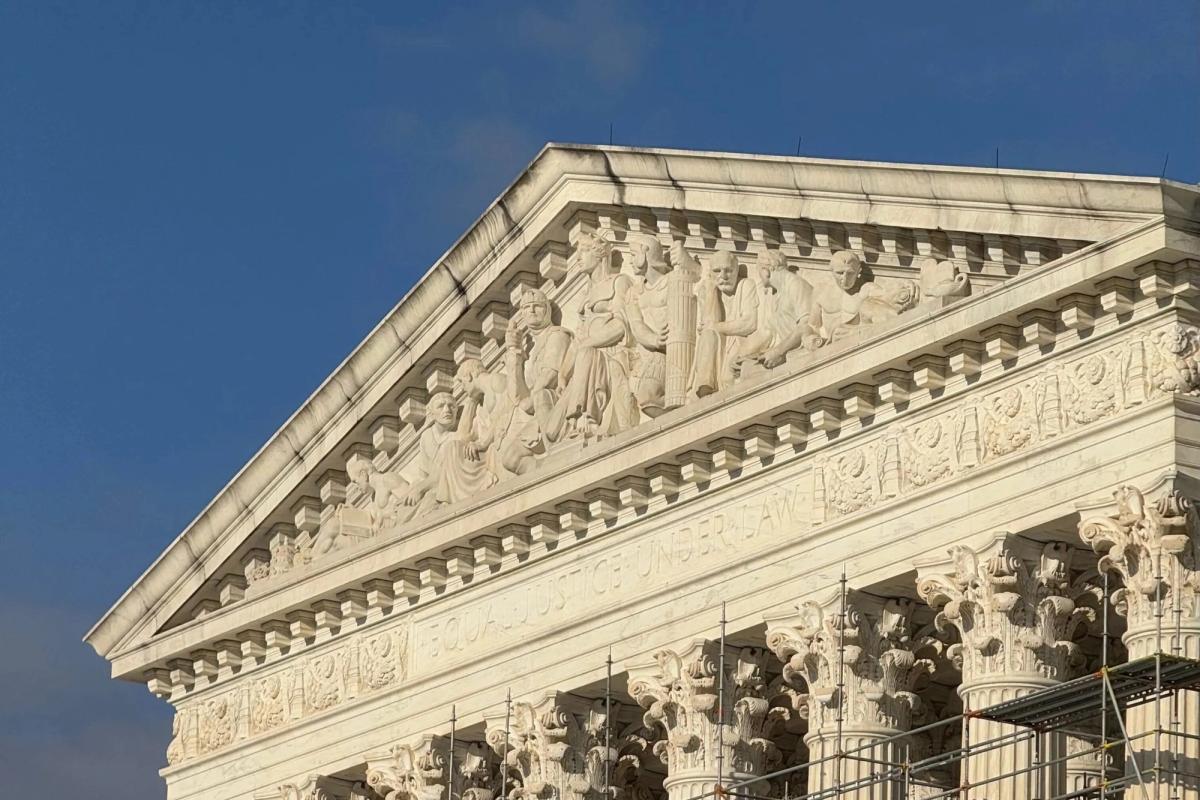
Writing for the majority, Justice Elena Kagan emphasized that “[a]n individual has a reasonable expectation of privacy in records about his cell phone’s location, and police intrude on that constitutionally protected interest when they demand the information—even though for only a limited time, and from a third-party tech company.”

Justice Samuel Alito, in a dissenting opinion joined in part by Justices Clarence Thomas and Amy Coney Barrett, contended that the majority’s opinion “will send seismic waves through our Fourth Amendment doctrine” but would ultimately not have any effect on Chatrie’s case.

The issue at the center of Chatrie v. United States arose after a man armed with a gun entered a federal credit union outside Richmond, Virginia, and gave the teller a note demanding money. He made off with nearly $200,000, but law enforcement officials did not have any leads until they served Google with a geofence warrant, which directed the tech company to provide location data for cellphone users who were near the bank at the time of the robbery.

The information that Google provided to law enforcement officials came in three tranches. First, Google gave law enforcement officials a list of the 19 accounts (but without the names attached to those accounts) linked to devices that were within 150 meters of the bank during the 30 minutes before and after the robbery. Second, based on that list of 19 accounts, the government asked for additional information about nine accounts that were in the area during a two-hour period. At the third step, a detective asked for, and received, the names and information associated with three accounts – one of which was Chatrie’s.

Relying on the location data, law enforcement officials obtained a warrant to search two residences linked to Chatrie, where they found almost $100,000 of the stolen cash, a gun, and demand notes.

Prosecutors charged Chatrie with bank robbery. He asked the trial judge to bar prosecutors from using the evidence obtained as a result of the geofence warrant at his trial, arguing that the warrant violated the Fourth Amendment.

A federal district judge agreed that the warrant in Chatrie’s case did not have the kind of probable cause and specificity that the Fourth Amendment requires. However, she nonetheless allowed the prosecutors to use the evidence, reasoning that even if there had been a violation of the Fourth Amendment, law enforcement officials had acted in good faith.

Chatrie pleaded guilty to bank robbery, although he retained his right to appeal the district court’s ruling allowing prosecutors to use the evidence obtained through the geofence warrant. He was sentenced to nearly 12 years in prison, followed by three years of supervised release.

By a vote of 2-1, the U.S. Court of Appeals for the 4th Circuit upheld the denial of Chatrie’s motion to exclude the evidence obtained as a result of the geofence warrant. The majority reasoned that law enforcement officials had not conducted a “search” for purposes of the Fourth Amendment because Chatrie could not reasonably expect two hours’ worth of location data, which he had voluntarily allowed Google to have, to be kept private. When the full court of appeals reconsidered the case, it upheld the panel’s ruling in a deeply divided decision.

In an opinion joined by Chief Justice John Roberts and Justices Sonia Sotomayor, Brett Kavanaugh, and Ketanji Brown Jackson, Kagan explained that the purpose of the Fourth Amendment “is ‘to safeguard the privacy and security of individuals against arbitrary invasions by governmental officials.’” And although the Supreme Court’s early decisions interpreting the Fourth Amendment “focused on whether law enforcement officials ‘obtain[ed] information by physically intruding’—that is, trespassing—on private property,” more recently it has also concluded that the government conducts a “search” when it invades an area that “an individual seeks to preserve … as private” and that “expectation of privacy is one that society is prepared to recognize as reasonable,” Kagan emphasized.

Eight years ago, in Carpenter v. United States, the court ruled that law enforcement officials conducted a “search” for purposes of the Fourth Amendment when they accessed cell-site location information – a historical record created when a cell phone connects to a cell site, “‘that provide[s] a comprehensive chronicle of the user’s past movements.’” “The resemblances between CSLI” and the location data at issue in this case “in their relationship to personal privacy, practically leap off the page,” Kagan wrote.

For purposes of whether the government conducted a search, Kagan said, it does not matter that law enforcement officials “access[ed] only a short amount of cell-phone location information.” Even that small amount, she emphasized, can provide significant information about someone that they might prefer to keep private – including visits to “‘the psychiatrist, the plastic surgeon, the abortion clinic, the AIDS treatment center, the strip club, the criminal defense attorney, [or] the by-the-hour motel.’”

Nor does it matter, Kagan continued, that Chatrie gave Google permission to collect and use the location data. Location data, Kagan suggested, is far more personal than the kind of “third-party records” that the Supreme Court has held are not protected by the Fourth Amendment. Moreover, she added, the location data “is the automatic price of conventional cell-phone usage.”

Kagan stressed that the Fourth Amendment “prohibits only searches that are ‘unreasonable.’” In this case, she said, Chatrie and the government have disputed – and the court of appeals did not decide – whether the geofence warrant provided the kind of “‘particularized information’ … based on ‘probable cause to believe that Google had information’ that would help solve a crime.” Therefore, the court sent the case back to the lower court for it to make that determination.

Justice Neil Gorsuch penned a separate opinion in which he agreed that the use of Chatrie’s location data constituted a “search.” But he took what he described as a “more traditional approach” to reach that result, arguing that the data was Chatrie’s “personal property” and that the government had searched it.

Alito argued that the court should have either dismissed the case or upheld the lower court’s decision based on the “good faith” exception – the idea that evidence obtained under a warrant should normally be admitted, even if it was obtained in violation of the Fourth Amendment, if the officers believed that they were acting in good faith. Because the full 4th Circuit had held that Chatrie could not overcome that exception, Alito argued, and the Supreme Court declined to weigh in on that issue, its ruling has no real impact – particularly when Google “has modified its Location History service in a manner that forecloses future use of this geofence procedure.”

Need Support?

Find verified resources for reproductive healthcare, support services, and advocacy organizations.

Find Resources