Happy Pride! It’s my favorite time of year: the sun is shining, the queers are coming out of hibernation, my social calendar is filled to the brim with drag fundraisers and gay dance parties, the new MUNA album is on repeat…To put it simply: the feeling of, well, pride is in the air.
But amidst all the festivities and fun, the reason for the season, so to speak, cannot be forgotten: that reason being to honor the resistance of the Stonewall Uprising in New York City and all the activism that followed. Our elders fought tooth and nail for the rights we have today—rights that are under direct attack from those in power. And as the government attempts to erase the trans community from public life, it has never been more important for the rest of our community to remain steadfast in solidarity and advocacy with our trans siblings in arms.
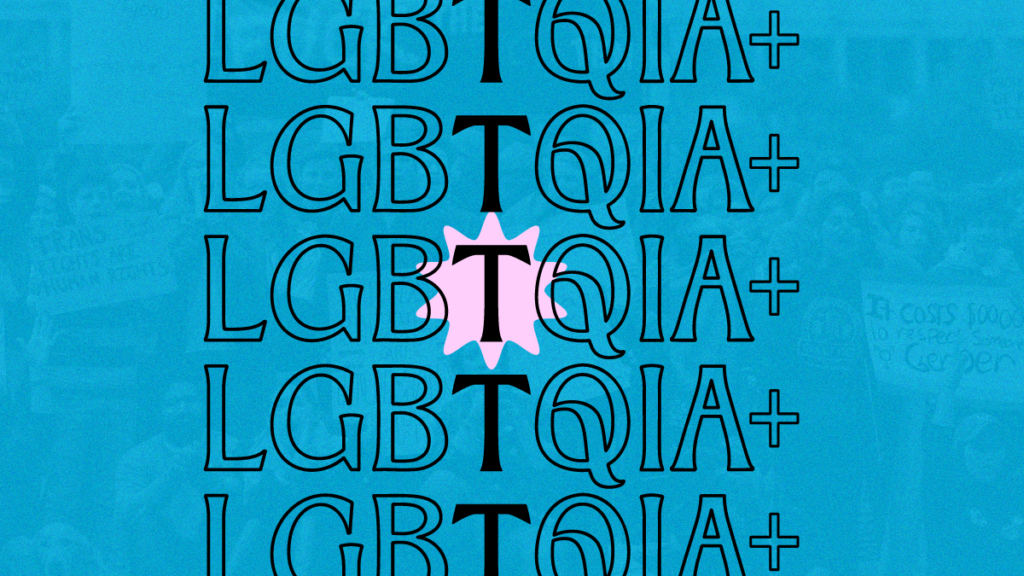
This Pride Month, the girls and gays—and everyone who benefits from civil rights protections on the basis of sex (aka: a lot of us!)—need to make sure we’re doing everything we can to support the T in LGBTQIA+. Because a lot of us could use the reminder. And because all of our rights are interdependent.
While it might be tempting for cis people to bury our heads in the sand about the realities of this current administration’s vicious, dehumanizing agenda to force trans people out of public life, it is imperative that we avoid doing so. Attacks on some of us are attacks on all of us—and you’d be foolish to think that extremists will stop at trans folks. They’re coming for all of us.
A brief history lesson: after the Supreme Court guaranteed the federal right to marry to same-sex couples in 2015, social conservatives lost a galvanizing issue to mobilize supporters (and donors). They needed a replacement and landed on transphobia; ever since, their attacks—from targeting the participation of trans athletes in school sports, to accessing gender confirmation care, to just using the correct bathroom—have reached a fever pitch.
But make no mistake: conservative extremists may be focused on attacking trans people right now, but they remain as staunchly opposed to gay people as ever. Earlier this year, right-wing activists launched a new campaign to overturn marriage equality by casting same-sex couples as threats to children—the same false arguments they’ve levied against trans people. And the authors of Project 2025 have also shown that their attacks on equal rights won’t end with the LGBTQIA+ community, having rolled out a radical plan to not just overturn marriage equality, but also limit access to contraception and scale back no-fault divorce. They’re coming for all of us.
That’s why the time to fight for all of us who care about equal rights is today. For years, state legislatures have been testing different strategies to silence discussion about trans people and their history, police trans bodies and identities, and strip trans folks of their legally issued documents. As a result, a leading organization in genocide and human rights has issued three red flags on the status of trans communities in America. Almost half a million trans folks have moved across state lines since Trump’s second election. It’s so bad, some cities are weighing declaring states of emergency to make it easier for trans people to relocate. Our trans siblings are suffering. We need to show up for them.
Because trans rights, LGBTQIA+ rights, and women’s rights are, by their very nature, intertwined, despite what J.K. Rowling might think. A lot of the rights that queer people and cis women have under the law come down to protections to be free from discrimination and mistreatment on the basis of sex. For example:
The Civil Rights Act’s Title VII protects people from sex-based discrimination in the workplace. Sex-based discrimination includes more than just preferring men over women at work; it also encompasses discrimination on the basis of pregnancy, sexual orientation, and transgender status. Importantly, protections against sex-based discrimination have also been understood for many decades to protect cis people from being discriminated against because they do not conform to stereotypical gender presentation or roles—such as a cis woman with a short hair cut who’s the target of “jokes” in the workplace because she’s not “feminine” enough without long hair.
One of the things that the anti-trans movement is trying to accomplish involves narrowing the scope of sex discrimination laws in order to target trans folks—but would therefore also have the impact of removing protections for cis women and girls who don’t conform to the arbitrary gender stereotypes that feminists have been fighting against for decades. We’ve already seen the consequences: for example, amid a proliferation of bathroom bans targeting trans people, cis women have been repeatedly stopped, harassed, or even kicked out of bathrooms for failing to conform to specific expectations of femininity. And Black and brown women are especially likely to be targeted for not being “feminine” enough. The fight for trans rights is a fight for everyone to have the right to be free from being forced to meet stereotypes that are sharply limiting for all women and girls.
And what’s more, trans folks have always fought for us. Like Marsha P. Johnson and Sylvia Rivera on the frontlines of the Gay Liberation movement in the sixties and seventies, trans women of color have always been in this fight. We wouldn’t be where we are today without trans people. And we won’t be able to fight the next iteration of attacks on same-sex marriage and gay rights more broadly without them.
So, consider this a call to action. Allies: Seek out opportunities for solidarity in your local communities—whether that be mutual aid, political advocacy, or simply Venmoing a doll at the gay bar. Read up on how to be a better ally to trans folks. Speak up when you hear transphobic talking points about “gender ideology” the next time you see your conservative uncle. In a time of fascist authoritarians trying to erase the mere existence of anyone who’s not a cis white straight man, we must band together to fight for the better future that we know is possible.
The post Hey, Girls and Gays: It’s on Us to Defend the “T” in LGBTQIA+ appeared first on National Women's Law Center.