When people think about the major queer meccas of the United States, they may think of New York City’s West Village, San Francisco’s Castro district, and Philadelphia’s Gayborhood. Less well known is Womontown, a neighborhood in Kansas City, Missouri that was transformed into a lesbian utopia in the early 1990s.
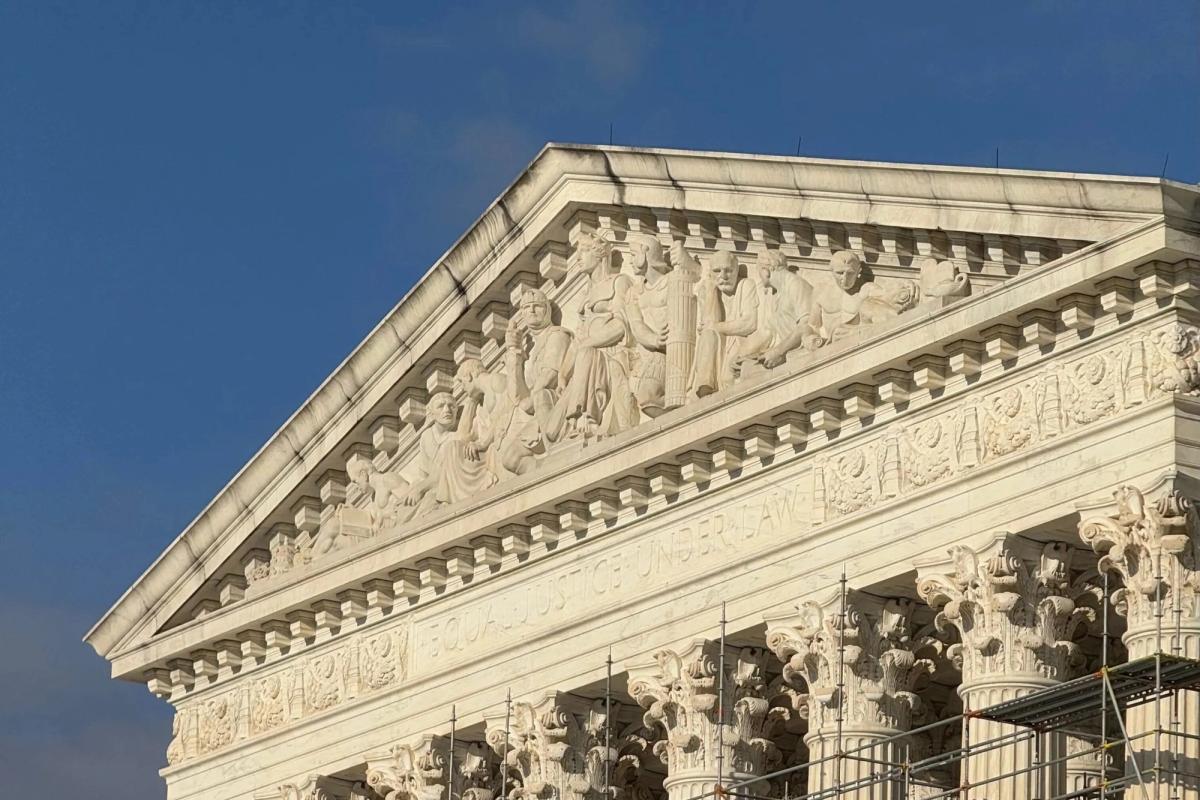
While public opinion on queer people began improving in the 1990s, the legal climate towards the community remained harsh. Same-sex marriage was banned at the federal level, and many states, including Missouri, banned “homosexual conduct”—effectively, sexual contact between men. A 2003 Supreme Court ruling that overturned a similar Texas law made Missouri’s unenforceable.
Womontown—which is not a misspelling, but rather how the neighborhood’s residents demonstrated their intentions to exist outside of patriarchal structures—was started by couple Andrea Nedelsky and Mary Ann Hopper. It functioned as a rare enclave where lesbians could unapologetically be themselves, love their partners openly, and establish both community and financial autonomy by purchasing homes.
At its largest, Womontown was home to 80 people and operated as an organized community in a 12-block span of Kansas City’s Longfellow neighborhood. Residents purchased 28 homes and 14 apartment buildings, despite facing discriminatory lending practices and intimidation from the local community.
Nedelsky had purchased a home there in the 1970s and wanted Hopper to move in with her, Hopper said in Womontown, a 2022 Kansas City PBS documentary on the neighborhood. But at the time, the area was not considered particularly hospitable. The neighborhood had a reputation for being a home to drug dealers and people involved in gang violence, according to former residents and the film’s producer, Sandy Woodson.
Hopper, who recounted being heckled on the front porch and hearing gunshots nearby, was not interested in trying to fix what she felt was a bad situation.
“It was like, ‘I don’t think I can live here unless we really make some changes,’” she said in the documentary. “So then we just started imagining, what if we could just walk hand in hand, freely down the streets, a bunch of lesbians all in this neighborhood?”
Creating community
That conversation spurred a call to action. Nedelsky and Hopper began to encourage people to join them in the neighborhood, where, according to Hopper, purchasing a three-story house could cost between $15,000 to $20,000 at the time.
Because the neighborhood’s real estate had been considered undesirable, it offered Womontown residents an economically viable opportunity to build financial stability through home ownership. They were also able to create their own safe space, where they had control over who was invited into their homes.
To spread the word, Nedelsky and Hopper published ads in places like Lesbian Connection, a magazine founded in 1974 with the mission “quite simply, to connect the lesbian community worldwide,” according to its website. The couple also attended underground music festivals, like the Michigan Womyn’s Music Festival and the National Women’s Music Festival, which functioned as women-only spaces for lesbians to connect. Those gatherings offered inspiration for the kind of place Womontown could become.
“You got that feeling for three or four days of what it would be like for women to create their own community,” Hopper said. “They didn’t need anybody from the outside judging them.”
Women from as far away as Hawaii, California, and New York moved thousands of miles to Womontown, while others who already lived in Missouri or Kansas City itself relocated to be closer to accepting and likeminded individuals.
Womontown also offered residents something new: city living. Other co-ops with similar structures were mostly located in rural areas. For urbanites, the appeal of existing housing and ample job opportunities were important differentiators.
Nedelsky and Hopper built relationships with landlords in Longfellow by convincing them that selling their properties to lesbians would improve neighborhood dynamics. Rather than flipping property to make a profit, Womontown residents invested in these houses and buildings, transforming them into homes.
“What I thought was cool is, this is a way of improving a neighborhood without gentrifying it,” Woodson, the documentarian, told local NPR station KCUR. “These women weren’t coming in and fixing up the houses so they could sell ‘em for a lot more money. They were fixing them up so they could stay there and have a community.”
That said, the queer community has a complex relationship with gentrification. Facing disenfranchisement and discrimination, LGBTQ+ people have historically been relegated to lower-income and less “desirable” neighborhoods to build community. But as their presence has gradually changed these areas, it’s led to an increase in home values—sometimes pricing out both longtime residents and even queer people themselves, a concept known as “gaytrification.”
And not everyone accepted the growing number of lesbians in their neighborhood. Nedelsky said in the documentary that allies were “all in” on the development of the community—but those who were not “were vicious.” Some families were concerned that these new residents would turn their children gay, a common, fabricated trope still perpetuated today by anti-LGBTQ+ activists and politicians.
The women placed purple flags with yellow dutch tulips in their doorways to signal their homes were “safe” to one another. They also planted tulips in their front yards or along their blocks, a tactic that Nedelsky said passed with families and straight individuals as they aesthetically changed the area.
Together, we make reproductive justice visible.
Rewire News Group is a reader-supported, independent nonprofit newsroom. Membership keeps this reporting accessible to all.
The ‘power of possibilities’
Eventually, the labor required to upkeep the community took its toll. Hopper said she and Nedelsky needed a break from “the constant everyday”: between promoting Womontown at festivals, attending neighborhood association meetings, keeping up with paperwork and landlords, and planning weekend activities, “it was a full time, second job.”
The couple felt that the community had become established enough to maintain itself, particularly because its residents were homeowners. Another resident, Barbara Lea, attempted to continue its momentum, but the work quickly became overwhelming for one person.
“I just felt like I was driving the bus and got real quiet, and then suddenly I turned around and there was nobody on the bus [anymore],” she said in the documentary.
While many residents remained in the neighborhood for decades, and some still live there now, the organized community had largely dissolved by 1995.
The community’s history and continued existence has inspired many young women in Kansas City today, according to Stuart Hinds, curator of special collections and archives at Kansas City’s Gay and Lesbian Archive of Mid-America (GLAMA), which houses many archival materials documenting Womontown at its height.
“Their eyes light up when they hear about it, and the bulk of researchers using the collections have been young women,” Hinds wrote in an email to Rewire News Group.
A local middle-schooler recently focused a school history project on the neighborhood, he said, and she attended a national competition this month after winning state and regional championships.
“The idea of this successful, grassroots, genuine community of women is very appealing to young people looking for connection,” Hinds said.
GLAMA installed a commemorative marker in the neighborhood in 2024, recognizing the sustained interest in the community and impact of its residents.
“Womontown continues to resonate in the lives of current and former residents, serves as a model for future neighborhood development, and demonstrates the power of possibilities,” the plaque states.
In the nearly two years since that acknowledgement, the Trump administration has undermined LGBTQ+ rights and attempted to erase queer and trans histories, including by removing references to transgender people on New York’s federal Stonewall Memorial website in early 2025.
Kansas City, Missouri declared itself a sanctuary city for LGBTQ+ people in 2023 and earned a perfect score on the Human Rights Campaign’s equality index for the fifth consecutive year in 2025. But the city has faced state backlash for its inclusive policies.
The city repealed its 2019 ban on anti-gay conversion therapy on May 21, 2026, after being sued by then-Missouri Attorney General Andrew Bailey.
The American Psychological Association, the American Psychiatric Association, and the American Medical Association all oppose conversion therapy, having found that it harms patients, and it may reinforce feelings of self-hatred.
But after the Supreme Court’s conservative majority ruled in April 2026 that Colorado’s outright ban of the practice may be unconstitutional under the First Amendment, Bailey, along with a group of Christian counselors, challenged Kansas City’s ban. It was repealed in a 7-5 city council vote in May 2026, but weeks later, city officials announced they are working on a new conversion therapy ban. As a part of the same measure, businesses will also no longer be required to address patrons using their preferred pronouns.
Overall, Missouri’s LGBTQ+ overall policy score is ranked “negative” by Movement Advancement Project, a nonprofit think tank that researches LGBTQ+ equality and democracy. The organization estimates that the state has lost between $362 million to $879 million in household income as LGBTQ+ individuals move away due to hostile and discriminatory laws.
Still, the state’s queer community is fighting back. Just weeks after repealing the ban on conversion therapy, Kansas City mayor Quinton Jackson and the city council are now exploring ways to reinstate the law.
Hinds said communities like Womontown offer inspiration in today’s United States partly because of the prejudice and unfair treatment they’ve already overcome.
“Working with archival materials … you are able to see how the queer community has dealt with even worse oppression in the past, and can learn from both their successes and their failures as we face challenges in the early 21st century,” Hinds said.
He added, “with dedication, commitment, and perseverance, you can build the world you want to see.”
The post How a Group of Lesbians Created ‘Womontown,’ a Queer Utopia in Missouri appeared first on Rewire News Group.