Juneteenth, Reproductive Justice, and the Ongoing Fight for Freedom

Blog Post Juneteenth, Reproductive Justice, and the Ongoing Fight for Freedom PRH providers reflect on Juneteenth, abolition, reproductive justice, and the ongoing fight for bodily autonomy. By Mani Vinson, Communications Manager | June 18, 2026 Share https://prh.

Juneteenth, Reproductive Justice, and the Ongoing Fight for Freedom
Blog Post

Juneteenth, Reproductive Justice, and the Ongoing Fight for Freedom

PRH providers reflect on Juneteenth, abolition, reproductive justice, and the ongoing fight for bodily autonomy.

Freedom Day, or Juneteenth, is celebrated annually on June 19th to commemorate the emancipation of enslaved African Americans.

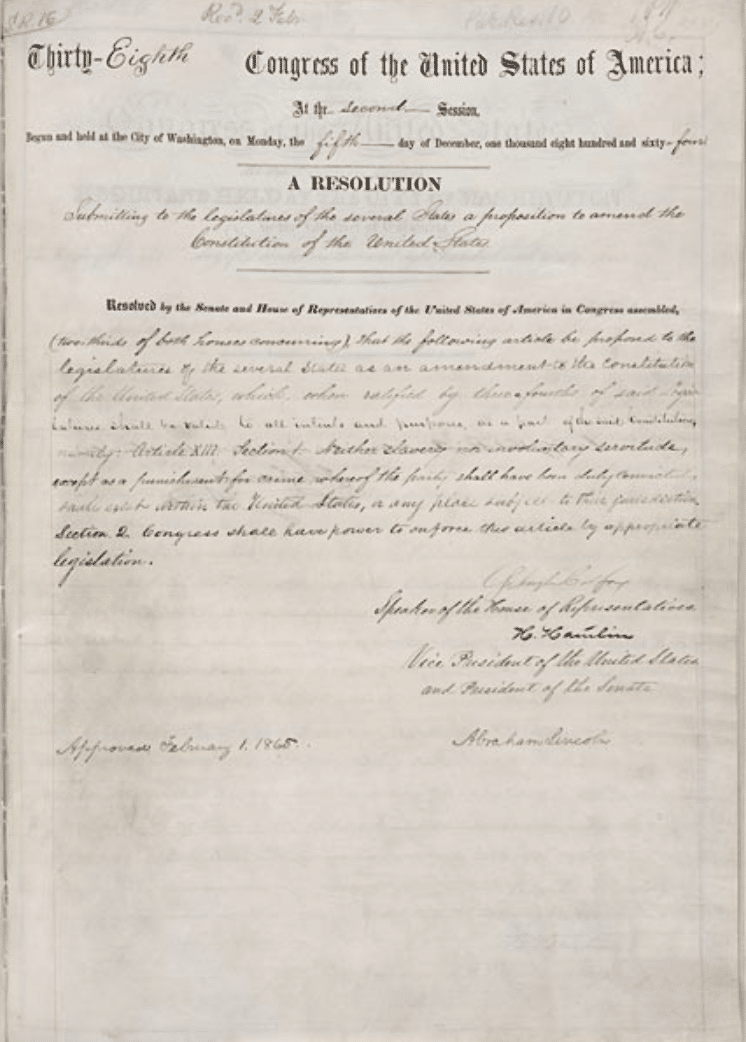
While President Abraham Lincoln signed the Emancipation Proclamation on January 1st, 1863, it wasn’t until June 19th of 1865—almost two and a half years later—that the troops visited Galveston, Texas to enforce the end of the Civil War, liberating hundreds of thousands of enslaved African Americans. Sadly, even with the Emancipation Proclamation, slavery was not formally abolished until the 13th Amendment was ratified in December of 1865. This took an incredible amount of sociopolitical advocacy to enshrine the foundations of our ongoing fight for equity, dignity, and, of course, bodily autonomy. 

The House Joint Resolution Proposing the 13th Amendment to the Constitution, January 31, 1865
The House Joint Resolution Proposing the 13th Amendment to the Constitution, January 31, 1865.

As you can imagine, the road to freedom was, and still, is a long one, as we navigate a society heavily influenced by the ramifications of chattel slavery. While enslaved, Black birthing people were subject to high volumes of sexual violence as forced reproduction and sexual intimidation were leveraged as tools for slave owners to build wealth and maintain order. Following the emancipation of enslaved Black people, during the Reconstruction era, Black people were surveilled, targeted, and left vulnerable to racially motivated violence. Black people were also exposed to unethical experimentation to “advance” medical practices (think about the development of modern gynecology, the Tuskegee Syphilis Study, the nonconsensual use of Henrietta Lacks’ cells, and the forced sterilization of Black birthing people).

It is well documented that the modern police system descends from Slave Patrols, or groups used to capture and return fleeing enslaved Black people to their “owners”. We can see that these systems and practices are alive and well today in our health care system as Black birthing people are subject to higher rates of nonconsensual drug testing, criminalization when seeking life-saving health care like abortion (and even when not seeking care), and are still victimized by systemic racism and a maternal mortality crisis. These conditions being even worse for Black people in Southern states, Black people experiencing poverty, queer and trans Black people, and Black people with disabilities.

Despite Black Americans having celebrated Juneteenth for over 160 years, Juneteenth was not recognized as a national holiday until 2021, one year before the Dobbs decision, resulting in the overturning of Roe. v Wade. This ruling eliminated the federal constitutional right to an abortion and opened the door to for even more calculated attacks on mifepristone and misoprostol access.

This all begs the question: what does it mean to be free? 

At Physicians for Reproductive Health, when we think about Juneteenth, and about what it means to be free, we are reminded of the core tenets of Reproductive Justice, the framework of our advocacy.

SisterSong defines Reproductive Justice as the human right to maintain personal bodily autonomy, have children, not have children, and parent the children we have in safe and sustainable communities.

In the spirit of freedom-focused advocacy, we invited three incredible providers to share their thoughts on Juneteenth, abolition, and the progression of our movement:

What Juneteenth Means to Black Providers and Advocates

What do you want people to know about Juneteenth? What do you want non-Black providers and advocates to know about Juneteenth? What does this day mean to you?

DR. BRIA PEACOCK

As a descendant of enslaved people, five generations deep in the Deep South of Cordele, Georgia, Juneteenth is deeply personal to me. It is a celebration of freedom, resilience, resistance, and the enduring strength of Black people. It is also an opportunity to reflect on the unfinished work of freedom in America. For non-Black providers and advocates, I hope Juneteenth serves as a reminder that many of the inequities we see today, including disparities in maternal health and reproductive healthcare, are rooted in the legacy of slavery and the systems that followed it.

For me, Juneteenth is both a celebration and a call to action. I celebrate the courage of my ancestors who survived unimaginable violence and oppression while building lives, families, and communities right here in the South. At the same time, I honor them by continuing the work of expanding freedom for today’s and tomorrow’s peoples.

DR. BIANCA HALL

As a Black woman of Caribbean descent, I see Juneteenth as both a celebration and a reminder. It commemorates the delayed arrival of freedom for many enslaved people in the United States and underscores that legal freedom does not always translate into lived freedom. While my family’s roots are Caribbean, I am a first-generation American, and I honor Juneteenth as a day centered on the history, resilience, and enduring contributions of ADOS (American Descendants of Slavery) communities, whose ancestors survived the brutality of slavery and helped shape this nation despite generations of injustice.

Juneteenth is a reminder that freedom, rights, and equality are often unevenly realized. I would encourage non-Black providers and advocates to reflect not only on the history of slavery, but also on how its legacy continues to shape health, opportunity, and lived experiences today.

For me, Juneteenth is a time to honor the resilience of those who came before us, celebrate the progress we have made, and recommit to the work that remains.

DR. ASHLEY JEANLUS

Juneteenth is a day to celebrate a new beginning, a moment of resilience and joy after centuries of bodily and emotional harm done to Black people. But it’s also a reminder of how much further we have to go, because the liberation of Black bodies from chattel slavery is directly connected to our modern fight for bodily autonomy

Juneteenth, Reproductive Justice, and Bodily Autonomy

As a provider, what does it mean to celebrate the abolition of slavery while we continue to fight for the right to bodily autonomy through reproductive justice and advocacy? How can we hold space for celebrating our progress while acknowledging that we have so much more progress to make?

DR. BRIA PEACOCK

As a reproductive health provider, I see abolition and reproductive justice as deeply connected. Chattel slavery was built upon the denial of bodily autonomy. The reproductive justice movement emerged from Black women recognizing that true freedom requires the ability to decide if, when, and how to have children, and to raise those children in safe and supportive communities.

Celebrating Juneteenth while continuing to fight for bodily autonomy means recognizing both how far we have come and how much work remains. We celebrate because our ancestors fought for freedoms that transformed generations. We continue organizing because freedom is not a destination; it is an ongoing practice. Honoring their legacy requires both gratitude for progress and commitment to the work that remains unfinished.

DR. BIANCA HALL

To me, Juneteenth is a reminder that expanding freedom requires ongoing work. We can celebrate the progress made by those who came before us while remaining committed to addressing the inequities that continue to shape people’s health, autonomy, and opportunities today.

DR. ASHLEY JEANLUS

Celebrating abolition means honoring the powerful legacy of ancestors who fought for freedom and justice and recognizing that their spirit lives in the work we do today. There is a long journey ahead, but I’ve learned to celebrate every step and every victory along the way, because progress is worth honoring even when the work isn’t finished.

Abolition as a Framework for Health Care and Advocacy

How does abolition inform your approach to providing medical care? Separately, how does it inform the way you approach your advocacy? What do you have to say to people who find abolition too “big” or “visionary” to apply to everyday life and work?

DR. BRIA PEACOCK

Abolition forces me to ask not only how I can help an individual patient today, but to recognize the systems that are creating harm. In healthcare, that means recognizing that many barriers my patients face are not personal failures but consequences of policies and institutions that were never designed with their wellbeing in mind. Abolition invites us to imagine and build systems rooted in dignity and community.

In my advocacy, abolition challenges me to think beyond reform and toward transformation. It asks us to envision what people need to thrive and then work collectively to create those conditions. As a physician, that means advocating not only for access to healthcare, but also for housing, economic security, education, and the social supports that make health possible.

The abolition of slavery was once considered too big and too visionary. Yet people who were chained and beaten imagined freedom anyway. I believe the same is true of the movements for reproductive freedom and justice today.

DR. ASHLEY JEANLUS

Abolition isn’t abstract to me; it shows up every time I walk into an exam room and care for a patient who has been failed by a system designed to harm them, because the communities most impacted by health disparities are disproportionately Black, young, and low-income.

Everything is interconnected: the attacks on our bodily autonomy, the maternal health crisis, the bans we’re having right now—none of it exists in isolation, and that’s exactly why abolition is the framework that makes the most sense for this work.

Despite the dark history of Juneteenth’s roots, there is much to celebrate.

The resilience, tenacity, beauty, culture, and bravery of Black Americans is a direct portal connecting us all to the resilience of our enslaved and freed ancestors, to those who paved the way for us to be free.

Juneteenth parade in Denver, Colorado.

As we celebrate, we must also acknowledge that there is still much work to be done as we work toward an equitable world where Black people are not just living but thriving. This Juneteenth (and beyond), we implore you all to deepen your knowledge of African American history, remember that the path to abolition is not abstract nor is it a quick journey, and make a commitment to advocating for and protecting all patients with intersected marginalized identities—because, as Fannie Lou Hamer said, none of us are free, until all of us are free.

The post Juneteenth, Reproductive Justice, and the Ongoing Fight for Freedom appeared first on Physicians for Reproductive Health.

Need Support?

Find verified resources for reproductive healthcare, support services, and advocacy organizations.

Find Resources