No matter where she’s from, every Black woman knows the beauty salon has never been just a place to get her hair done. It’s where confidence is poured back into you until you walk out standing a little taller than you walked in. It’s where everybody has an opinion, somebody’s going to make you laugh, and before you know it, the woman in the next chair is cheering you on like she’s known you forever.
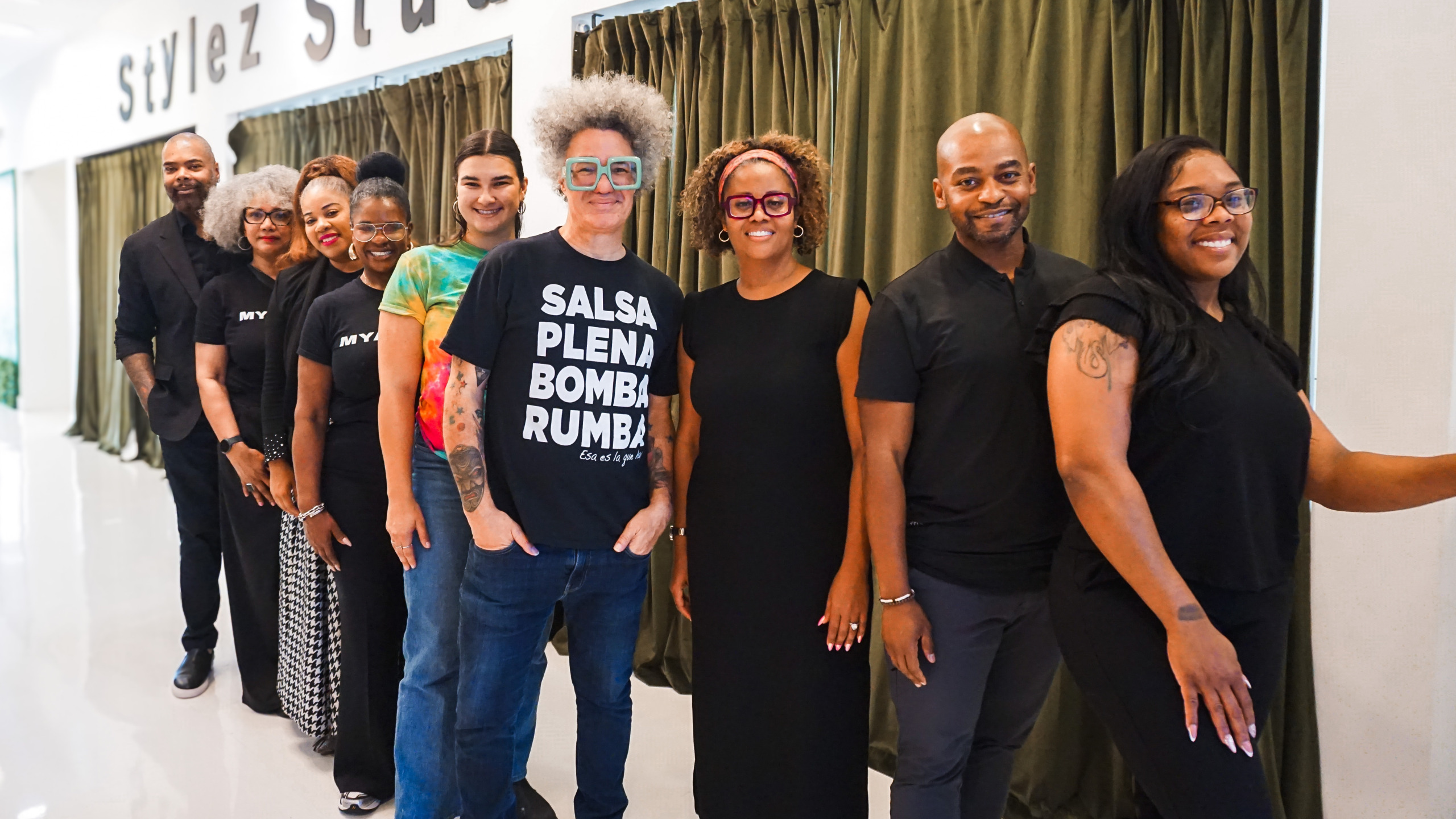
That’s just what Black beauty salons do. Long before the first curl is defined or the first braid is finished, the beauty salon has already done what it does best. Caring for Black women. Not as labels. Simply as women.

Inside Stylez Studio, every styling chair held the possibility of something bigger than a new look. A new beginning. Every element of Create to Heal—a community wellness initiative created by ESSENCE, Don’t Forget About Me (DFAM), and MYAVANA—is intentionally designed to center care. The initiative’s second iteration, which took place last week in NOLA, in partnership with Operation Restoration, provided hair and self-care treatments to locals ahead of ESSENCE Festival. The event included everything from personalized hairstyling and scalp analyses, powered by MYAVANA’s HairScope technology, to therapeutic massages provided by DFAM. Altogether, every detail reflected the intention behind Create to Heal: to surround women with care.
“Our goal is to bring a more personalized experience to salons and truly cater to every person’s unique hair journey,” Candace Mitchell, founder and CEO of MYAVANA, tells ESSENCE. “This partnership brings together community, technology, and personalization to create something that’s truly meaningful.” Mitchell believes technology should enhance the human connection—not replace it.
“I hope every woman who walks through these doors leaves feeling like she’s stepping into a new chapter,” she says. “One of my favorite sayings is, ‘Every hairstyle has a story.'” Those stories were already unfolding. One consultation. One conversation. One styling chair at a time.

Every appointment carried its own story. “I stepped in here, and these people were great to me,” Ms. Perkins, an Operation Restoration Client. “I’ve had coffee, my espresso, donuts, my hair done, and a great massage. It’s just been exciting the whole time. I can’t wait to get outside and show the world.” For many of the women inside Stylez Studio, the transformation wasn’t just what they saw in the mirror. It was how they felt walking away.
Ashley Spencer, owner of Stylez Studio, says opening her doors to Create to Heal represented something she’d dreamed about throughout her career. “To witness these women being restored—to hear their stories and everything they’ve overcome—was incredibly moving,” Spencer says. “Listening to some of the women’s stories literally brought me to tears.”
By the end of the day, Spencer realized the experience had changed everyone in the room. “We were just as grateful for them as they were for us.” Stylist Nene Marie understood that from the moment she volunteered.
“Giving back is more important than anything to me,” she says. “As a hairstylist, I have the opportunity to help people build their confidence and make them feel good about themselves.” That spirit echoed throughout the salon. Women laughed together. They exchanged compliments. They admired one another’s new styles. They celebrated one another like only Black women know how.

The experience extended far beyond the styling chair. While one woman admired her finished hairstyle, another relaxed into a therapeutic massage. Every woman who walked through the doors was cared for—mind, body, and spirit. Luis Burgos, Founder and Creative Director of DFAM, believes that’s exactly what trauma-informed beauty care should look like.
“For us, it means participants know someone cares,” Burgos says. “A haircut and a massage mean a lot. Taking the time for yourself is extremely important to move forward and face the challenges that come day by day.”

Before the music filled the Superdome and thousands gather across New Orleans to celebrate ESSENCE Festival, Create to Heal reminded us that celebration can begin with service. “We’ve been really intentional about how we show up for the community beyond the festival,” says Varsay Sirleaf, Senior Director of Community Engagement at ESSENCE. “Going beyond the pages, going beyond media, going beyond social media—how do we actively touch people who live and breathe this city?”
That commitment led ESSENCE back to Operation Restoration. “Healing comes in various forms,” Sirleaf says. “There’s a lot of trauma involved in incarceration, but also in coming back and rebuilding your life. Create to Heal is about healing from that trauma. It’s about being part of that transformation and impact.”
For Operation Restoration founder and CEO Syrita Steib, that’s what this partnership has always been about. “Every woman deserves to be cared for, invested in, and reminded of her worth,” Steib says. “When we create intentional spaces for healing, we restore dignity, hope, and the belief that restoration is possible.”

Maybe that’s the thing about healing. It rarely announces itself. Sometimes it looks like a fresh silk press. Sometimes it sounds like laughter filling a beauty salon. Sometimes it begins with one Black woman reminding another that she has always been worthy.
Long after ESSENCE Festival ends, the hairstyles will grow out, the mirrors will welcome new faces, and the styling chairs inside Stylez Studio will be filled again. But for the women who walked through those doors, Create to Heal offered something that couldn’t be washed away. It offered care. It offered community. It offered proof that healing doesn’t always begin with something grand.
Sometimes it begins with someone simply making sure you’re seen.