For years, balancing career and motherhood as a judge meant working through inflexible schedules and large caseloads while remaining present as the primary caregiver.
These days, the landscape has shifted. Many mothers sitting on the bench are juggling these concerns in addition to the risk of death threats and being targeted with sexually explicit AI-generated videos.
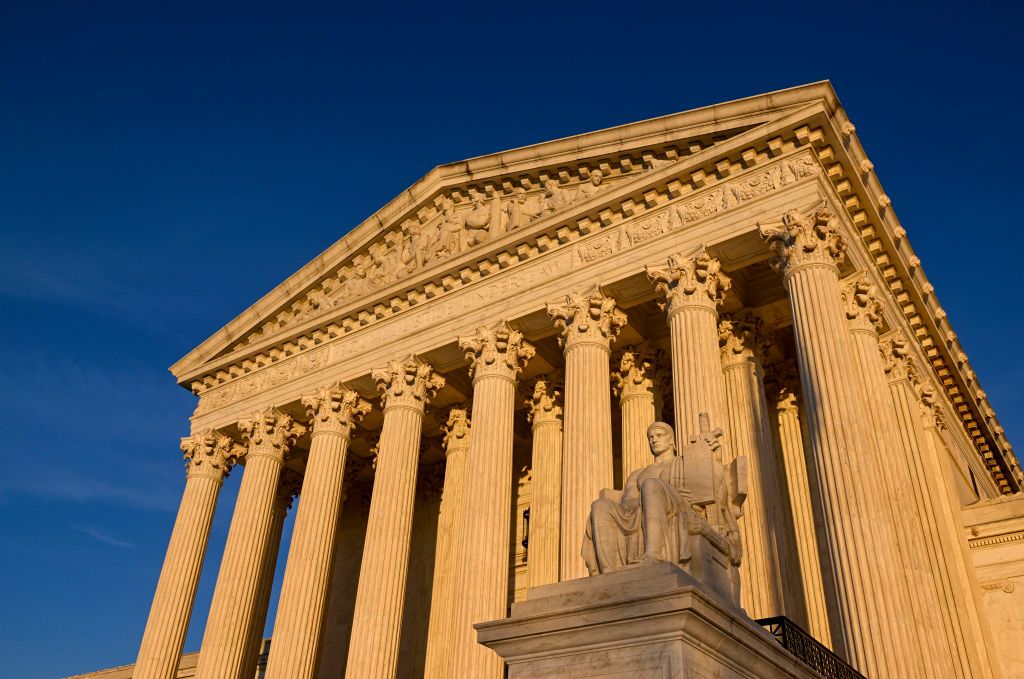
Threats to judges have increased dramatically over the last decade. In 2019, the U.S. Marshals Service, which provides security for federal judges, logged 373 threats that rose to the level of requiring an investigation. That figure had more than doubled by 2025, when the agency investigated 807 threats against federal judges. This data is not broken down by gender.
One 2024 survey of state court judges found that 70.9 percent of women state judges reported feeling threatened as a result of a ruling, compared to 60.4 percent of men state judges. (Data measuring threats against state and county judges is more difficult to track because many jurisdictions are not required to report threats to a centralized database.)
In interviews with The 19th, women judges at all levels attribute this rise in threats and harassment to the pervasiveness of social media and deepfakes created by publicly accessible AI tools, as well as an intensifying political climate that has driven more animosity toward judges.
Three years ago, Jennifer Johnson, a judge in Dixie County, Florida, was the target of a video posted to TikTok that showed an animated man wearing a red, white and blue face mask attacking her with a hatchet.
In 2021, a comment posted to a Fox News YouTube channel called U.S. District Court Judge Beth Bloom a “dead commie traitor,” adding, “you will all be shot dead on sight.” Another comment on the video contained her home address.
Both of these threats resulted in arrests for the offenders, but in many cases, judges feel they lack adequate security guidance and protection.
For judges with children, these growing threats go beyond considering their personal safety and extend to shaping the lives of their kids and how they parent. Last year, a dozen pizzas were delivered to the homes of several judges under the name of Daniel Anderl, the 20-year-old son of U.S. District Court Judge Esther Salas who was murdered in 2020 by a man who had appeared before Salas in court.
“This is a directed and systemic effort to let the judges know: We know where you live. We know where your children live. We can come at any time,” Bloom said. “I don’t believe for one moment that the judges are not continuing to do their job, but it’s hard.”
Balancing children’s safety
Personal safety was not top of mind for Kelley Paul when she transitioned from being a defense attorney to a judge on the Superior Court of Santa Clara County in California in 2022. Over two decades as a public defender, Paul handled gang, homicide and sexual violence cases, as well as defendants with severe mental health needs. She could only recall one security issue she faced as a result of that work.
Paul received training from the county’s court security office as part of her judge position, but personal safety wasn’t a major concern until issues began to pop up a few months into her term.
One day in 2023, Paul was at a training in San Diego, nearly 500 miles from where she lived with her two youngest daughters, when a colleague alerted her about a Facebook post that listed her full name and position, along with complaints about her work as a public defender when she represented a client accused of sexually abusing and killing a child. The post soon began to attract increasingly aggressive responses from people who wanted revenge for Paul’s client’s acquittal.
“I was honestly very panicked because I wasn’t near my children, so I had to call our judicial protection unit,” Paul said. The security unit was concerned enough to contact local law enforcement, which sent officers to follow her kids home from school. But Paul, a single mother of three daughters, had to tread carefully with her kids, she said. Her youngest daughter, who was 12 at the time, is on the autism spectrum, Paul said, so she chose to withhold certain details about the officers’ escort to avoid overwhelming her.
“You want to put her in a position to have information, but you also don’t want to scare her and make her so afraid that she doesn’t want to go to school, she doesn’t want to live her life,” Paul said. “That’s a hard balance.”
In 2025, a series of videos began appearing on a YouTube channel containing AI-generated images and song lyrics focused on Paul. In some cases, videos reviewed by The 19th contain deepfake images of Paul dancing or kissing a shirtless deepfake representation of the Santa Clara County District Attorney. Other videos contain AI-generated animations of Paul as a younger version of herself, wearing bikinis or form-fitting clothing with visible cleavage. In the animations, Paul resembles one of her daughters.
In addition to nearly two dozen videos specifically aimed at Paul, one video shows a 2025 clip from the TV show “Elsbeth” where a judge is shot outside a courthouse. After a different video containing altered images of Paul promised, “you’ll vanish by the weekend,” Paul and her children fled their home for nearly two weeks.
The incident prompted Paul to petition for a workplace violence restraining order on the grounds that she has “suffered emotional distress” due to the harassment. The public document notes that multiple videos reference firearms or refer to Paul as a “bitch” or “cunt.” Two of the videos reference a recent international vacation she took, which the petition states was not publicly available information. Last week, Paul’s harasser was charged with violating the restraining order by posting new videos after the order went into effect.
About 50 miles north of where Paul resides, Wendy Coats, a judge on the Superior Court of California in Contra Costa County, dealt with her own scare involving her teen daughter. Coats first took the bench in 2018 after working as an appellate attorney. Throughout her time on the bench, Coats has been cautious about her family’s safety. To this day, her daughter has never seen her in court, Coats said.
“She looks a lot like me, and so even if the subject matter of the case wasn’t too hard, we weren’t going to put her in a situation where she was sitting in a courtroom and would be easily identifiable as my child,” she said.
When Coats and her husband set out to buy a new home, they opted for a gated community because the other houses they considered had access points that could compromise their safety, she said.
But they could not avoid every threat.
One year, Coats’ husband received a call on his cell phone from a man he did not know. At first, he asked to speak to Coats and posed questions about certain cases she handled as a judge. Then the man asked about the couple’s daughter by name. Coats later determined that the caller was a defendant who had appeared before her in criminal court years prior.
A state of hypervigilance
Both Paul and Coats successfully obtained restraining orders against their harassers. But restraining orders have an end date, leaving the judges in a state of perpetual caution both in their homes and in public.
“There was a part of me that was like, ‘I don’t want to do this interview because I’m afraid of having my name out again,” Coats told The 19th. “I don’t want this guy to do a Google search and then it pops up and then he starts again.”
In Coats’ home, no one is allowed to answer the front door — “ever,” she said.
For years, she has been doing periodic social media “audits” for her now 17-year-old daughter to make sure she knows the people following and engaging with her online. And if Coats’ daughter ever runs into trouble when she’s out with friends at a mall or a store, Coats has instructed her to “walk behind the counter to an adult, identify yourself and have them call the police,” she said. “Because part of responsible parenting is giving her skills. It’s like a fire drill.”
In Johnson’s case in Dixie County, the video depicting an assailant attacking her with a hatchet resulted in the arrest of her harasser, a man who had appeared in court concerning allegations of child abuse and neglect. He was ultimately convicted and sentenced to 15 years in prison for the video threat against Johnson. The conviction was the culmination of seven years of harassment that began in 2016 and included voicemail messages to her office phone and video posts on social media stating that judges should die.
During that time, Johnson bought a gun and began going to the shooting range. There was a period of five months leading up to his arrest when she didn’t go anywhere without the firearm, she said. She said she hopes she never needs to use the weapon to defend herself, but feels like it’s become an unfortunate necessity for protection.
Johnson has four children, ages 27, 25, 21 and 14. They were 17, 15, 11, and 4 when the harassment began, and over the years, she has given them guidance on how to safely use social media. “If we’re going on vacation, you can’t tell anybody,” she said. “You can never tell anybody. You can never give your address. And you post all your things the week after.”
Both Johnson and Bloom, the federal judge who was told she would be “shot dead on sight,” are vocal about sharing their stories, educating the public on the role of judges and calling for better protections through the network Speak Up for Justice, a group formed to advocate for judicial independence and security.
Bloom’s 20-year-old daughter, who was nearby during one of The 19th’s phone interviews, recalled growing up seeing U.S. Marshals stationed outside her home if her mother faced a serious threat, and recognizing that members of her family could face danger.
“I’m always concerned, just because it keeps on continuing,” said Bloom’s daughter, whose name has been withheld to maintain her security. “There’s always a new threat being made to someone or a new act of violence being done onto a judge or their family member.”
“But I feel like our best weapon is awareness, and my mom’s made it very clear how the world works,” she said. “Even though it’s unfortunate, it prepares you for what could happen.”