What does it really cost to plan summer care for kids? These moms show us the receipts.

Every year, parents — usually mothers — toil months in advance of the summer break to sign kids up for camps, book nannies, fly grandparents out to help or sort out a medley of arrangements and schedules. Planning can start as far as a year in advance.

What does it really cost to plan summer care for kids? These moms show us the receipts.

Every year, parents — usually mothers — toil months in advance of the summer break to sign kids up for camps, book nannies, fly grandparents out to help or sort out a medley of arrangements and schedules. Planning can start as far as a year in advance. 

After signing her kids up for all their assorted activities, one mom said she then signed herself up for therapy to manage the stress

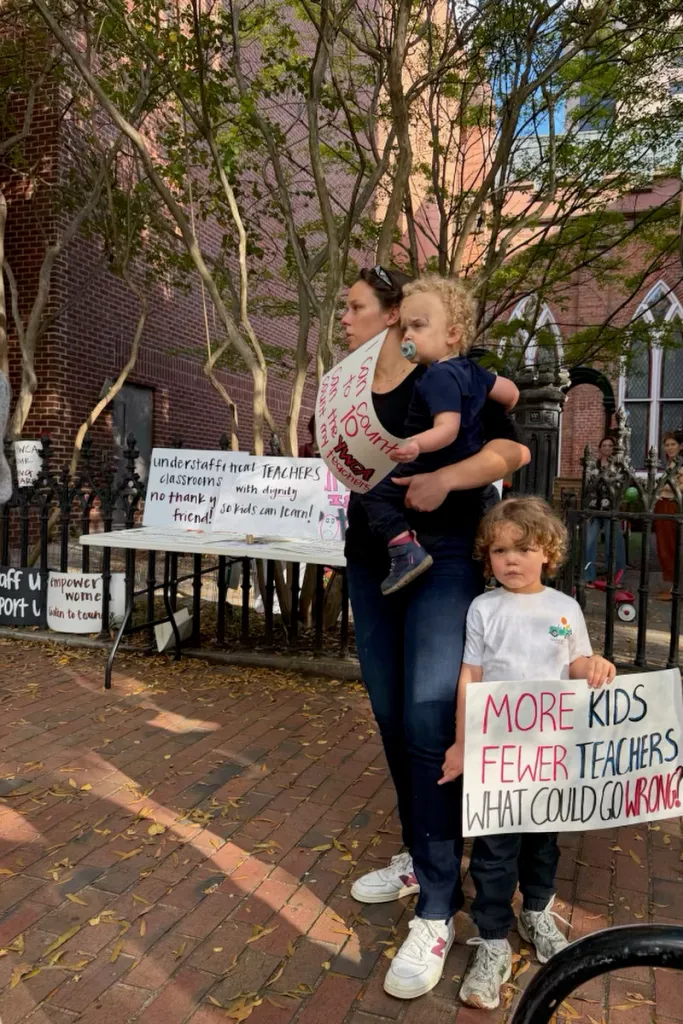
The summer months for school-aged kids are probably one of the best examples of America’s you-figure-it-out attitude toward most things related to caregiving.

Unlike in other countries, the United States summer programming experience is fragmented: You could book a private camp or one through your local YMCA, school district or church — all with different registration dates, waitlists and signup policies. Demand is often much higher than supply. And many of the options don’t run with the actual workday, which leaves parents responsible for brokering time with their employers. 

Cost has increasingly become a barrier for families looking to put their kids in summer activities, which now run about $2,400 to $6,000 per summer per kid on average. Only about half of children whose parents want them to have a structured summer experience are actually enrolled in summer camps or day camps, according to a report by the nonprofit Afterschool Alliance that surveyed 30,000 American families. For 38 percent of the families that are unable to enroll their kids, cost is the top factor. The other barriers are transportation challenges, not being able to find a program, not having programs available in their community, program hours that don’t meet parents’ needs and not enough spaces in the programs that are available. 

What all of this looks like in practice is a summer camp rat race that often begins at the start of the year. 

“Summer camp, similar to other childcare and education systems, has not kept up with the reality of most children being in families where all the parents are working, whether that’s a single parent working full time or whether it’s two parents working full time,” said Inimai Chettiar, the president of A Better Balance, a nonprofit that promotes workplace balance for women and caregivers. “This is a system from the previous generations where a lot of moms were staying home.” 

The result is that summer camp falls into the bucket of things Chettiar calls “home admin work.” 

“This is part of the invisible work that women do: not only having to figure out what camps to go to, what schools for the kids to go to, doing the research, going to the tours, comparing the different schools, figuring that out, figuring out the drop off, if you need to hire someone, or taking time out of work to go do it — all of this is falling on women,” she said. “The administration of this has exploded in terms of the burden on mothers.” 

Ahead of the summer break, The 19th spoke to five moms across the country about how they’re piecing together their kids summer plans — and critically, how they’re paying for them. 


Amanda Hambrick

  • New York City
  • Minister
  • Number of kids: 4
  • Summer cost: $14,250

During the last week of the summer, when most camps are closed and parents are left scrambling, Amanda Hambrick helps put on a one-week free camp focused on social justice for kids entering kindergarten to 8th grade. Their 50 spots are almost gone. 

For the rest of the time, she has a mix of activities to keep her four kids — 12-year-old twins, a 10-year-old and a 3-year-old — entertained during the eight weeks of New York City summer. 

Here’s the breakdown: 

  • She and her ex-husband will each take two weeks off of work, staggering their time: 10 days out of the PTO bucket each
  • One week of sleepaway camp for the twins and 10-year-old: $2,000
  • Four weeks of day camp for the twins at about $800 a week: $6,400
  • Two weeks of acting camp for her 10-year-old: $1,400
  • Two weeks of gymnastics camp for her 10-year-old: $1,750
  • Four weeks of part-time daycare for her 3-year-old: $1,200
  • Four weeks of a nanny to help with pickups: $1,500

The total: $14,250

By New York standards, that’s pretty affordable. Hambrick is also cutting costs by volunteering her time as a camp counselor at the sleepaway camp, and she’s going to be bringing her toddler with her to work some days a week. 

Hambrick said she’s always had to “figure out the summer Jenga,” a job that has often involved tapping into networks of moms to find the best camps and secure slots. Her recent divorce has made the labor of it that much more challenging. Schedules need to be ironed out even earlier in the year now. 

“It’s part of that invisible labor of actually getting it done and piecing it together, and a big part of that also is relationship building,” she said. “Moms just understand that you’re going to find out about affordable camps and fun camps and good camps through conversations and relationships that you have with people and with the community, and so that’s the way that I’ve been able to make our summers work so far throughout all my kids’ lives.”


Maddy Novich 

  • New York City
  • Associate professor of criminal justice
  • Number of kids: 3
  • Summer cost: $24,370

Years ago, when Maddy Novich was on a two-week trip to the Netherlands, a lightbulb went off for her and her husband. 

If they were back home in New York City, their 4-year-old would be in summer camp and they’d be having to navigate one of the most chaotic systems in the country. But what if they put him in a camp for a week while they were abroad? That way, she and her husband could have some time to do all the things their son didn’t want to do, like art museums. They looked it up on a whim and soon realized there were a lot of camp options. So they tried it — and he loved it. They tried it again the next year, then the next, then the next, each time extending the duration of their trips abroad and building summer camp into the experience no matter where they went. 

In Europe, where they usually go for the summer, signing up and finding summer camp “is much less crazy, it’s much less competitive, from my experience and the places that I’ve been to,” Novich said. It’s also typically more affordable compared to camps in New York, which easily run upwards of $800 to $1,000 a week

Novich vets the camps ahead of time by looking at reviews and ensuring they have English-speaking staff. Over time, she’s built relationships in places they’ve visited multiple times, like Amsterdam. 

Here’s how the cost broke down last year for nine weeks overseas with three kids, ages 12, 8 and 5: 

  • Two weeks of summer camp in Scotland for the two eldest: $2,000
  • One week of summer camp in Amsterdam for the youngest: Free because it was covered for them (cost is otherwise $350 a week)
  • A nanny to help for part of the summer: $3,000
  • Flights: $5,700
  • Other travel (trains, buses and rideshares): $3,500
  • Hotel stays: $750
  • Groceries (about comparable to what she spends in New York): $5,600
  • Eating out: $2,000
  • A trip to the emergency room when her daughter dislocated a toe: $107
  • Other miscellaneous costs: $893
  • Other kids’ activities (museums, aquariums, bounce houses): $820

The total: $24,370

What really unlocked this summer option for Novich was securing largely free housing through a platform called Home Exchange. An annual membership costs $235 and it allows them to swap homes at no cost with other families who want to come stay in New York. (Novich doesn’t pay the fee because she works with the company). Another plus: She swaps with families that also have kids, so they don’t have to worry about schlepping all the kid stuff they need — beds, cribs, high chairs, toys — overseas. Novich estimates they saved about $35,000 last year on housing alone. 

Of course, there are caveats, Novich said. Her frame of reference is New York, one of the most expensive summer camp markets in the country. And, because she has the summers off  through her work and her husband has a flexible tech job, they are able to go abroad. They travel extensively, so some of the costs are part of their summer budget. The family usually starts mapping their trips out a year in advance, and they share their journey on Instagram to more than 76,000 followers

“The response has overwhelmingly been very positive because it’s just encouraging people to think outside the box a little bit, and saying the way that the U.S. does it isn’t the only way,” Novich said. 

This summer will be their most ambitious yet: four different camps in Spain, Switzerland and Greece, and her two oldest kids are doing sleepaway camp in Switzerland for the first time. The entire family will be gone 11 weeks. 


LaQuitta Brown

  • Detroit
  • Certified nursing assistant 
  • Number of kids: 5, 2 school-age
  • Summer cost: $1,000

Summer camp options are already difficult enough to find — and when your child has a disability, the challenges compound. Last summer, LaQuitta Brown got lucky. 

She was able to enroll her 8-year-old son, who has autism, ADHD and an avoidant/restrictive food intake disorder, in a Detroit program that caters to children with disabilities. Her son, Kermari, was able to participate in Spanish-language immersion, dancing and cooking. 

This year, he’ll be back. The program starts in July and runs for five weeks, costing her about $700. (The family doesn’t qualify for subsidies to lower costs.) 

That means costs this year will include: 

  • Five weeks of summer camp: $700 
  • Extra hours with a caretaker in June before summer camp starts: $300

Her husband is already stretched as thin as possible — he works every day at an engine manufacturer— and her other school-age son, who is 14, will be working this summer for the first time (the rest of her children are in their 20s). So it’s up to her to bridge the time between now and the start of camp. Brown, a certified nursing assistant, had already stepped back from full-time work to take on only on-call shifts so that her schedule could be more responsive to her son’s needs. But she still plans to take on two to three more shifts a week to cover the cost of camp. She’s also attending a few free activities available around the city throughout the summer, plus upping his direct care services with a caretaker. Before Kermari got into summer camp, this is how she bridged the entire summer. 

All things considered, she said, it’s still a win because at least there is an option on the horizon that works for her family. When he first did the summer camp program last year, Kermari had an incredible experience. So Brown kept an eye on whether it was returning this year and signed up in April — as soon as she could. 

“When you have children that are socially and emotionally incapable of certain things, but you see them happy, you want to continue that at whatever cost it is and sacrifice whatever you need to sacrifice to make sure that you can bring that happiness back to them when they’re out in the world,” Brown said. 


Claire de Leon

  • Long Beach, California
  • Communications strategist
  • Number of kids: 2
  • Summer cost: $8,892

Claire de Leon started thinking about summer camp for her 5-year-old early this year. Pretty soon, there was a spreadsheet of math, reading and STEM and other camps they were considering. She was already too late for many of them. 

The slots filled up quickly and some of the more affordable options had dubious reviews online, with parents flagging safety concerns. So she started thinking more expansively about how to fill the summer months. That’s when she thought of Belgium. Her longtime best friend moved there with her family a couple of years ago, and de Leon promised to visit her every year. What if they made that trip in the summer? Their housing would be covered and the kids could play together.

So that’s the plan: Three-and-a-half weeks in Brussels, where de Leon will work remotely while her husband takes two weeks off. Then, when they’re back stateside, she and her friend will swap. Her friend’s family will come to California to stay with them for a month, and de Leon’s 5-year-old will go to five weeks of half-day camp in Long Beach, from 9 a.m to noon.  The family will also spend a week and a half in Seattle later in the summer with grandparents who will help take on some of the care while de Leon works. 

Here’s how it will shake out: 

  • Flights to Brussels: $2,120
  • An overnight train from Austria to Brussels: $400
  • Half-day camp in Long Beach for five weeks: $500
  • Full-time daycare for her 2-year-old: $1,770 a month, $5,310 for the whole summer
  • Flights to Seattle: $562 

All combined, it’s $8,892.

For her, easing the stress of summer planning meant getting really creative about what was possible within her family’s means and leveraging the relationships they had — both in the United States and out of it. 

“The more that I can approach it from not from a place of scarcity, but from a place of: What could be possible? What could we do? It really felt like it opened up these doors,” she said. “It sounds so odd to say, but thinking about going to Europe as a relatively affordable option for our very, very particular situation of having friends there was like, ‘We can do that?’ It just sounds to me like something someone else would do.” 


Meghan Hullinger

  • Marlinton, West Virginia
  • Outreach and community engagement
  • Number of kids: 4
  • Summer cost: $2,100–$2,550

In the pocket of rural West Virginia where Meghan Hullinger lives with her four kids, there is just one childcare center for the entire county. There are camps, but few of the families in this lower-income area can afford to put their kids in them. A two-week camp could run her $8,000. “I make $25,000 a year, so that’s not possible.”

In rural areas with few options, single moms like Hullinger are banding together to make it work. 

This summer, her 6-year-old will spend about a month in Florida with the girl’s father and grandmother. Her teenage daughters, ages 13 and 16, will spend the summer at home. And her 8-year-old will go to a free camp his school puts on from 8 a.m. to noon every weekday for six weeks. A friend will help her with pick-ups on Mondays and Tuesdays, and she’ll try to leave work early on Wednesdays and Thursdays, plus her 16-year-old can pitch in with childcare or she can put her son a couple weeks in the local daycare, which also takes older kids, for a couple of weeks. But that’s an extra $450 a month that she just doesn’t have right now.

Though her community of mom friends help each other, she sometimes has as many as eight kids in her house to feed — plus the extra gas to even get to the store at a time when gas prices are high. The nearest Walmart is an hour and 15 minutes away by car.

The costs add up:

  • Extra groceries in the summer months: $900
  • Drive to Florida and back to drop her daughter off: $700
  • Flight to bring her daughter home: $500
  • Six weeks of summer camp for her 8-year-old: Free
  • Extra daycare if needed: $450

Together, that’s about $2,100 if she doesn’t do daycare, or $2,550 with it. 

It frustrates her, she said, that it takes this much stitching together to get through three months out of the year. Families — read: mothers — are just expected to make it work. 

“We’re still back in that late 40s, early 50s supposition that women are at home all day with nothing better to do,”  she said. “We are still running our nation and our policies based upon the presumption of unpaid labor, and that’s just not a reality. It has not been a reality for so very long, and I don’t understand why we’re ignoring that as a nation.”

Need Support?

Find verified resources for reproductive healthcare, support services, and advocacy organizations.

Find Resources