What My First PGA Championship Taught Me About Golf’s Black History And Its Future

B002 By ESSENCE Editors · Updated May 28, 2026 Getting your Trinity Audio player ready… Prior to a few months ago, my knowledge of golf was limited to Tiger Woods, the Masters Tournament, the brothas from Eastside Golf , and a few social organizations based locally here in Washington, D.C .

What My First PGA Championship Taught Me About Golf’s Black History And Its Future
What My First PGA Championship Taught Me About Golf’s Black History And Its Future B002 By ESSENCE Editors ·Updated May 28, 2026 Getting your Trinity Audio player ready…

Prior to a few months ago, my knowledge of golf was limited to Tiger Woods, the Masters Tournament, the brothas from Eastside Golf, and a few social organizations based locally here in Washington, D.C.


But like any new hobby, a health obsession comes with it, and before you know it, I was attending my first PGA Championship at Aronimink Golf Club last week.

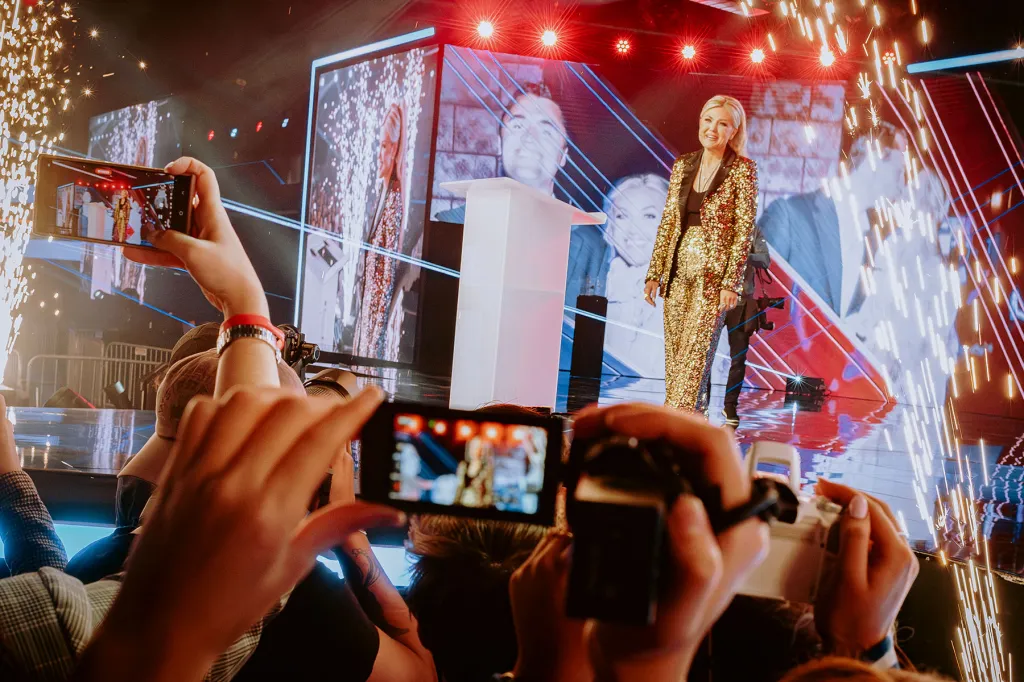
Aronimink Golf Club sits outside Philadelphia and the grounds are exactly as manicured and enormous as you’d expect. I was there with T-Mobile, who partners with the PGA Championship, and I spent the first hour just trying to get my bearings. The crowd skewed younger than I anticipated, and there were way more women than I thought there would be. It felt more “alive” than the golf I had in my head. What I didn’t find out until later was what this specific club’s history had to do with Black people and this sport.

Something I looked up after the fact, that I wish I had known walking in, is that this was not Aronimink’s first PGA Championship. The last time the tournament was held at this same club was 1962, and the reason it ended up there that year was not a good one. The PGA had a clause in its bylaws at the time that restricted membership to white golfers only. When pressure mounted on the organization to remove it, they didn’t. Instead, they moved the tournament, and Aronimink is where it landed. Charlie Sifford, the most talented Black golfer of that era, had been fighting for years just to be allowed to compete on the same courses as his white counterparts. The clause wasn’t dropped until 1961, and even after that, the barriers didn’t disappear so much as they shifted. Sifford eventually became the first Black golfer to earn a PGA Tour card and the first to be inducted into the World Golf Hall of Fame. He never played the Masters, and the sport made sure of that.

It honestly reframed everything I saw that day.

The racial diversity piece is still a work in progress, but the sport is pulling in new people in a way it hasn’t before. According to the National Golf Foundation, Black participation in golf has jumped 123 percent since 2020, and women account for roughly 60 percent of the net gain in new on-course golfers since 2019. Rob Smith, who runs digital for PGA of America, added that 48 million people engaged with golf in some form last year. And a lot of those new people found their way in the same way most of us find anything these days, through their phones, through YouTube, through a show on Netflix.

What My First PGA Championship Taught Me About Golf’s Black History And Its Future

The social media piece of this is bigger than it sounds. A few years ago the PGA started putting YouTube shows out from the practice range, with just a camera and a golf pro talking through warm-ups, and the comment section took on a life of its own. People were asking what a player was eating, what club he just switched to, and whether his shoes were available to buy. They didn’t even have anyone monitoring the comments at first. The comment sections were full of people who clearly weren’t lifelong golf fans, and they were showing up anyway, curious, engaged, and wanting more than what the broadcast was giving them.

A lot of that curiosity traces back to Full Swing, the Netflix show produced by Chad Mumm, who also produced Drive to Survive and, not for nothing, Happy Gilmore 2. The show works on people who have never cared about golf because, as Mumm put it, “you don’t have to really understand anything about golf to really care about these people.” It’s not about the sport, it’s about what it costs someone to keep showing up after years of falling short, and about the families on the sidelines with everything riding on someone else’s swing. During the Golf’s New Era panel at the PGA Championship, Mumm also brought up something that I think explains a lot of what’s happening right now, “When I was a kid in high school, being on the golf team was kind of being on the chess team. Now it’s cool.” 

LeBron James was live tweeting Nelly Korda winning a tournament earlier this year, and Steph Curry has been open about how much he plays. When people with that kind of cultural reach are spending their free time on golf and posting about it unprompted, the audience follows.

None of that erases what’s still missing at the top of the sport though. At the Players Championship earlier this year there were no Black golfers in the field. Only four Black players have held PGA Tour cards in this entire century. The recreational side of this is moving in the right direction and I don’t want to discount that. But the professional structure still demands a level of access and financial investment that has always been out of reach for most Black families and largely still is. Golf knows this, and the question of what it’s actually going to do about it is still being answered.

What I saw at Aronimink last week felt like part of that answer being worked out in real time. T-Mobile, which came in as the official 5G partner of the PGA Championship three years ago, has been less interested in visibility and more interested in actually solving problems. Aronimink is 100 years old with no fiber in the ground and 50,000 people on the property every single day of the championship. T-Mobile deployed over 60 AI-connected cameras across the course so the tournament app could show fans in real time where the longest lines were, where the crowds were thickest, where open seating was available. They also introduced an AI assistant in the app this year that can answer questions as you walk around, which as someone who spent a solid portion of last week unsure what she was looking at, felt genuinely useful. 

What My First PGA Championship Taught Me About Golf’s Black History And Its FutureB003

Amy Azzi, who runs sponsorships at T-Mobile, explained during the panel that when T-Mobile and PGA of America first sat down together, the conversation started with one question: what problems does connectivity actually solve for you? “We very quickly realized how explosive the growth was of this sport for young diverse audiences,” she said, “and just said, ‘We’re all in.'”

And based on what I experienced, I believed her. The technology and the spaces they set up was genuinely useful for someone like me, a person who showed up with no real frame of reference and needed the experience to make sense. Club Magenta, T-Mobile’s on-site space set up at the 15th green, was open to any T-Mobile member regardless of plan tier, you just had to show your app at the door and could bring two guests. It had open seating with a view of the course, a happy hour, merchandise, and a 5G putting green with real-time stroke analysis. And for an event of this size and prestige, it was surprisingly thoughtful about the regular fan experience.

I don’t know if I’m a golf golf person now. Maybe I am, actually now that I’ve officially attended a Masters tournament and a PGA Championship. What I do know is that I understand something about this moment the sport is in that I didn’t understand before last week. Golf is working to become something different than what it has always been, and from what I saw last week, some of that work is genuine. And it’s happening at Aronimink, of all places. I don’t think you can fully appreciate what golf is trying to become without knowing what it has been.

The post What My First PGA Championship Taught Me About Golf’s Black History And Its Future appeared first on Essence.

Need Support?

Find verified resources for reproductive healthcare, support services, and advocacy organizations.

Find Resources