The key arguments in the birthright citizenship case

On April 1, the Supreme Court will hear oral arguments in one of the highest-profile cases of the 2025-26 term – and indeed, one of the biggest cases in several […] The post The key arguments in the birthright citizenship case appeared first on SCOTUSblog .
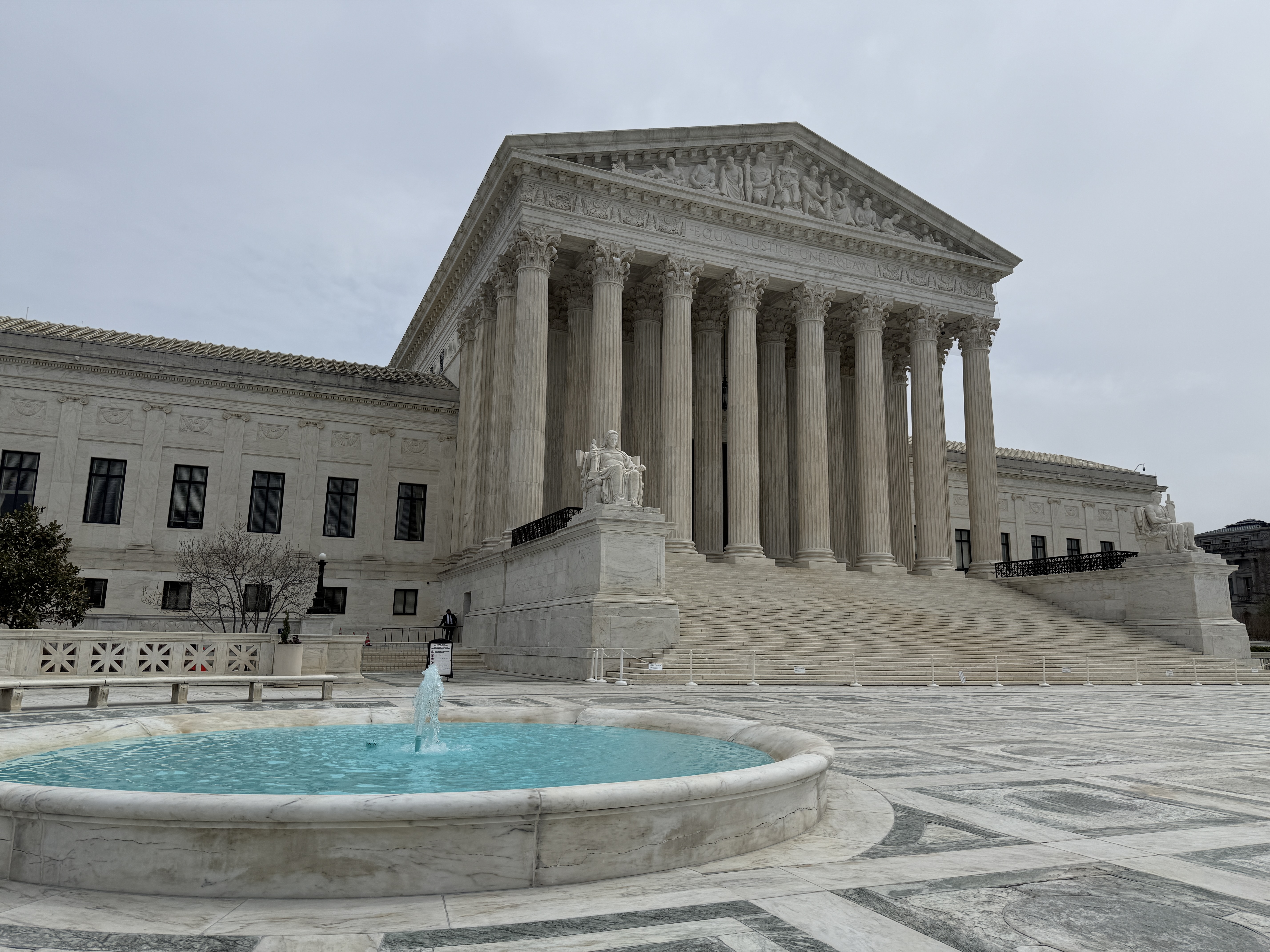
The key arguments in the birthright citizenship case

On April 1, the Supreme Court will hear oral arguments in one of the highest-profile cases of the 2025-26 term – and indeed, one of the biggest cases in several years. Trump v. Barbara is a challenge to President Donald Trump’s January 2025 executive order seeking to end birthright citizenship. All of the lower courts that have weighed in so far have ruled that the order is unconstitutional, but the Trump administration contends that those rulings – as well as the longstanding view that virtually everyone born in the United States is entitled to U.S. citizenship – are based on a fundamental misunderstanding of the Constitution. The challengers counter that the Trump administration “is asking for nothing less than a remaking of our Nation’s constitutional foundations” – one that “would cast a shadow over the citizenship of millions upon millions of Americans, going back generations.”

The constitutional provision at the center of the case, known as the citizenship clause, is part of the 14th Amendment, which was added to the Constitution in 1868. The clause confers citizenship on anyone “born … in the United States, and subject to the jurisdiction thereof.” It was intended to overrule the Supreme Court’s notorious 1857 decision in Dred Scott v. Sandford, holding that a Black person whose ancestors were brought to this country and sold as enslaved persons was not entitled to any protection from the federal courts because he was not a U.S. citizen.

On Jan, 20, 2025, after he was sworn into office for a second term, Trump issued the executive order ending birthright citizenship. Beginning in 30 days, the order indicated, babies born in the United States will not be automatically entitled to citizenship if their parents are in this country either illegally or temporarily.

Trump’s order has never gone into effect, as challenges to it were filed almost immediately, and several federal judges around the country temporarily barred the government from implementing the order throughout the country while litigation over the order’s constitutionality continued. The administration came to the Supreme Court in March of last year, asking the justices to put those rulings on hold, but it did not ask the justices to weigh in on whether Trump’s efforts to end birthright citizenship violated either the Constitution or federal law. Instead, in Trump v. CASA, the administration asked the court to prohibit lower-court judges from issuing what are known as universal injunctions to block enforcement of orders like Trump’s anywhere in the country.

By a vote of 6-3, the Supreme Court rejected the concept of universal or nationwide injunctions. Writing for the majority, Justice Amy Coney Barrett stressed, among other things, that because there was no history of courts providing similar remedies in early English and U.S. history, modern lower courts therefore do not have the power to issue universal injunctions.

In the wake of the Supreme Court’s decision, challenges to the merits of the executive order continued in the lower courts. In the case now before the court, U.S. District Judge Joseph Laplante on July 10 issued a preliminary injunction that barred the Trump administration from enforcing the executive order against a class of babies born after Feb. 20, 2025, who are or would be denied U.S. citizenship by Trump’s order. Laplante concluded “that the Executive Order likely ‘contradicts the text of the Fourteenth Amendment and the century-old untouched precedent that interprets it.’”

In its brief on the merits, the Trump administration insists that the executive order simply “restores the original meaning” of the citizenship clause. That clause, writes U.S. Solicitor General D. John Sauer, was enacted to overrule Dred Scott and give citizenship to formerly enslaved people and their children, rather than to “the children of aliens who are temporarily present in the United States or … illegal aliens.” In the years that followed the adoption of the 14th Amendment, Sauer said, the court twice acknowledged the limited purpose of the citizenship clause. First, in the Slaughter-House Cases in 1873,  the court “recognized that the Amendment’s ‘one pervading purpose’ was ‘the freedom of the slave race’ and ‘the security and firm establishment of that freedom.’” And just over a decade after that, the court in Elk v. Wilkins indicated that the clause’s primary purpose “was to settle ‘the citizenship of free[d] [slaves].’”

The Trump administration also contends that the executive order’s limitations on birthright citizenship are consistent with the rules used in early English and U.S. history, under which children were entitled to citizenship only if they were born within the allegiance of the government – that is, owing the government a duty of support and loyalty.

The administration also cites the Supreme Court’s 1898 decision in the case of Wong Kim Ark, who was born in San Francisco to parents of Chinese descent. When he returned to the United States from a visit to China in 1895, immigration officials would not allow him to enter the country on the ground that he was not a U.S. citizen.

A majority of the Supreme Court agreed with Wong Kim Ark that he was a U.S. citizen. Writing for the majority, Justice Horace Gray explained that although the “main purpose” of the 14th Amendment had been to establish the citizenship of Black people, including former enslaved persons born in the United States, the amendment applies more broadly and is not restricted “by color or race.” Instead, he wrote, the amendment “affirms the ancient and fundamental rule of citizenship by birth within the territory, in the allegiance and under the protection of the country, including all children here born of resident aliens.”

There have historically been only a few exceptions to that general rule, Gray continued – for example, the children of hostile enemies who are occupying the country, and the children of foreign diplomats, as well as (until 1924) some Native Americans.

The citizenship clause, the challengers say, “drew on and reaffirmed a centuries-old, common-law tradition of citizenship by virtue of birth, rather than parentage.” In early English law, they write, “children born to ordinary foreign nationals were subjects” of the king, whether or not their parents lived permanently in England. And in 1844, a New York court applied that same rule, holding that a child born in New York to Irish parents living temporarily in the United States was a U.S. citizen.

Much of the debate surrounding the citizenship clause focuses not only on history and precedent but on the text itself, and in particular, on its requirement that, to qualify for birthright citizenship, a child be not only born in the United States but also “subject to the jurisdiction thereof.”

The Trump administration argues that to be “subject to the jurisdiction” of the United States, you must be “completely subject” to its “political jurisdiction,” which means that you must owe it “direct and immediate allegiance” and receive “protection” from it. The children of U.S. citizens and formerly enslaved persons meet that test, Sauer writes, as do the children of noncitizens “who ‘have a permanent domicile’” – that is, a permanent home, where they intend to stay indefinitely – “and residence in the United States.” But the children of noncitizens “who are domiciled elsewhere, and are only temporarily present in the United States, owe primary allegiance to their parents’ home countries, not the United States.” The same rationale applies to children of undocumented immigrants. Indeed, Sauer says, those children “do not owe primary allegiance to the United States by virtue of domicile, for illegal aliens lack the legal capacity to establish domicile here.”

The challengers counter that if the drafters of the 14th Amendment had intended to go against the existing practice of granting citizenship to all babies born in the United States in favor of giving citizenship only to the children of parents who make their home permanently in the United States, “they would have said so.” But in any event, the challengers continue, “undocumented immigrants are domiciled in this country: They reside here, with ‘an intention to remain.’”

The Trump administration offers several policy arguments to support the executive order. Among other things, Sauer tells the justices, the prevailing “misinterpretation” of the citizenship clause has provided a “powerful[]” incentive for women to “travel to the United States solely to acquire citizenship for their children.”

The challengers push back, calling the rate of “birth tourism” “marginal.” But even if it were more than that, they say, there are solutions that are less drastic than eliminating birthright citizenship altogether – for example, “as the government acknowledges, federal regulations already prohibit issuance of tourist visas ‘for the primary purpose of obtaining U.S. citizenship for a child by giving birth in the United States.’”

Finally, the challengers contend that the executive order is invalid for the separate reason that it violates a federal immigration law, 8 U.S.C. § 1401, providing that anyone “born in the United States, and subject to the jurisdiction thereof” is a U.S. citizen. They say that when the statute was first passed in 1940 and then reenacted in 1952, Congress would have understood that the phrase “subject to the jurisdiction thereof” – which mirrors the text of the citizenship clause – incorporated the prevailing practice that virtually everyone born in the United States is automatically a U.S. citizen.

The Trump administration insists that to interpret the statute, courts should look at what it “actually means, not what Congress thought it meant in 1940 or 1952.” When the phrase “subject to the jurisdiction thereof” was “transplant[ed]” from the 14th Amendment to the statute, Sauer emphasizes, it brought with it “the meaning that the phrase carries in the Constitution” – which, the government has argued, does not confer automatic citizenship on the children of undocumented immigrants and temporary visitors.

A decision in the case is expected by late June or early July.

The post The key arguments in the birthright citizenship case appeared first on SCOTUSblog.

Need Support?

Find verified resources for reproductive healthcare, support services, and advocacy organizations.

Find Resources