In the last episode of my podcast B*tch, Listen, I mused about a problem I can’t stop thinking about: Online progressives have built the most informed progressive public in U.S. history and it has not translated into any form of power or institutional change. Not even close.
Anyone can explain anything to anyone now. That’s new. Twenty years ago if you wanted to understand how the Federalist Society was reshaping the federal judiciary in alignment with a Christofascist agenda, you needed a law degree or to browse a very specific corner of the internet.
But now we are a nation of content creators with tiny microphones who are explaining everything and anything under the sun. When it comes to trying to make heads or tails of what the Supreme Court is doing, you don’t need a law degree. You just need a phone and 15 minutes.
The information is everywhere. The podcasts, the newsletters, the Instagram carousels breaking down Supreme Court decisions in eight slides—everywhere.
And we are still losing. Badly. Across the board. Because all the education in the world isn’t a replacement for actual power.
(Listen: We Did the Reading. Fascism Came Anyway)
I’ve been doing this work for 12 years. I have explained abortion jurisprudence in every format that exists. I have been on panels and podcasts and Twitter.
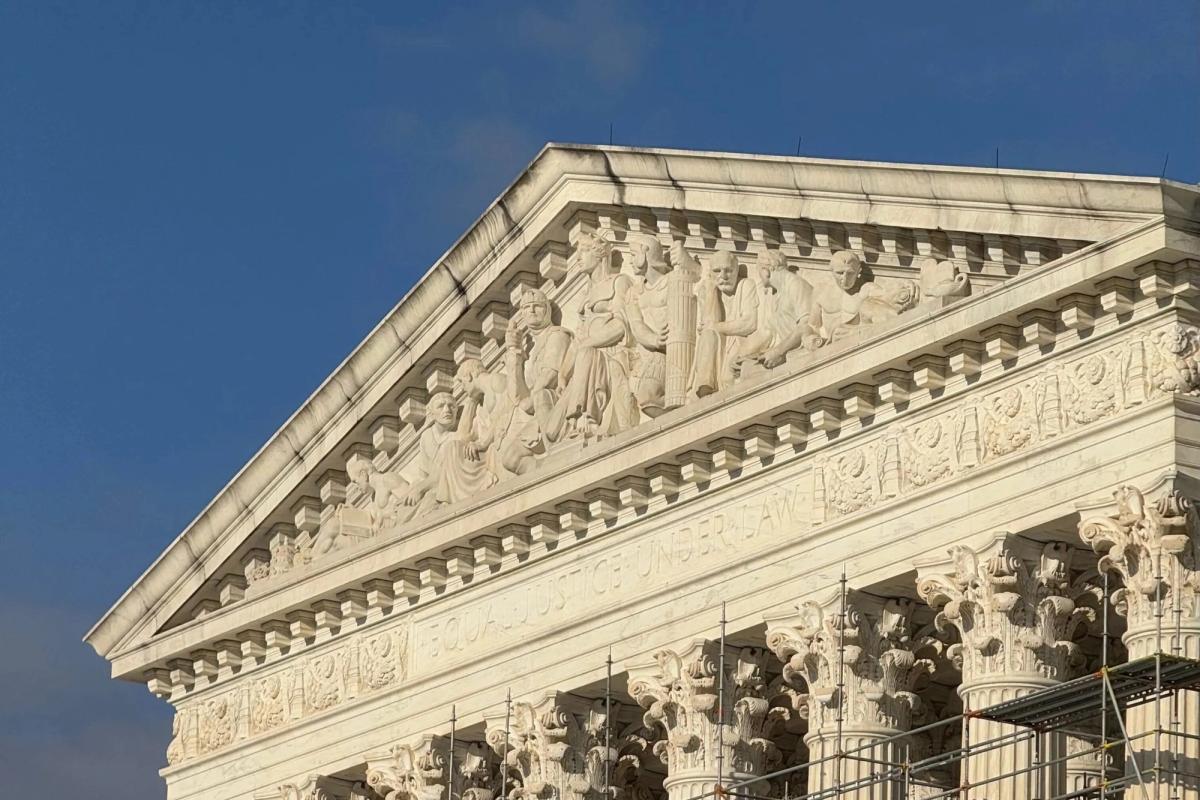
Roe fell anyway. And voting rights have been slowly dismantled, with the Supreme Court set to stick the last knife in the belly of the Voting Rights Act later this term in Louisiana v. Callais. The Court that is supposed to interpret the Constitution is openly pursuing a political agenda, and a significant portion of the country either doesn’t know or can’t figure out what to do about it.
I don’t think the problem is that progressives aren’t learning. I think they are learning more than they ever have. I think the problem is that we have confused the classroom for the whole project. We built an incredible apparatus for producing informed people and called it a movement. Somewhere along the way awareness became a substitute for power instead of a precursor to it.
The right hasn’t made that mistake. The Federalist Society doesn’t just educate lawyers—it has built a pipeline that turned legal education into judicial appointments into a Supreme Court supermajority.
It has treated the classroom as the beginning of something, not the end. The beginning was indoctrination in the classroom. The end was a seat on a federal court of appeals. And in the middle were networking events where young conservative lawyers hobknob with Washington’s conservative elite intent on molding those lawyers in conservatism’s image.
The left built the American Constitution Society in 2001 as an explicit answer to that pipeline. The ACS still exists, but it never got the funding or coordination the Federalist Society did. Instead, it has become a networking organization for progressive lawyers instead of an institution that can counter the Federalist Society’s stranglehold on the federal judiciary.
Instead of building infrastructure for power and then funding that power, think about what the left actually built instead. Beyond ACS conferences, there’s Netroots Nation, where progressive activists confer with each other. Even SXSW has become a kind of left-leaning hub. These are gatherings where smart progressive people sit on panels, talk to each other about the problems, and fly home.
I’ve been to these conferences. I’ve been on those panels. They are valuable in the movement for social justice. But they are also, fundamentally, a way of getting the message out to people who already agree with you—of connecting progressive organizers and media with other progressive organizers and media.
But the right didn’t get where they are by just holding meetings to deliberate about war. They were creating soldiers to fight it. Lawyers who came out of the Federalist Society pipeline knew exactly what their assignment was, which courts to target, which cases to bring, and which judges to cultivate.
Why haven’t progressives successfully done that? What needs to happen for the blue donor class to get on board with court reform? Because the people already know. At least that’s what spending my mornings on Bluesky have taught me. People know the Supreme Court is captured. They know what court reform would require: Expansion. Term limits. Jurisdiction stripping.
There are advocacy groups like Demand Justice and Fix the Court that are pushing for court reform. They do real work. Important work.
But there’s a difference between organizations that advocate for court reform and a constituency that creates electoral consequences for politicians who ignore it.
Together, we make reproductive justice visible.
Rewire News Group is a reader-supported, independent nonprofit newsroom. Membership keeps this reporting accessible to all.
The NAACP didn’t just educate people about civil rights—it made it politically costly to oppose them. In 1930, for example, they launched a grassroots campaign against President Herbert Hoover’s Supreme Court nominee John J. Parker, a man known for opposing Black enfranchisement.
The NAACP called on its members to contact senators and threaten electoral consequences directly as opposed to simply lobbying them. That killed the nomination, according to the Walter White Project, a project documenting the work of the former NAACP leader.
No Democrat has lost a primary because they refused to support court expansion. No senator is afraid of a court-reform constituency the way they’re afraid of the gun lobby or AIPAC. That’s got to at least partly explain why Democrats won’t touch court reform—at least not in any meaningful way.
In 2021, Biden convened a commission to look at court reform, including the possibility of expanding the Supreme Court. In a 288-page report, the commission came to the conclusion that reforms that would actually unfuck the courts would be too partisan—as if the current state of Supreme Court affairs isn’t nakedly partisan.
Democrats aren’t against court reform. They’re for reforms that leave the Supreme Court exactly as it is. But as Elie Mystal of The Nation pointed out way back in 2020, there will be no progressive gains if the Supreme Court remains exactly as it is.
Mystal then proceeded to suggest a court expansion that would involve adding 20 seats to the judiciary, arguing that this is the only way to dilute the ideological capture of the Federalist society-appointed judges. It sounds like a provocation, but it isn’t. It’s a sensible response to the realization that weak reforms won’t get progressive legislation that improves people’s lives passed.
(Listen:The Constitution: A Scam by Rich White Men, for Rich White Men, with Elie Mystal)
Term limits sound serious until you realize nobody is grandfathering out the six Supreme Court justices who already got there through a 40-year influence operation.
An ethics code sounds serious until you ask what happens when Clarence Thomas ignores it. The answer is nothing. As of 2023, Thomas has been bound by a code of ethics, but that code of ethics is decorative because the Supreme Court has no way to enforce it. And neither does Congress. Because what can be done if Thomas continues receiving perks from his conservative donors, one of whom has a Nazi fetish?
Impeachment? In your dreams.
The only Supreme Court justice ever impeached is a guy named Samuel Chase—and that was 1804. The Senate acquitted him. Lawmakers have not tried to remove a justice since.
Which brings us to what Democrats have been doing in this century. The political party that ran on abortion in 2020, won, and then did nothing to protect reproductive rights is the same party whose president watched six unelected lawyers dismantle 50 years of precedent.
His response: issuing a toothless executive order purporting to “protect medication abortion access” with no action steps on how that was actually going to happen. (Jessica Mason Pieklo and I covered this on Boom! Lawyered back in 2022. We were not impressed.)
(Listen: Biden Finally Did Something About Abortion! Or Did He?)
The people are ahead of the politicians when it comes to court reform. That’s not nothing, but it’s also not power—not yet. And the gap between what people know needs to happen and what they’re able to make happen is exactly what I keep coming back to.
I’m going to explore this problem with online educator Blair Imani in an upcoming episode of B*tch, Listen on April 23. (subscribe here)
Extremely online progressives have more microphones than ever. (And, yes, they’re tinier than ever.) And every day, countless content creators pick them up to explain politics and policies to their audiences. One would think all that talking would translate into some sort of power: Power to keep the government out of our private lives, out of our health care decisions.
But the truth is, we have less power than we did 50 years ago. At least in 1974 there was a legal right to abortion. Now you can get thrown in jail for looking an abortion pill in the eye.
I don’t have a clean answer for why more education hasn’t led to more power. But I think it starts with being honest that education and power are not the same thing, and that focusing on one without building the other is how you end up exactly where we are.
The post Court Reform Is the Only Real Exit from Today’s Political Hellscape appeared first on Rewire News Group.