For these Black Muslim women, Ramadan is about faith, tradition and sisterhood

Around 5 a.m., Detroit is still dark and Zarina El-Amin is already up, moving with purpose.  Ramadan, she said, makes motherhood feel quieter on the inside. Home becomes the first masjid of the day — soft footsteps, warm light, a clock watched closely, and a family waking up together because the fas...

For these Black Muslim women, Ramadan is about faith, tradition and sisterhood


Around 5 a.m., Detroit is still dark and Zarina El-Amin is already up, moving with purpose. 

Ramadan, she said, makes motherhood feel quieter on the inside. Home becomes the first masjid of the day — soft footsteps, warm light, a clock watched closely, and a family waking up together because the fast is set to begin as soon as dawn breaks.

The mother of three is among 1.8 billion practicing Muslims — almost one-quarter of the world’s population — participating in the Islamic holy month that commemorates the revelation of the Quran to the Prophet Muhammad.

From sunrise to sunset is the period of ritual fasting. Nothing to eat. Nothing to drink.

Muslim women can face unique challenges juggling motherhood, sisterhood and womanhood while observing a holy time that is as physically, mentally and spiritually demanding as Ramadan. “All right, so today, for example, I woke up at 5:15 this morning,” said El-Amin, a Detroit cultural anthropologist and founder of Legacy Storykeepers. “And I woke the kids up at the same time to get suhoorr,” the pre-dawn meal that precedes the day’s fast.

She serves her two sons, 19 and 14, and her 12-year-old daughter morning meals that are intentionally simple.

“I don’t do heavy meals in the morning,” El-Amin said. “So typically, I’m just drinking a protein drink, I take my vitamins, and I drink lots of water. That’s what I do early in the morning for my suhoor and I make sure the kids have something sustainable, too. Like, they love dates.”

For Muslims, dates carry meaning beyond nutrition. Eating them connects back to the practices of Prophet Muhammad, especially during fasting.

El-Amin calls Detroit “one of the meccas for the Black Muslim movement,” then pulls that history into something intimate: faith passed down through family, inherited like a last name.

“I am the daughter of converts to Islam,” she said. “My mother and my father both converted to Islam in the 70s, separately. They met at the mosque, they got married, and then my brother and I were raised in Islam. So, Islam has been a part of my upbringing and a part of my identity since birth.”

That upbringing came with infrastructure — a community with enough strength to raise children within it.

“My parents were also very active in the Detroit Muslim community,” El-Amin said. “They were founders of one of the largest African-American mosques in the city, called the Muslim Center. What that meant for me as a kid was that that place was my second home.”

“And growing up Muslim, for me, was easy,” she added. “I had an extended family, a spiritual family. I had aunties. I had uncles. I had cousins, family that we chose and created.”

“I think that my parents actually gave me a gift, raising me within this community,” she said.

Now that gift lives in her own house, too. Ramadan isn’t only observed there. It’s taught — through repetition, rhythm and the steady returning to a practice until it becomes identity. 

“What came first for me, centered around Ramadan in particular, was that Ramadan is a miracle,” she said. “Like, how do you get over a billion people around the world to be like, I’m not going to eat today and be happy about it. And like, I’m going to stand up in line and pray for hours and be happy about it. Like, that is a miracle in itself.”

“And when we’re in this society, though, like America, where it is an anomaly, not everybody in a society is doing it,” she said, “but you choose to do it for your own spiritual training, you choose to do it for the cleansing of your own soul when nobody is watching you.”

“You can do whatever,” she continued. “But you’re choosing to try to cleanse your heart. Do good. Just the same way, you have to clean out your refrigerator, we have to cleanse our souls on the deep level every so often and that is what Ramadan does for us.”

She wants her children to take in the inner training — discipline that doesn’t need an audience.

“Being Muslim in a non-Muslim society, you have to be very strong with your own sense of self, because other people will try to tear you down all the time,” El-Amin said. “They’ll press and continue to say things like, ‘why you ain’t eating and you can’t drink anything either? Why would you do that?’ ”

Inside her home, that grounding shows up through her daughter. El-Amin said the 12-year-old planned a potluck iftar, the meal that breaks the fast, with her friend girls from school — bringing Ramadan into her own world and turning fasting into community by choice.

“For me, Black Muslims, like we’re unapologetic with who we are, what we’re going to do, and we have to be strong because we have a lot of people that just simply don’t want to understand too,” she said.

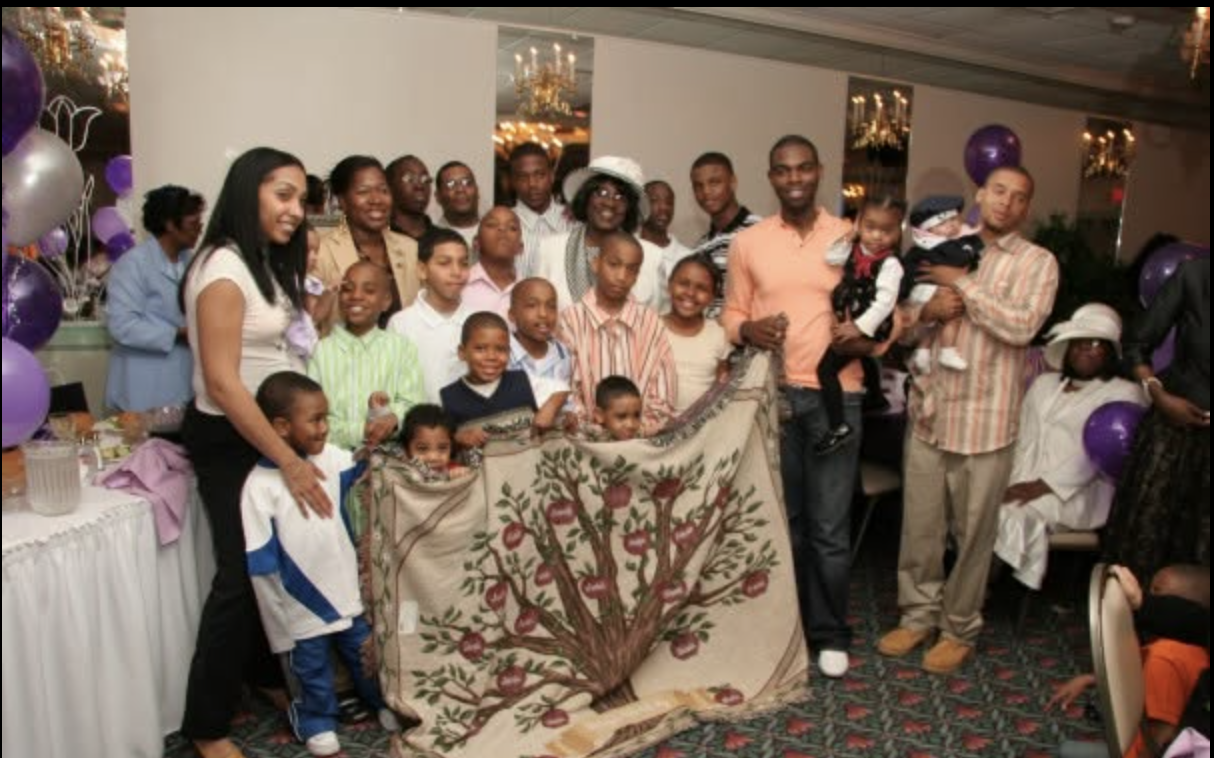
A family of four smiles at the camera.
Zarina El-Amin and her three children (Courtesy Zarina El-Amin)

El-Amin remembers talking with an Egyptian man who moved to the United States and couldn’t imagine fasting when the city stays open and the day doesn’t bend.

“He was like, ‘Yeah, but the McDonald’s and all the restaurants are still open,’” she said. “He was like, ‘In Egypt, everything is closed during the day. Everything opens at night because everybody is fasting, but here, everything is still open.’”

El-Amin’s answer stayed direct.

“We don’t fast for the city. We don’t fast for society. We’re fasting for ourselves,” she said. “So it doesn’t matter how many restaurants are open. If God said fast now from dawn to sunset, I’m going fast now from dawn to sunset, and that’s just it.”

El-Amin’s Ramadan is inheritance.

Janae Wilson’s begins somewhere else: sisterhood.

She can still see her first Ramadan — alone in an apartment she was proud to have, watching evening come like it always does, and realizing nobody was coming over.

“I did it alone. I was completely alone when I broke my fast every night,” she said.

She stayed home on purpose, she said. Not because she felt estranged from the Muslim community, but because she was still carrying what came before it — another religious environment that left her guarded. She wanted to be sure of herself. She wanted to know what she believed without borrowing somebody else’s version.

“My first Ramadan was during the summer,” Wilson said. “So in the summer, you fast 16 hours and I remember just being in my apartment and feeling like, man, this is hard.”

Her entry into Islam came through instability.

“College was very, very hard for me,” she said. “For a lot of reasons, going through grief, going through financial challenges, going through homelessness at times, it was rough.”

She worked full-time through school because that expectation arrived early.

“I had to work full time through my entire college experience because, you know, with a more traditional Black family, you get put out at 18,” Wilson said.

Couch surfing became routine. One of those couches belonged to a Muslim friend. That’s where faith shifted from an idea to something she could reach for. She remembers being at her friend’s family home when her friend’s mom asked a question that opened a door.

“We were at her family home and her mom asked me if I’ve prayed,” Wilson said. “Then she said that, ‘God is very powerful and there is nothing that he can’t do. Muslims, we believe God is the most merciful.’”

“I tried to pray and I just asked for clarity,” she said. “I asked for guidance in such a hard moment where it’s like, I don’t see how I personally am ever going to get to a point of stability.”

Even then, she didn’t rush. She studied, read and tried to learn enough to feel ready. She kept returning to a bookstore in Detroit, picking up more books, circling the decision.

“I would go into this bookshop and I would get new books and keep trying to learn more and more because I’m a bit of a perfectionist,” she said.

Then the bookshop owner said what she needed to hear.

“He’s like, well, tomorrow is never promised, right? So if you really are seriously considering it, you should do it now,” Wilson said.

“And I did it right there in that bookstore,” she said. “We call it the Shahada, which is a proclamation of faith. I took my Shahada right there. I haven’t looked back since.”

Conversion didn’t soften everything. With her family, she said, it made things harder before they improved.

“My biggest struggle personally is acceptance for my family,” Wilson said. “There were moments where it’s like, okay, you want to be Muslim, cool but don’t come around the family.”

She said she isn’t searching anymore. She’s rooted — and Ramadan looks different when you’re held by community.

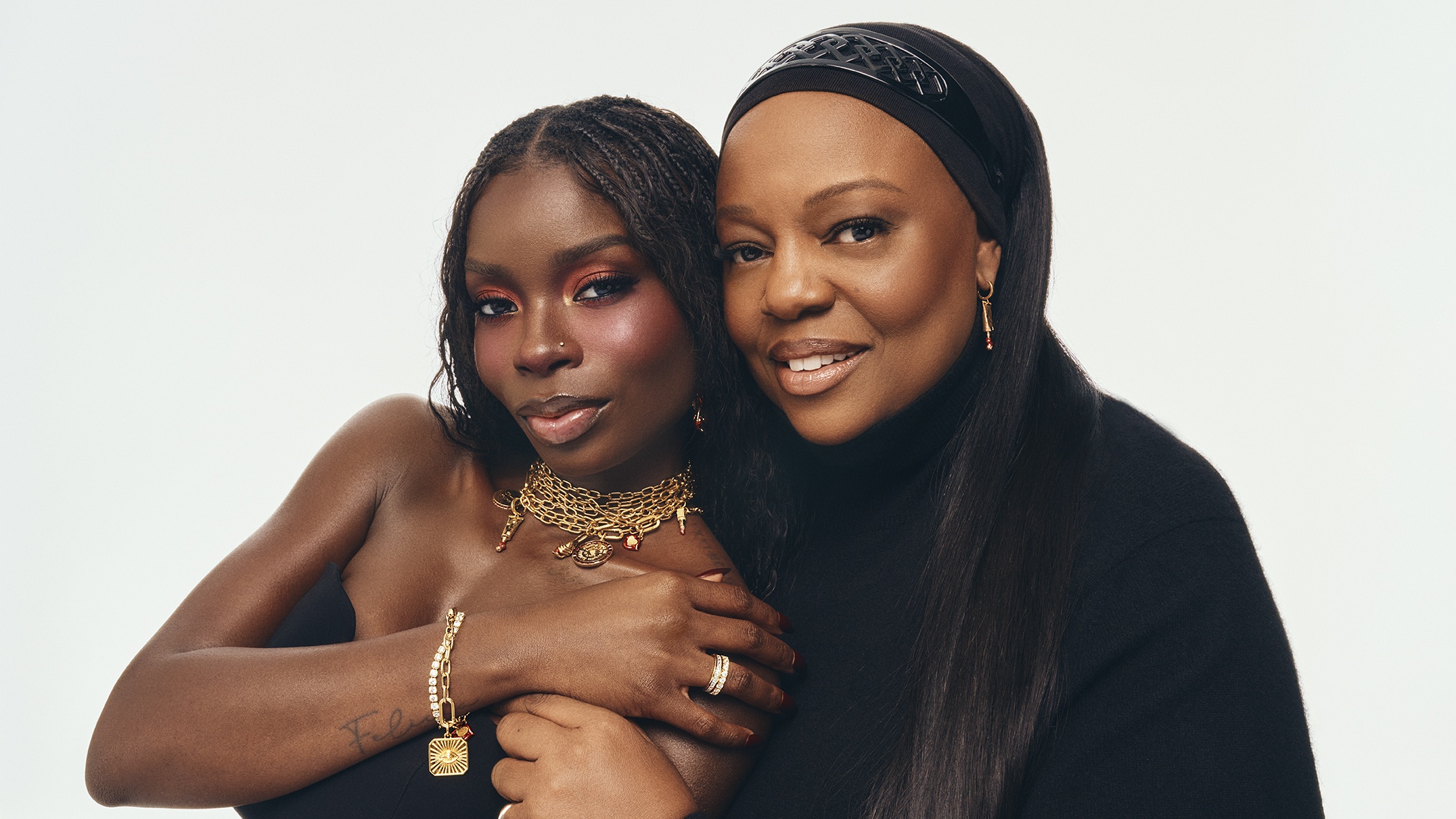
A woman smiles into the camera.
Janae Wilson (Courtesy Janae Wilson)

“The thing that I would say Ramadan brings to me more than anything else is also a sense of community,” she said. “Being able to be so active in our communities, especially the Black community specifically, is so special.”

“I am a part of a beautiful group,” she added. “We call ourselves ‘The Sister Girls.’ We’re majority young, Black Muslim women and we all have different backgrounds, but we all come together and it’s so beautiful to be able to just relate on that level.”

Before Ramadan this year, she hosted a gathering to bring women into the month together.

“It was about 30 women, diverse, but mostly Black women,” Wilson said. “Just coming together and talking about ‘what do we want?’ ‘What does Ramadan even mean to us?’”

It’s the same question she asked during her first Ramadan, but the place she asks from has changed. Her daily life has changed too — down to the workplace.

Wilson is the deputy director of Dream of Detroit, a Muslim-led nonprofit focused on revitalization on the city’s westside through community organizing, housing and economic development.

“This is my first Ramadan where I’m actually working at an organization that is Muslim-led,” she said. “And that has been really, really different for me.”

“This is the first year where I wake up and I feel at peace,” Wilson said. “I don’t feel a sense of rushing. I don’t feel a sense of having to explain myself to anybody. Everyone understands.”

For Wilson, the shift is simple: she is no longer breaking her fast alone.

Tasleem Jamila Firdausee arrives at Ramadan from a different doorway. 

“I get up at about 4 AM or 4:30 AM,” she said. “And I go into my prayer room and I pray.”

Ramadan, for her, is womanhood lived on purpose: tending to the body, checking the spirit, tightening the character, returning to God before returning to everybody else.

“It’s the ultimate detox for me as a Muslim,” said Firdausee, an interdisciplinary scholar, multidisciplinary artist and holistic health coach. “It’s like not only am I cleansing my body, but my spirit, my actions, my character are all elevated to be a reflection of how Allah wants me to be in this life.”

She called it armor.

“To me, it’s a time to put on my spiritual warrior outfit and armor,” she said, “and to go deep within the holy Quran, recalibrate, and renew my intentions.”

Her sense of self traces back to 18, coming of age on Chicago’s South Side in what she described as a socially conscious Black environment.

“I grew up in a very socially conscious Black area of Chicago,” she said. “So I grew up really seeing Black people just in every position in the most beautiful way.”

She said hip-hop introduced her to Islam before any formal introduction could.

“I was introduced to Islam really through music, through hip-hop music,” she said. “Rakim, Poor Righteous Teachers, Public Enemy, they would mention Islam in their lyrics. And so it just really sparked me to say, OK, what is this?”

Now, she holds that early awareness with steadiness. National division does not surprise her.

“As long as I’ve been Black on this earth,” she said, “it’s always been a divide.”

So Ramadan becomes her return — not away from the world, but back into herself. The fasting. The prayer. The early rise. The inward check. A woman keeping her footing through worship and teaching other women to do the same through the life she’s built: discipline that isn’t loud, faith that isn’t fragile and womanhood that stands tall before dawn.

By the end of the month, the rhythm becomes muscle memory.

That’s where Ramadan sits across these three lives: a mother waking her children early enough to carry the day, a young woman building a sister circle so nobody breaks fast alone and a prayer room lit before 4:30 a.m., again, because womanhood still has to be held steady before the world starts pulling.

Need Support?

Find verified resources for reproductive healthcare, support services, and advocacy organizations.

Find Resources