‘I will not stop fighting for safe abortion until no woman or girl is left behind’
A tragic encounter early in her nursing career set Estrela Góia on the path to becoming a dedicated abortion champion who partners with Ipas Mozambique to train providers and expand access.
“I witnessed a lot of maternal deaths as a young nurse, and many were due to unsafe abortions,” says the maternal and child health-care manager with the Provincial Directorate of Health in Mozambique. “I remember once when a young woman came to our clinic with an incomplete abortion. She was desperate and afraid, but unfortunately, it was too late to reverse the damage caused by a back-alley procedure. Despite our best efforts, we couldn’t save her. She died a painful, needless and preventable death, which deeply saddened me.”
Even though Mozambique has one of Africa’s most liberal abortion laws, people seeking abortion care still face many obstacles, with the country ranking one of the highest in maternal deaths in sub-Saharan Africa. For every 100,000 live births in 2024, 223 women died because of problems related to pregnancy or birth, according to the World Health Organization.
Based in Zambezia, one of the most populous provinces of Mozambique, which remains vulnerable to climate change and socio-economic problems, Góia has spent many years championing safe abortion in her community.
“Caring is an inextricable part of my nature, and part of this means ensuring every woman has a right to make decisions about her own body and access safe abortion care,” she says. “Protecting women’s sexual and reproductive health is part of how I express this care.”
Here, Góia speaks about her work as an abortion champion.
Photography and videography by Bruno Pedro
What is your current role?
Góia: I’m the focal point for sexual and reproductive health and rights at the Provincial Directorate of Health. Additionally, for the last seven years, I’ve worked as the provincial trainer on comprehensive abortion care, thanks to Ipas Mozambique, which first offered me training on this. I travel around the province to provide abortion care support and training.
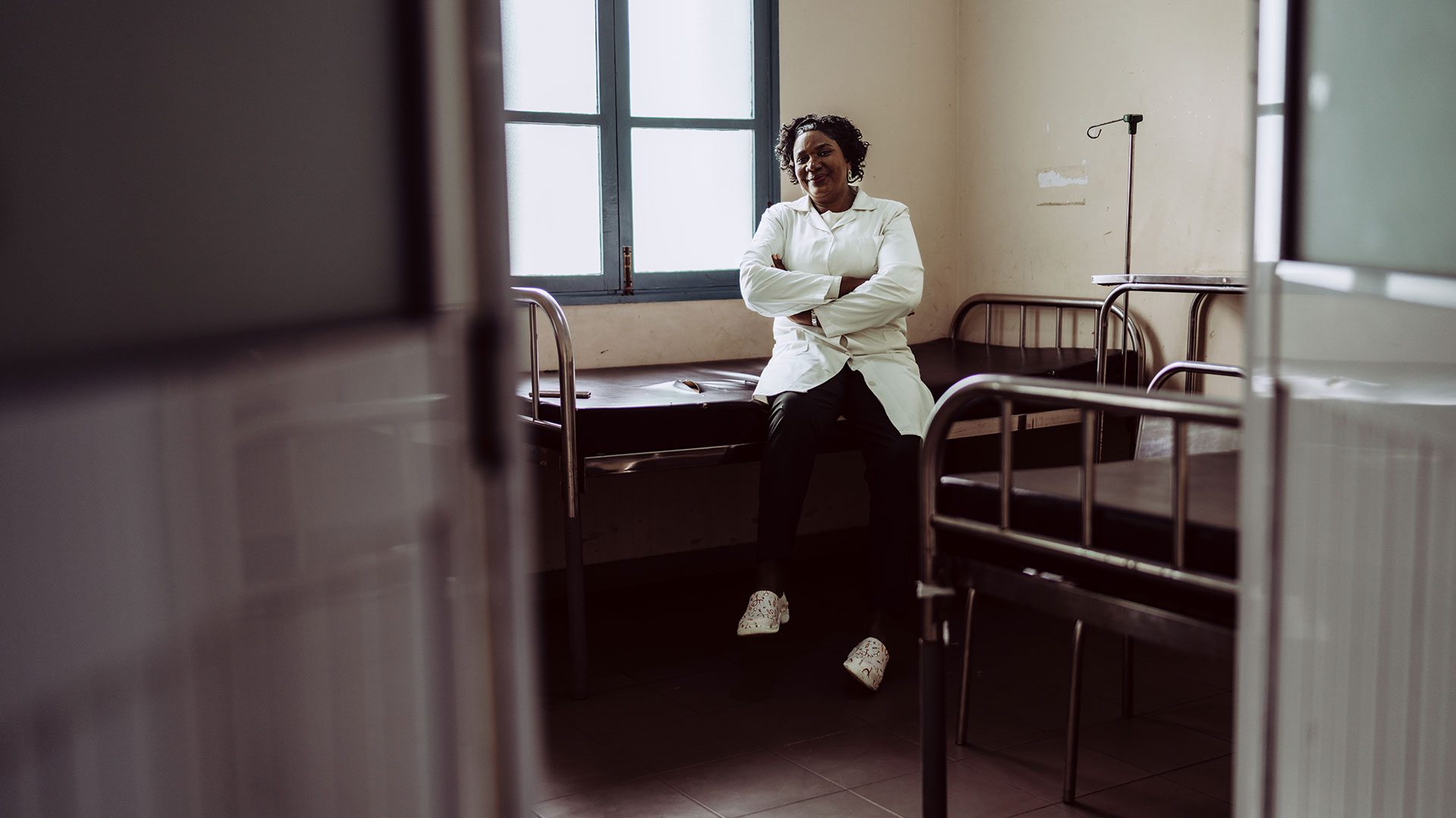
Pictured above: Estrela Góia, a maternal and child health-care manager in Mozambique, who became a dedicated advocate for safe abortion after witnessing preventable deaths caused by unsafe abortions.
What was your role in the 2014 revision of the abortion law?
I can’t claim full credit—many people played major roles in the revision—but I contributed where I could. At the time, I conducted a literature review on the benefits of safe abortion.
The process itself was very transparent and open. When a new government came to power, the constitution was revised. To align other laws with the new constitution, the penal code was also reviewed.
Medical professionals, legal experts, women’s rights groups like the Ethiopian Women’s Welfare Association, and professional associations such as the Ethiopian Society of Obstetricians and Gynecologists came together to advocate for change. They compiled research, synthesized data, gathered public opinion, and even arranged study visits for decisionmakers to learn from other countries with more progressive abortion policies.
Ipas was part of this coalition, though I wasn’t with Ipas at the time. I was working with another organization but remained active in the discussions. I concluded from my review that safe abortion access offers far more benefits than restrictions. But the real credit goes to the senior leaders and advocates who led the charge to revise the law.
When did you first interact with Ipas?
It was in 2017 when we hosted a team conducting a survey to assess health facilities at the district level. We carried out studies and had to decide which health facility had the highest number of incomplete abortions. After this, I attended a training-of-trainers session in Maputo, where we learned about the implementation of comprehensive abortion care.
In 2018, we started training fellow health-care providers as we had selected specific health-care facilities where we could do this. Specifically, we trained those with the highest number of incomplete abortions, or postabortion care, based on our research.
Did you face any resistance while implementing the program?
My views were unwelcome at first. Our provincial director, as well as my colleagues, had issues with conscientious objection, the rejection of abortion based on moral or religious grounds.
Many people I interacted with still thought abortion was a crime in the country. As much as Mozambique liberalized its abortion law to greatly broaden women’s access to safe abortion care in 2014, this information had not been disseminated to everyone.
My colleagues did not consider that safe and legal abortion was a way to avoid maternal deaths.
“
I succeeded at transforming minds because of my resilience through advocacy.
How did you finally get them on board?
I did internal advocacy to persuade my director, colleagues and peers to support my efforts. I held several values clarification for action and transformation training sessions with them until they agreed to come to the table to discuss the topic of abortion logically.
Together with Ipas Mozambique, I started holding several awareness-raising sessions at different levels—leadership, community, and providers’ levels—to make sure that people were aware that this law exists, and that it makes it accessible for women to have a safe abortion within the set norms.
What kind of resistance did you face when talking to community members about this information, and how did you counter it?
Initially, it was not easy. But with a lot of persistence and a lot of iterations of awareness raising, we started talking about the advantage of accessing safe abortion services. It made a huge difference when people shared real life stories of the dangers of unsafe or clandestine abortions, as opposed to safe abortions, where a woman would be able to go on with her life. It took a lot of time, but people eventually appreciated the benefits of safe abortions. Now they are happy because complications and deaths from unsafe abortions have become increasingly rare in health areas where services are offered.
And now we’re speaking the same language; we’re all on the same page. And women have access to this service without limitations.
Estrela Góia partners with Ipas Mozambique to train providers and raise awareness on safe abortion. She’s pictured here talking to a colleague.
What kept you going all these years despite the challenges you faced?
What really encouraged me was that I did not want to remain silent. I wanted to keep talking, even if people told me that they were against abortion or said that ‘Estrela is immoral for favoring abortion.’ But I did not want to silence my voice, because I knew that safe abortion was good for the community, and for me as a health-care worker.
Do you think you’ve fully achieved your goals regarding safe abortion, or do you think there’s more to be done?
As a nurse and health facility supervisor, I have witnessed far fewer abortion-related complications among the women who come to seek services at our clinics, and we attribute this to training and raising awareness about safe abortions. Unlike before, we have significantly less workload and no longer run out of supplies.
However, the goal is not fully achieved because not all health facilities provide safe abortion services. I’m talking about the health facilities that are in remote areas, for example, those located on remote islands, where women do not have access to these services. So, if they need to access them, they need to travel to a different location, which requires resources.
With climate change, it’s even harder for these women in the islands and remote areas to access these services.
I would be happy and singing around that I have achieved my goals if these services were available in every health facility, and any woman could go to a health facility and have access to all the services. Then I would say the mission is accomplished.
“
I would be happy and singing around that I have achieved my goals if these services were available in every health facility, and any woman could go to a health facility and have access to all the services. Then I would say the mission is accomplished.
How has Ipas helped or supported your mission?
As a service provider, Ipas has been my strength. Ipas has been with me in every situation where I have needed to reach women. And sometimes, especially in emergencies, I’ve felt that Ipas has been more supportive than my own institution due to some of the limited resources that persist within our public health system.
Sometimes we need to allocate supplies or medicines to certain health facilities. I first advocated for it with my own management, but they would give priority to other programs. But if I contact Ipas, they will support me.
Looking back, what are the most impressive changes you’ve seen in terms of abortion rights and access?
My boss transformed from a conscientious objector to an abortion champion, and I count that as a win. He talks about abortions in public sessions.
My colleagues, who used to call me the “owner of abortion,” now hug me and tell me that they just didn’t understand what safe abortion meant, but now they do. This is very satisfying and rewarding.
Unlike before, when unsafe abortion data were omitted from reports about maternal death, these data are now reported.
What achievement are you most proud of?
Before, women were charged illegal fees to access abortion. This has reduced significantly due to advocacy. People are now aware of how to access free abortion services.
What advice do you have for someone living in a place where abortion is banned or very restricted if they want to advocate for expanded abortion access?
I would say that people should keep fighting. Women should get together and create a movement. Women need to shout and be loud because only then can decisionmakers make a change.
Estrela Góia serves as the focal point for sexual and reproductive health and rights at the Provincial Directorate of Health in Mozambique. She’s pictured here talking to patients.
FACT BOX
- Abortion was decriminalized in Mozambique in 2014. One of Ipas Mozambique’s partners, the Mozambican Association of Obstetricians and Gynaecologists (AMOG), played a critical role.
- In 2024, Ipas Mozambique, in partnership with the Mozambican Association of Obstetricians and Gynaecologists, supported the implementation and dissemination of this law.
- Through this partnership, they ensured that abortion drugs became part of the national health system’s basic drugs. It was through this advocacy that the Ministry of Health in Mozambique started including these types of drugs and medicines in the essential drugs and medicines at health facilities.
- Ipas Mozambique also participated in the revision of the abortion law.
- Ipas Mozambique worked to revise the new curriculum to train nurses in maternal and infant health. As a result, Mozambique government started including topics like abortion in the training of the nurses for maternal and child health. Any nurse trained within these curriculums will have these tools to support safe abortion.
- Revision of the gynecology emergency service record books: Before the Ipas intervention, the gynecology emergency service record books had no key indicators on the provision of safe abortion. They mentioned abortion, but only as a post-abortion care service. With the support of Ipas Mozambique, the gynecology emergency book was revised to ensure the inclusion of these key indicators for the provision of safe, high-quality abortion services.
“This is not an easy thing in our country. Sometimes it takes 10 years to revise this type of book or manual. We managed to revise it to include all the safe abortion indicators. And it is approved. Right now, we are distributing these manuals in Mozambican health facilities. It’s not just for Ipas-supported facilities but a country-wide measure.”
– Celina Fides de Morais, Health Systems Advisor and team leader-Mocambique-Zambézia, Ipas Mozambique
The post How this abortion champion is expanding access in Mozambique appeared first on Ipas.