EVANS, GEORGIA — On Sunday, Keisha Lance Bottoms held one of the last voter meet-and-greets of her campaign for governor at a small business near Augusta. It had been, she told the crowd, “quite a year” since she got into the race.
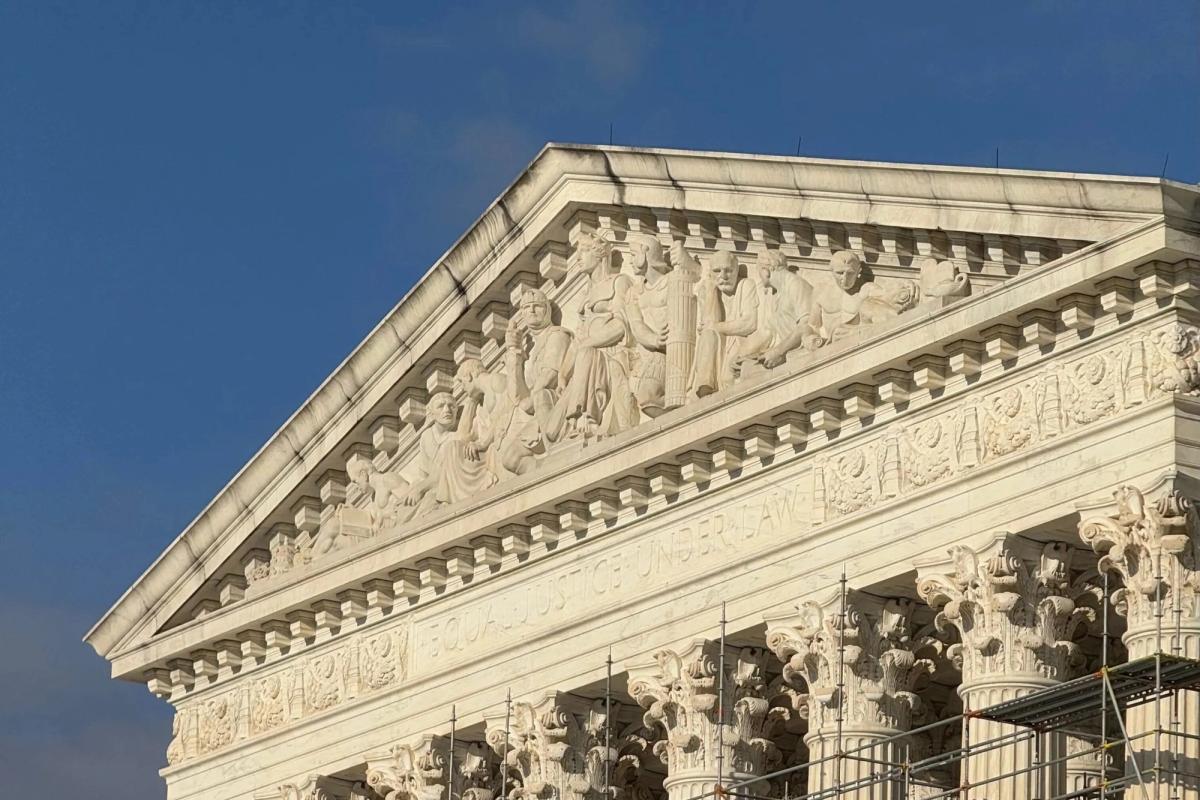
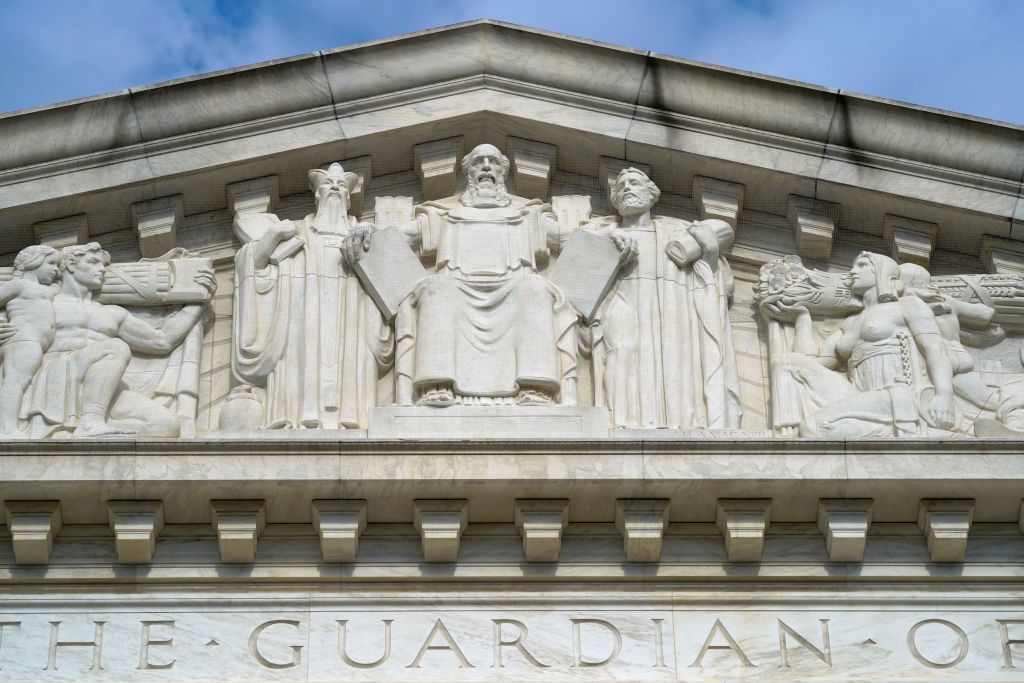
The former Atlanta mayor, widely seen as the front-runner in the Democratic primary, spoke about her plans to expand Medicaid in the state, recruit more teachers and enact universal pre-K. But a recent U.S. Supreme Court ruling giving Southern states the green light to draw out majority-Black districts has upended the race and become a central part of her message. On every seat, there was a flyer that warned: “This is not a drill. This is a power grab,” along with Bottoms’ plan to fight back against the decision.
“We’re not asking for a handout, we’re not asking to take anything away from anybody,” Bottoms told the crowd. “We’re asking for fairness.”
Georgia was always going to be a main character in this election year. And if it wasn’t before, the U.S. Supreme Court made sure of it. As some of the state’s neighbors rushed to redraw their political maps after the high court’s decision, Bottoms hoped Georgia would “stay out of the group chat.” But Republican Gov. Brian Kemp, who is term-limited, has called for a special session next month to redraw congressional lines ahead of the 2028 election, raising the stakes for this year’s elections.
While a special session is imminent, Georgia is in a unique position as a purple battleground surrounded by a sea of red states. And a rare slate of four open statewide elected offices in a year where the national political environment favors Democrats puts Black women candidates, like Bottoms, on the front lines of some of the state’s biggest elections.
“Georgia is a little different than many of the Southern states, because we do have an electoral pathway,” said Andrea Young, the outgoing executive director of the ACLU of Georgia and a longtime civil rights activist in the state.
Young and Democratic candidates, including Bottoms, said record turnout in early voting, where Democrats are so far outpacing Republicans, is a sign the Supreme Court decision is mobilizing voters. “People do understand that one of the things on the ballot is democracy,” Young said.
It is only part of the pitch, though, from candidates including Bottoms, who is hoping to crack 50 percent of the primary vote and avoid a runoff.
“Even before getting to that decision, people were concerned about affordability, cost of living, lack of access to healthcare,” Bottoms told The 19th in Evans. “We run through the list, and it’s just, I think, another rung on the ladder.”
At her meet and greet, voters asked Bottoms about her views on issues such as property tax relief, rural hospital closures, homelessness and data centers. The conversation returned to democracy when another voter asked Bottoms how she would handle another attempt to overturn the election, referencing President Donald Trump’s efforts after the 2020 contest. After Trump was elected again in 2024, the FBI took the unprecedented step of seizing 2020 ballots from Georgia’s largest county as part of a criminal probe last year.
“I’m a person of faith, some of this we’ve got to pray about,” Bottoms said. “But my faith also tells me faith without work is dead, so the other part of it is we gotta show up and vote, and elect people who are willing to fight it out in the courts.”
Black women Democrats could make history in statewide races

If Democrats are successful in this year’s elections, some Black women could make history.
Right now, the offices of governor, lieutenant governor, attorney general and secretary of state in Georgia are all held by Republicans (a Democrat hasn’t won the governorship in Georgia in 25 years) and have traditionally been dominated by men. But the lack of incumbents in 2026 creates an opening for Democrats and Black women to win those seats: last year, Alicia Johnson became the first Black woman to win statewide elected office in Georgia with a seat on the state’s Public Service Commission.
Bottoms could be Georgia’s first woman governor and the first Black woman elected governor anywhere in United States history if she wins both the primary and what is expected to be a highly competitive general election in November. The crowded Republican field includes Lt. Gov. Burt Jones and businessman Rick Jackson.
Trial attorney Miracle Rankin, a former president of the Georgia Association of Black Women Attorneys, is one of two liberal candidates seeking to flip seats on Georgia’s Supreme Court on Tuesday. If elected, she’d be the first Black woman to serve on the high court.
The ACLU of Georgia, which conducts voter education but doesn’t endorse candidates, is one of the groups that has invested money in putting the technically nonpartisan races on the map. The candidates and groups like Planned Parenthood Votes have made abortion and the court’s upholding of the state’s six-week ban a central issue.
“So often these people who serve on these Supreme Courts are just not in touch with the reality of people’s lives, and in particular, the reality of women’s lives,” Young said.
Democratic state Rep. Tanya Miller is running in an open race for attorney general and could also be the first woman and the first Black woman to serve in the role in Georgia. Three of the Democratic candidates running to be Georgia’s chief election official are women, including Fulton County Commissioner Dana Barrett.
Another Democratic state legislator, Dr. Jasmine Clark, is also looking to make history. Last year, she decided to challenge longtime Democratic incumbent Rep. David Scott in Georgia’s safely blue 13th Congressional District. Before Scott died in office in April at 80, Clark had outraised him — she’s now the front-runner and, if she wins, would be the first Black woman PhD scientist in Congress. She said she wants Democrats to not only win back the U.S. House but to wield power with intention.
“We will still have two years of a Trump presidency, for all intents and purposes, but what can we do, and what should we do?,” she said. “I think that getting some new voices in the room, you might start to see some new ideas.”
‘A tectonic shift’

Georgia is rooted in the history of the Civil Rights Movement, known for cultivating leaders like Martin Luther King Jr., former Rep. John Lewis and Amb. Andrew Young, Andrea Young’s father. Again in 2020, Georgia’s top Republican officials resisted pressure from Trump to subvert the election results. One of them, former Lt. Gov. Geoff Duncan, left the Republican Party and is now running for governor as a Democrat.
“Georgia was the home of the civil rights movement, and we sent a message to the rest of the country that there’s a better way to do it,” Duncan told The 19th after Sunday morning campaign stops at Black churches in Atlanta. “I think this is the same tectonic shift. We can really prove to the rest of the country, including the South, that there is a better way to do this.”
That history is top of mind for many Black voters, especially those who were alive during the civil rights movement.
On Saturday, as Democratic gubernatorial candidateJason Esteves, a former state senator, held a lively event complete with live music and a root beer keg in Atlanta, voters Toney Chandler and Jessica Staworth reflected on a sense of deja vu: Chandler, 75, said she was “seeing flashbacks” to the civil rights era, while Staworth, 50, said she saw echoes of the 2000 presidential election dispute.
“We are in the process of repeating history,” Chandler said.
Both Esteves and Duncan are hoping to force Bottoms into a runoff.
Affordability and generational change drive the conversation

Beyond the redistricting and voting rights fights, the economy and cost of living are the top issues driving voters’ concerns and Democrats’ campaign messaging in Georgia and nationwide.
“I think remaining focused on those things that impact people’s day-to-day lives will make us a stronger party, and also just making sure that people understand how we are delivering, how our policies are making their lives better,” Bottoms said.
Georgia’s 2026 races will also be high-profile test cases for how Democrats strategize and message in a competitive battleground state with a racially diverse and fast-growing population.
In interviews, Democratic voters like Walter and Pamela Cheatham, who own a martial arts studio in Augusta and attended Bottoms’ event, identified the economy and healthcare, including rural hospital closures, as their top voting issues.
Daryl Rolle, the owner of the venue where Bottoms held her event in Evans, said he thinks Georgians “aren’t satisfied” with their current political leadership.
“People don’t want $5 gas,” he said. “People want common sense.”
Some Democrats in Georgia, like Esteves, are also explicitly running on a message of representing a new, fresh generation of Democratic leadership.
“People are tired,” he told The 19th. “They’re tired of Trump destroying our country, destroying Georgia’s economy, and they want change.”
Young said Georgia and the Democrats on the ballot in 2026 are a “model of a multiracial, multicultural coalition.”
“Georgia has the potential to have a government that reflects the ideals of Jimmy Carter and Martin Luther King, our two Nobel Prize winners who were born and raised in this state,” she said. “I think that is the majority that exists.”