SCOTUStoday for Monday, March 30

We’re excited to introduce the second in our series of animated videos, done in partnership with Briefly, on some of the term’s most important cases. This new video is an […] The post SCOTUStoday for Monday, March 30 appeared first on SCOTUSblog .

SCOTUStoday for Monday, March 30

We’re excited to introduce the second in our series of animated videos, done in partnership with Briefly, on some of the term’s most important cases. This new video is an introduction to the birthright citizenship case, Trump v. Barbara, which will be argued on Wednesday. Watch it here.

And a reminder: To those of you who are in the legal profession, could you please fill out this brief survey about your work? We’re looking to better understand segments of our audience and the tools that they use.

At the Court

On Friday, the court indicated that it may release opinions tomorrow at 10 a.m. EDT. We will be live blogging tomorrow morning beginning at 9:30.

Also on Friday, the court announced that it will hear argument in the Temporary Protected Status cases on Wednesday, April 29.

Orders from the justices’ Friday conference are expected this morning at 9:30 a.m. EDT.

Also this morning, the court will hear argument in Abouammo v. United States, on whether federal prosecutors can try a defendant not only in the district where the offense occurred, but in the district where the crime’s “contemplated effects” were felt; and Jules v. Andre Balazs Properties, on the jurisdiction of federal courts to enforce an arbitration award.

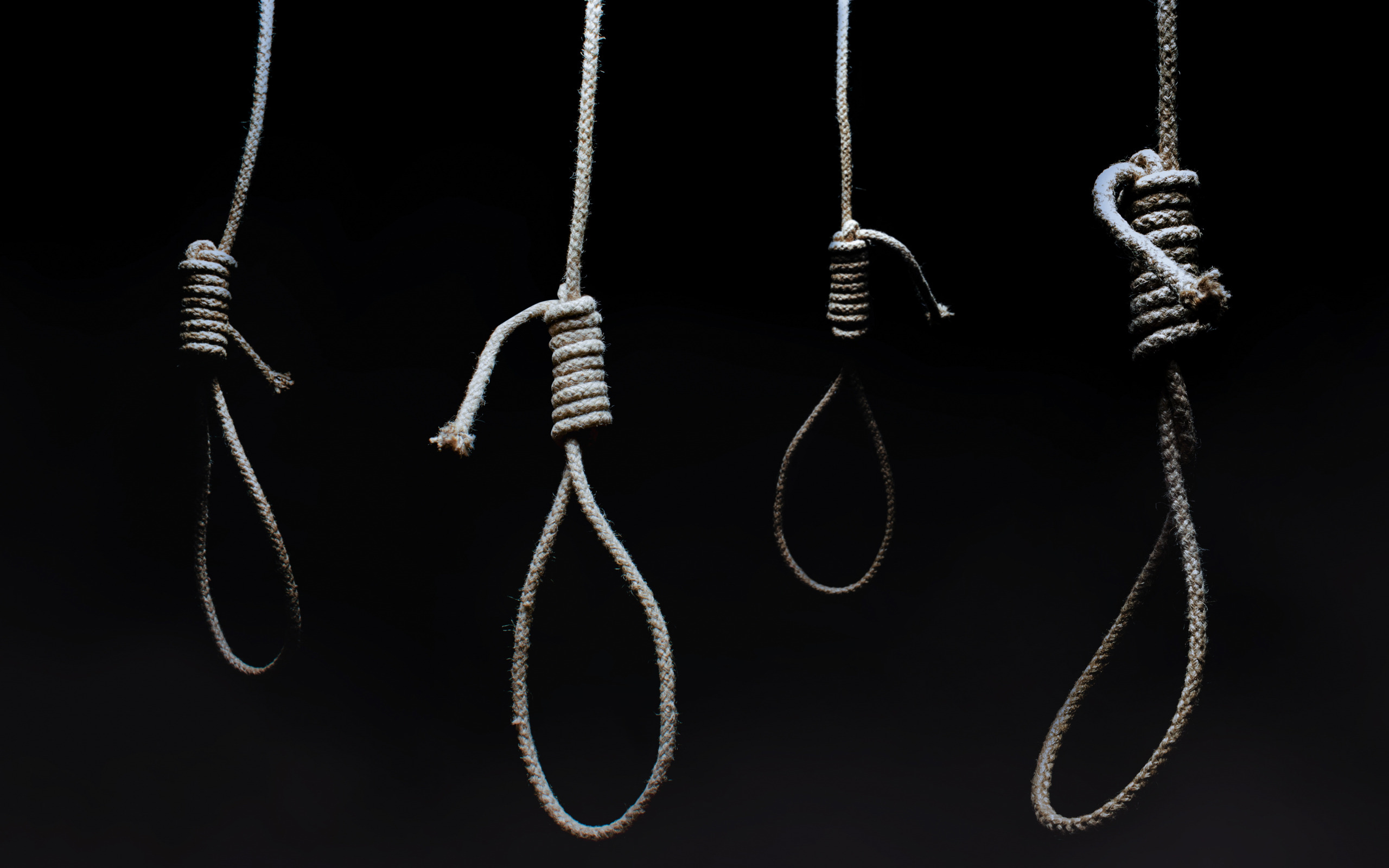
Tomorrow, the court will hear argument in Pitchford v. Cain, on a Mississippi man’s claim that he was sentenced to death in violation of the Constitution’s ban on racial discrimination in jury selection. For more on the dispute, see Amy’s case preview in the On Site section below.

On Wednesday, we will be live blogging as the Supreme Court hears argument in Trump v. Barbara, on President Donald Trump’s executive order limiting access to birthright citizenship. The live blog will begin at 9:30 a.m. EDT. Amy’s case preview is linked in the On Site section.

Morning Reads

Supreme Court fight over birthright citizenship threatens ‘chaos’ in proving newborns’ status

John Fritze, CNN

Last year, as the Supreme Court heard argument on the universal injunctions putting President Donald Trump’s executive order on birthright citizenship on hold nationwide, Justice Brett Kavanaugh asked a “series of nuts-and-bolts questions” about how the order would affect the work of hospitals, state governments, and other institutions. Now, “[a]s the Supreme Court prepares to consider the merits of Trump’s executive order … most of the same practical questions Kavanaugh raised a year ago remain unanswered,” according to CNN. For one thing, it’s unclear if the government has the resources to “run checks on the parents of more than 3.6 million babies born in the United States each year.” And even if it does, such checks may produce incorrect results if one or both of a baby’s parents legally immigrated to the U.S. because “the Social Security Administration itself has acknowledged for years that potentially millions of its immigration records are inaccurate.”

Pressure mounts on Supreme Court to take up case that tests secret gender transitions at schools

Jack Birle, Washington Examiner

On March 2, the court sided with parents in an emergency docket case over California policies on transgender students, reinstating a district court ruling that requires educators to notify parents if their child changes the name or pronouns they’re using at school. That decision put a spotlight on pending petitions for review raising similar issues and prompted John Bursch, senior counsel for the conservative law firm Alliance Defending Freedom, to write a letter to the justices urging them to weigh in, according to the Washington Examiner. The march decision “was preliminary, and it remains important for the Court to resolve the important issues presented by the petition here more fully and finally,” Bursch wrote.

Supreme Court mulls limiting mail-in ballots, forcing states to prepare for changes

Ella Lee, The Hill

Last week, the court heard argument on whether Mississippi can count mail-in ballots that arrive up to five days after Election Day as long as they’re postmarked by that day. The justices are expected to release their decision in the case by early July, but election officials in the 14 states that allow for mail-in ballots to arrive after Election Day aren’t waiting until then to prepare for a ruling against Mississippi, according to The Hill. Officials said they are updating voting guides to encourage mailing ballots earlier and hiring additional communications staffers to help with public education.

US jury verdicts against Meta, Google tee up fight over tech liability shield

Diana Novak Jones, Reuters

Two high-profile “lawsuits targeting social media firms over harm to children” ended in the past week with jury verdicts against the site or sites involved. “The verdicts pierce a legal shield that plaintiffs suing tech companies have long struggled to overcome: Section 230 of the Communications Decency Act, a 1996 federal law that generally protects online platforms from liability over user-generated content,” according to Reuters. “In both cases, the plaintiffs sidestepped that hurdle by arguing the companies harmed young users through decisions they made about the platforms’ design rather than the content itself.” Meetali Jain, director of the Tech Justice Law Project, told Reuters that it’s likely that the Supreme Court will soon address whether Section 230’s liability shield covers platform design choices. “I personally think that the Supreme Court is even ready for a case like this, for the right case,” Jain said.

The Long Struggle to Live Up to ‘Brown’

Anastasia Boden, The Dispatch

In a post for The Dispatch’s Next 250 series, SCOTUSblog contributor Anastasia Boden reflected on the country’s struggle to embrace Brown v. Board of Education, in which the Supreme Court held “that separate schools for students based on race violated the 14th Amendment’s Equal Protection Clause.” “Brown v. Board of Education is often portrayed as the triumphant moment when America finally fulfilled the Declaration of Independence’s promise that all men are created equal. And it was a landmark moment in constitutional law,” Boden wrote. “But … announcing a constitutional principle is sometimes easier than living up to it.” She observed that it took six years after the Brown ruling was released for many Southern schools to admit Black students, noting that such admissions led to new forms of resistance like protests outside the schools.

On Site

Case Preview

The key arguments in the birthright citizenship case

On April 1, the Supreme Court will hear oral arguments in one of the highest-profile cases of the 2025-26 term – and indeed, one of the biggest cases in several years. Trump v. Barbara is a challenge to President Donald Trump’s January 2025 executive order seeking to end birthright citizenship. Here are the key arguments being made by the administration and the order’s challengers.

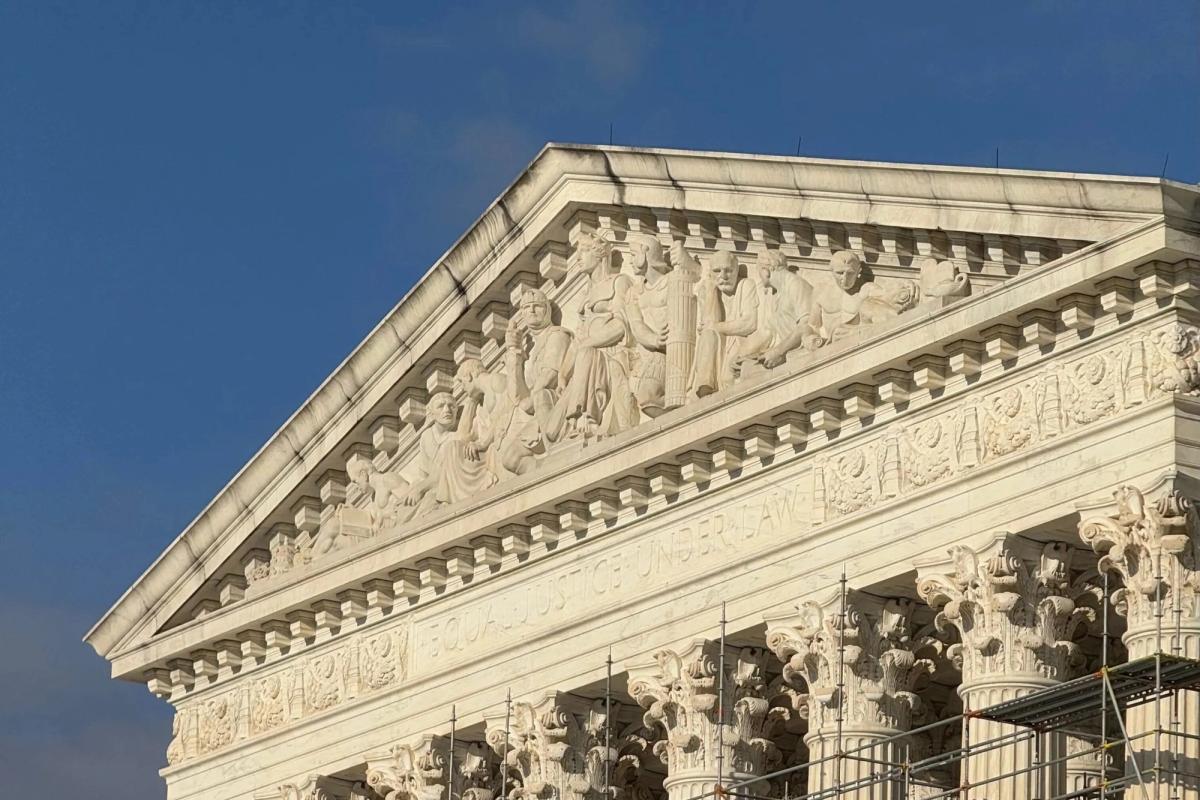
The Supreme Court Building is pictured on March 25, 2026.
Case Preview

Court to hear argument on claim of racial discrimination in jury selection

The court will hear oral argument on Tuesday in the case of a Mississippi man who contends that he was sentenced to death in violation of the Constitution’s ban on racial discrimination in jury selection. Terry Pitchford asserts that such a constitutional violation “undermines the foundational promise of equal justice under law.” But Mississippi counters that this is not one of the “narrow circumstances” in which federal courts can grant state prisoners post-conviction relief.

The Supreme Court Building is pictured on March 25, 2026.
From the SCOTUSblog Team

Temporary Protected Status cases to be argued on final day of April argument session

The Supreme Court on Friday morning announced that it will hear arguments on April 29, the last regularly scheduled argument day of the term, on the Trump administration’s effort to end the Temporary Protected States program for several thousand Syrians and roughly 350,000 Haitians currently living in the U.S.

WASHINGTON, DC - FEBRUARY 10: The Supreme Court of the United States building, photographed on Thursday, Feb. 10, 2022 in Washington, DC.
Contributor Corner

Birthright citizenship: Hintopoulos, Harlan II, and “Joltin’ Joe” – mid-century elements of American greatness worth remembering on the eve of Barbara

In their Brothers in Law column on the birthright citizenship case, Akhil and Vikram Amar highlighted United States ex rel. Hintopoulos v. Shaughnessy, a 1957 case in which the Supreme Court considered Elizabeth and Anastasios Hintopoulos’ effort to avoid deportation and, in the process, affirmed that their child born while they were illegally in the U.S. was “of course” an American citizen.

The United States Capitol building is seen in Washington D.C., United States, on December 9, 2025

SCOTUS Quote

JUSTICE ALITO: “Is that your – that’s your best evidence, that there was a reference to litigation?”

MR. STONE: “That’s – that’s the best reference because there’s not – there’s virtually –”

JUSTICE SCALIA: “Where – where did that appear?”

MR. STONE: “That appeared in a Senate report when they passed –”

JUSTICE SCALIA: “Okay. That’s all I needed to know.”

Kellogg Brown & Root Services, Inc. v. United States, ex rel. Carter  (2015)

The post SCOTUStoday for Monday, March 30 appeared first on SCOTUSblog.

Need Support?

Find verified resources for reproductive healthcare, support services, and advocacy organizations.

Find Resources