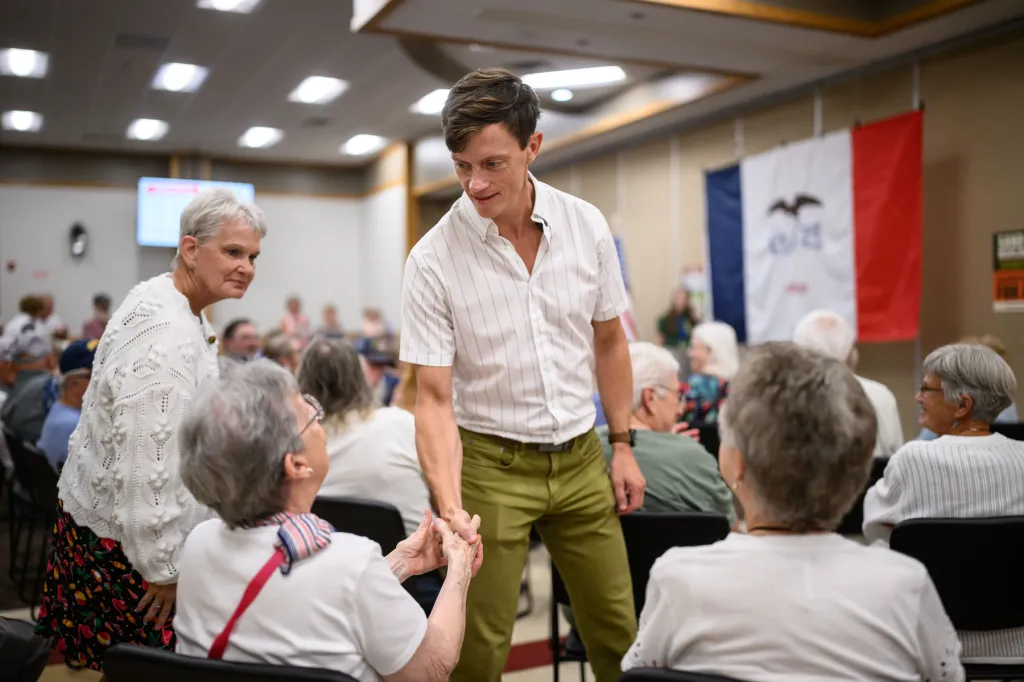
This morning, the court will hear argument in the birthright citizenship case, Trump v. Barbara. We will be live blogging beginning at 9:30 a.m. EDT. For a great introduction to the dispute, check out this animated explainer, done in partnership with Briefly.
In addition to being a major argument day, today is Justice Samuel Alito’s birthday. Born in 1950, Alito has served on the Supreme Court since 2006.
It also happens to be April Fools’ Day. Get in the spirit by watching this video from the Supreme Court Historical Society.
Last but not least, we continue to hope that subscribers who are in the legal profession will fill out this brief survey about their work.
At the Court
As noted above, we will be live blogging this morning as the court hears argument in the birthright citizenship case. After the argument concludes, the Advisory Opinions podcast will go live on the SCOTUSblog homepage.
On Tuesday, the court released its opinion in Chiles v. Salazar, holding that Colorado’s law banning conversion therapy, as applied to the petitioner’s talk therapy, regulates speech based on viewpoint and should have been assessed by the lower courts using a more rigorous standard of review. For more on the ruling, see the On Site section below.
Also on Tuesday, the court heard argument in Pitchford v. Cain, on a Mississippi man’s claim that he was sentenced to death in violation of the Constitution’s ban on racial discrimination in jury selection.
Tomorrow, the justices will meet in a private conference to discuss cases and vote on petitions for review. Orders from that conference are expected on Monday at 9:30 a.m. EDT.
Morning Reads
Trump suggests he will attend birthright citizenship arguments at Supreme Court
Josh Gerstein, Politico
While speaking with reporters on Tuesday, “President Donald Trump said he plans to be in attendance when the Supreme Court hears arguments [today] on his birthright citizenship executive order,” according to Politico. “I’m going,” he said. “I think so. I do believe.” If Trump does attend arguments, he will be the first president to do so, according to historians. “But Trump ha[d] previously flirted with attending oral arguments” in the tariffs case “before reversing course.”
In Supreme Court Justices’ Histories, a Story of Immigration in America
Abbie VanSickle and Julie Tate, The New York Times
As birthright citizenship goes to Supreme Court, here's how Americans feel about it
Domenico Montanaro, NPR
Public opinion on birthright citizenship “is complicated,” according to NPR. “Americans are heavily in favor of granting citizenship to children born to parents who were also born in the U.S. – or to those who immigrated to the U.S. legally. But they are split on – or much less in support of – automatic citizenship for children born to parents who immigrated illegally.” For example, a 2025 Pew Research Center survey showed that 49% of U.S. adults said that people born in the U.S. to parents who immigrated illegally should not be considered U.S. citizens, while 50% said they should be.
Line forms early at Supreme Court for birthright citizenship arguments
Gary Grumbach, NBC News
The birthright citizenship case is one of the highest-profile Supreme Court cases in recent memory, which helps explain why some people began waiting in line outside the Supreme Court Building on Sunday or Monday in hopes of getting a seat in the courtroom during the argument. NBC News spoke with one such individual, Nina Lin, a special assistant at the ACLU’s Ruth Bader Ginsburg Center for Liberty, about her experience. “Lin and her colleague are using fold-up chairs, wearing several layers of clothes and sharing a few power banks to make it through the next 24 hours on the sidewalk. They get food delivered and have been taking turns going to nearby coffee shops to refuel and use the bathroom.”
Colorado leaders weigh next steps after Supreme Court rejects state ban on ‘conversion therapy’
Marissa Ventrelli, Colorado Politics
After the Supreme Court sided with a therapist challenging Colorado’s ban on “conversion therapy,” state leaders addressed what they will do next. Colorado Gov. Jared Polis “said he is ‘evaluating’ the ruling.” Meanwhile, Colorado Attorney General Phil Weiser said “his office will also review the court decision and its impact on Colorado law.” Colorado Politics reported that Tuesday’s ruling might affect “current legislation being debated in the state legislature. House Bill 1322, sponsored by Democrats, would allow individuals who underwent conversion therapy to sue licensed providers for damages.”
On Site
Supreme Court sides with therapist in challenge to Colorado’s ban on “conversion therapy”
The Supreme Court on Tuesday sent a challenge to Colorado’s ban on “conversion therapy” – treatment intended to change a client’s sexual orientation or gender identity – for young people back to the lower courts for them to apply a new standard. By a vote of 8-1, the justices agreed with Kaley Chiles, the licensed counselor challenging the law, that the ban discriminates against her based on the views that she expresses in her talk therapy.
Justices debate ability of federal courts to confirm arbitration awards
Monday’s argument in Jules v. Andre Balazs Properties showed a bench with some uncertainty about the jurisdiction of federal courts to enforce an arbitration award. The specific question in front of the justices is what to do with a motion to confirm (or vacate) an arbitral award if there is a case in federal court about the dispute that was pending prior to the arbitration.
Veterans benefits: a consensus candidate for cert
In his Relist Watch column, John Elwood explored this week’s one new relist: Johnson v. United States Congress, a case on which courts have jurisdiction over constitutional challenges to veterans’ benefits statutes. Elwood noted that the veteran who brought the case and the federal government agree that the Supreme Court should take up the case.
A quick look at two important weeks for criminal law at the court
In his ScotusCrim column, Rory Little explained why last week and this week were and are significant ones for criminal law fans at the court.
Immigration law wins for Trump do not necessarily suggest a citizenship victory
In his Immigration Matters column, César Cuauhtémoc García Hernández explained why he believes that the Trump administration’s string of victories in lawsuits over immigration matters over the past year doesn’t necessarily smooth the path for success in the birthright citizenship case.
Birthright citizenship: hard questions – and the best answers – for Trump’s challengers
In a Brothers in Law column, Akhil and Vikram Amar and Samarth Desai laid out some of the hardest questions that tough-minded justices could ask the lawyer representing the challengers of President Donald Trump’s executive order on birthright citizenship and then explained what they think are the best answers to them.
Podcasts
In Mourning for the DOJ | Interview: Chris Christie
Former New Jersey Gov. Chris Christie joins Sarah Isgur and David French to discuss his explicit argument with former FBI Director Robert Mueller, remember a Christmas carol session with former Attorney General John Ashcroft, and weigh in on whether you should go to law school.
St. Mary Catholic Parish v. Roy
Over the past decade, the Supreme Court has issued multiple high-profile rulings on church-state partnerships and religious schools receiving public funds, holding that faith groups can’t be frozen out of funding programs simply for being religious and that public officials can’t deny requests for religious accommodations when similar accommodations are available to secular groups.
During their private conference tomorrow, the justices will consider an opportunity to further clarify the court’s free exercise jurisprudence by taking up a dispute over Colorado’s universal preschool program. In St. Mary Catholic Parish v. Roy, Catholic challengers contend that the state’s nondiscrimination requirement prevents them from participating in the program and amounts to unlawful religious discrimination.
Colorado’s universal preschool program began to take shape in 2020, when voters in the state approved a proposition that created a funding mechanism for it. In 2021 and 2022, the Colorado General Assembly outlined the goals and structure of the program in a series of bills and instructed the newly created Colorado Department of Early Childhood to further refine the rules for participation. The legislature made it clear that “quality standards must include a nondiscrimination requirement for all participating schools.”
In 2022, preschools began registering to take part in the universal preschool program, which enables Colorado families to receive 15 hours of free preschool each week at a participating institution. The schools had to certify that they met the state’s standards for areas such as classroom size and teacher training, and sign the nondiscrimination agreement, which states that participating preschools must “provide eligible children an equal opportunity to enroll and receive preschool services regardless of race, ethnicity, religious affiliation, sexual orientation, gender identity, lack of housing, income level, or disability, as such characteristics and circumstances apply to the child or the child’s family.”
Although every participating preschool must sign that agreement, they are allowed to express certain preferences that then guide the process by which families are assigned to a school. For example, public preschools can prioritize students in their district and schools that specialize in serving multilingual students can prioritize those students. “Preschools are allowed to decline to enroll children they are matched with who do not fit their enrollment preference, although their choice to decline a student is subject to Department review.”
In the lawsuit that’s now in front of the Supreme Court, the Archdiocese of Denver, two Catholic parishes that operate preschools, and two parents of preschool-age children explain that they cannot sign the nondiscrimination agreement because “Catholic teaching requires them to consider the sexual orientation and gender identity of a student and their parents before admitting them to a Catholic school.” They contend that making Catholic preschools’ participation in the universal preschool program contingent on accepting that agreement violates the First Amendment, citing the Supreme Court’s rulings on funding programs and free exercise from the past decade to support their position.
In 2024, a federal district court in Colorado denied the challengers’ request for an injunction that would prevent the state from requiring Catholic preschools to meet the nondiscrimination requirement. In September, the U.S. Court of Appeals for the 10th Circuit affirmed that decision, holding that the requirement was not designed to target religious institutions and that all preschools are held to the same nondiscrimination policy. Furthermore, according to the 10th Circuit, the record shows that Colorado officials actively encouraged faith-based schools to take part. “Colorado is not attempting to prohibit funds from being used for religious purposes. … The restrictions imposed by the nondiscrimination requirement universally cover enrollment policies and conduct, but they are not a targeted burden on religious use.”
In their petition for review, the Catholic challengers contend that the 10th Circuit’s ruling deepens a disagreement between federal courts of appeals over what it means for a statute to be neutral and generally applicable, the standard at the center of the Supreme Court’s ruling in Employment Division v. Smith. In that 1990 case, the court held that neutral and generally applicable laws – that is, laws that apply to everyone and were not designed to target a specific religious group – do not violate the free exercise clause even when they “incidentally” interfere with religious beliefs or practices.
Some courts, according to the challengers, would hold that Colorado’s policies for schools participating in the universal preschool program are not generally applicable because some schools can sidestep the requirement to accept all eligible students by using the preference system to reject students that don’t fit their specialty areas. The challengers urge the Supreme Court to not only enable Catholic schools to participate in the preschool program by allowing them to consider the sexual orientation and gender identity of a student and their parents, but also to overrule Smith.
The federal government filed an amicus, or friend-of-the-court, brief in support of the Catholic challengers without being asked to by the court, contending that a ruling in the case would provide a “significant benefit” to the country. “This Court should not allow widely diverging views about what makes a law neutral and generally applicable under Smith to stymie religious exercise in major portions of the country,” wrote U.S. Solicitor General D. John Sauer.
Initially, leaders of Colorado’s universal preschool program waived their right to respond to the petition. But in late December, the court called for a response, which the officials filed in early March. In it, they contend that allowing certain schools to use the preference system to prioritize low-income families or students with disabilities does not amount to sidestepping the nondiscrimination agreement.
St. Mary Catholic Parish v. Roy is scheduled to be considered for the first time by the justices at their private conference on Thursday.
SCOTUS Quote
JUSTICE BARRETT: “Would it have been different under your theory if he had AirDropped the document to the FBI agents as opposed to e-mailing it? Because then it would have all happened –”
MR. YANG: “I don’t use AirDrop, but I think that’s an Apple product that – that, like, you – you upload it somewhere?”
JUSTICE BARRETT: “Yeah. Are you an Android guy?”
MR. YANG: “I am an Android guy.”
— Abouammo v. United States (2026)
The post SCOTUStoday for Wednesday, April 1 appeared first on SCOTUSblog.