Yesterday marked 81 years since the inauguration of President Harry Truman, who went on to select four Supreme Court justices while he was in office. Will President Donald Trump have the opportunity to place four justices on the court, as well? Read the latest on a potential retirement this term in the Morning Reads section.
Plus, tomorrow is publication day for Sarah Isgur’s book, Last Branch Standing, and The Dispatch is running a special promotion for Dispatch members who order it. Check it out here.
At the Court
The court will next hear arguments one week from today, on Monday, April 20, the first day of its April sitting.
The court has not yet indicated when it will next announce opinions.
Morning Reads
As Election Looms, Washington Wonders if Trump Will Get a New Supreme Court Pick
Ann E. Marimow, The New York Times
Speculation has been swirling that Justice Samuel Alito, 76, will soon announce his retirement, but “the taciturn justice has not indicated even to friends whether or when he might retire,” according to The New York Times. “Ed Whelan, a prominent conservative legal commentator,” told the Times that he does not expect a vacancy this year, in part because, in retiring, Alito would be walking away from “so many big cases at the court” and “‘the potential to be in the majority in a way that he couldn’t count on in his first dozen years’ on the bench.” But one factor pushing Alito toward retirement may be the 2026 midterm elections, when Republicans may lose control of the Senate. “In interviews, Justice Alito’s friends, former colleagues and law clerks said that the justice is well aware of the political calendar and would prefer to have a Republican president choose his successor.”
Federal court hears new case against Trump’s latest global tariffs
Mae Anderson and Paul Wiseman, Associated Press
On Friday, the U.S. Court of International Trade heard arguments “in an attempt to overturn the temporary tariffs Trump turned to after the Supreme Court in February struck down” those imposed under the International Emergency Economic Powers Act. The temporary tariffs were imposed under “Section 122 of the Trade Act of 1974, which allows the president to impose global tariffs of up to 15% for 150 days, after which congressional approval is needed to extend them.” The text of Section 122 addresses “fundamental international payments problems,” and the current dispute involving the administration, two dozen states, and some businesses concerns is over “whether that wording covers trade deficits.” Ryan Majerus, a former U.S. trade official, told the AP that he expects the CIT to side with the administration “considering that [the tariffs] will expire in three and a half months anyway.”
Federal appeals court sends White House ballroom construction lawsuit back to lower court
CBS News
The U.S. Court of Appeals for the District of Columbia Circuit on Saturday sent a case on the White House ballroom construction project back to the district court for reconsideration of “the possible national security implications of halting construction,” according to CBS News. The “three-judge panel … said it did not have enough information to decide how much of the project can be suspended without jeopardizing the safety of the president, his family or the White House staff.” “Government lawyers had argued that the project includes critical security features to guard against a range of possible threats, such as drones, ballistic missiles and biohazards,” contending that those security upgrades need to be installed as soon as possible. The trial judge had put the construction on hold until April 14, but “[t]he appeals court extended that for three days, to April 17, to allow the Trump administration to seek Supreme Court review.”
Trump’s mandatory detention policy gets court victory as immigration issue heads toward Supreme Court
Jack Birle, Washington Examiner
On Thursday, the full U.S. Court of Appeals for the 5th Circuit declined to review a three-judge panel’s ruling upholding “the Trump administration’s policy of keeping illegal immigrants in detention during their deportation proceedings,” according to the Washington Examiner. “The 5th Circuit’s 2-1 ruling earlier this year found that just because previous administrations did not use their power under the Illegal Immigration Reform and Immigrant Responsibility Act of 1996 to detain illegal immigrants indefinitely, rather than allow them to seek release on bond, that does not mean presidents do not have that power.” “It is unclear if the Supreme Court would take up the case from the 5th Circuit for review, but if the justices were to do so, the earliest it would likely be heard is during the high court’s next term, which begins in October.”
U.S. Supreme Court justice Sonia Sotomayor urges women to lead with passion
Williesha Morris, AL.com
During a Thursday appearance at the University of Alabama, Justice Sonia Sotomayor reflected on the rise of artificial intelligence, the importance of reading Supreme Court opinions, and how to be a better leader, according to AL.com. AI, she said, “has the potential to perpetuate the very best in us and the very worst in us. If it’s bad data, what comes out is bad results. And, so it can be a very dangerous tool, particularly in judging the complexity of human endeavors or human situations.” Sotomayor also reflected on how difficult judges’ work can be. “We aspire as judges to rise above our prejudices,” she said. “It’s not easy.” Additionally, she encouraged women who hope to be leaders to identify a cause they really believe in, noting that such belief, when paired with hard work, makes a leader more effective. “The only way to lead people is if you have a passion about your cause,” Sotomayor said.
On Site
The sports stars, hip-hop artists, and celebrity magicians playing a role in pending Supreme Court petitions
Among the petitions for review awaiting the justices’ attention this spring, there are at least four that involve well-known petitioners or “friends of the court,” including sports figures, rappers, and two of the country’s most famous magicians. Here’s an overview of those four petitions and their significance, and a brief reflection on what a public figure’s involvement can mean for a case.
Law, memoir, and the mystery of Justice Anthony Kennedy’s writing
The Supreme Court justice memoir, so lucrative for its authors, tends to be a less than illuminating genre. Hence, the pleasant surprises in reading Justice Anthony Kennedy’s memoir, Life, Law & Liberty, published last fall and promoted by Kennedy in an interview this year. But how do we reconcile the modest yet elegant prose of the book with the oft-criticized sweeping rhetoric of his judicial opinions?
Words on the Supreme Court Building
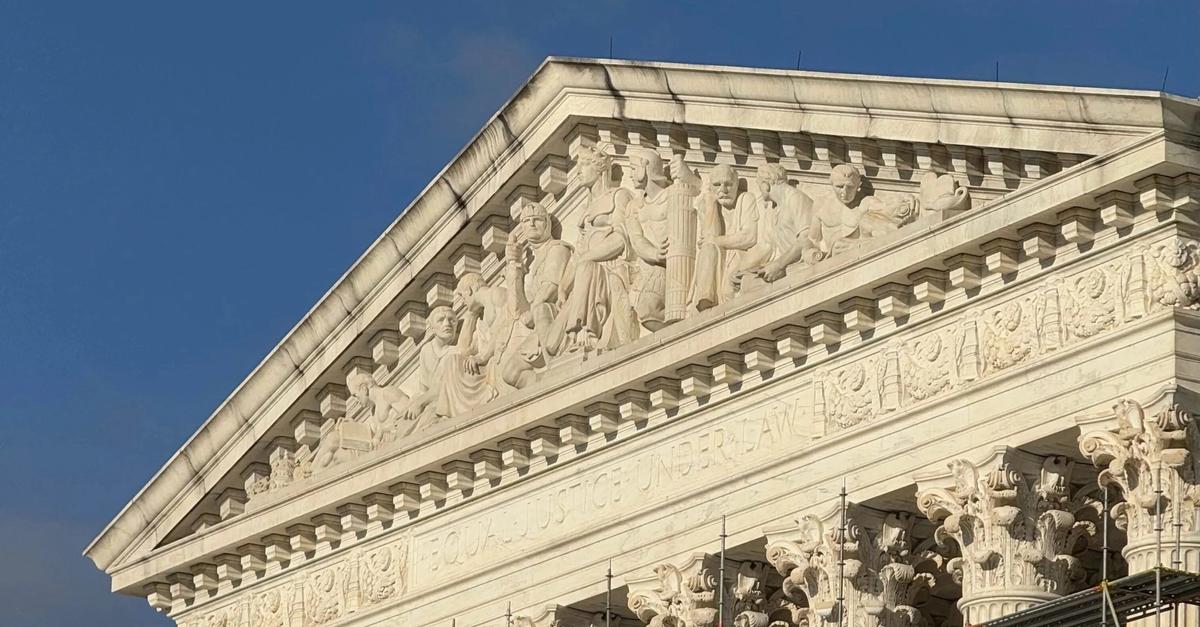
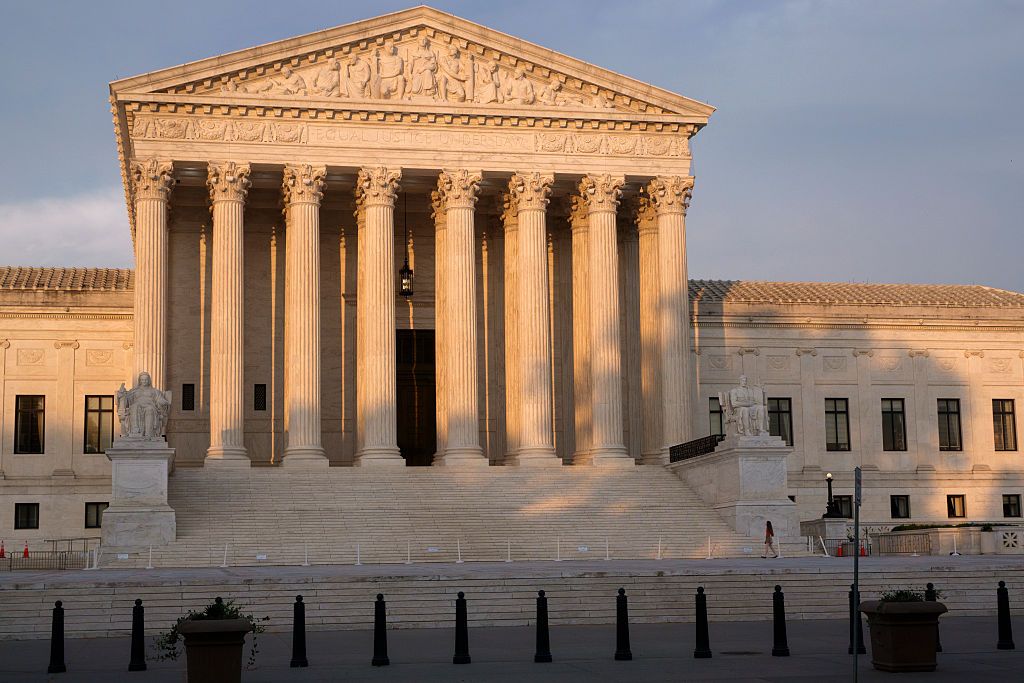
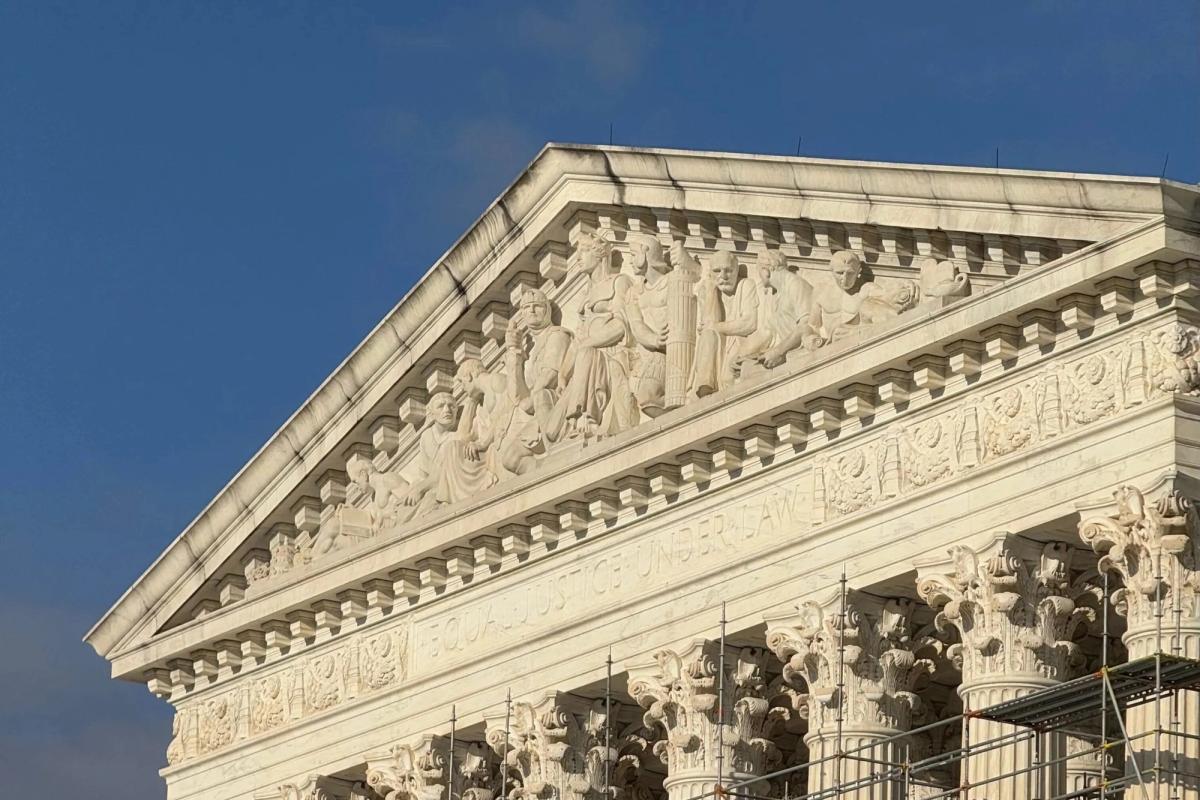
The iconic marble façade of the Supreme Court Building prominently displays the words “Equal Justice Under Law” above its main (west) entrance facing the U.S. Capitol. But even Supreme Court obsessives may be unfamiliar with its counterpart inscription on the rear (east) pediment: “Justice the Guardian of Liberty.” These inscriptions – like many things having to do with the Supreme Court – have their own surprising history.
The phrase “Equal Justice Under Law” originated not with a jurist or prominent philosopher (as far as we know), but with Cass Gilbert’s architectural firm. (Gilbert was the Supreme Court building’s architect, having been chosen by the Supreme Court Building Commission in 1929.) The phrase first appeared on a firm drawing from July 7, 1931, although it is not known if Gilbert came up with the phrase himself. Earlier drafts from 1929–1930 used placeholders such as “LEX ET JUSTITIA” (“Law and Justice”) and “EQUAL AND EXACT JUSTICE” (taken from President Thomas Jefferson’s First Inaugural Address).
As for the east pediment’s inscription, “Justice the Guardian of Liberty,” the original proposed inscription was “Equal Justice is the Foundation of Liberty,” but this was rejected by Chief Justice Charles Evans Hughes. Instead, in a May 16, 1932, handwritten note (possibly from the bench during a court session) between Hughes and Justice Willis Van Devanter (who also served on the building commission), the chief justice wrote that “I rather prefer ‘Justice the Guardian of Liberty.’” Van Devanter replied with a simple “Good (W.V.),” and Hughes subsequently directed the use of that phrase. Like the west inscription, no ancient, literary, or historical source has been identified as the origin of those words.
Both inscriptions were executed in English, as Hughes rejected Latin alternatives for the sake of public accessibility, and they were among the final elements settled upon before the building’s completion in 1935. Whatever their actual source, the words have taken on a life of their own, “symboliz[ing] the American heritage of democracy and the rule of law.”
SCOTUS Quote
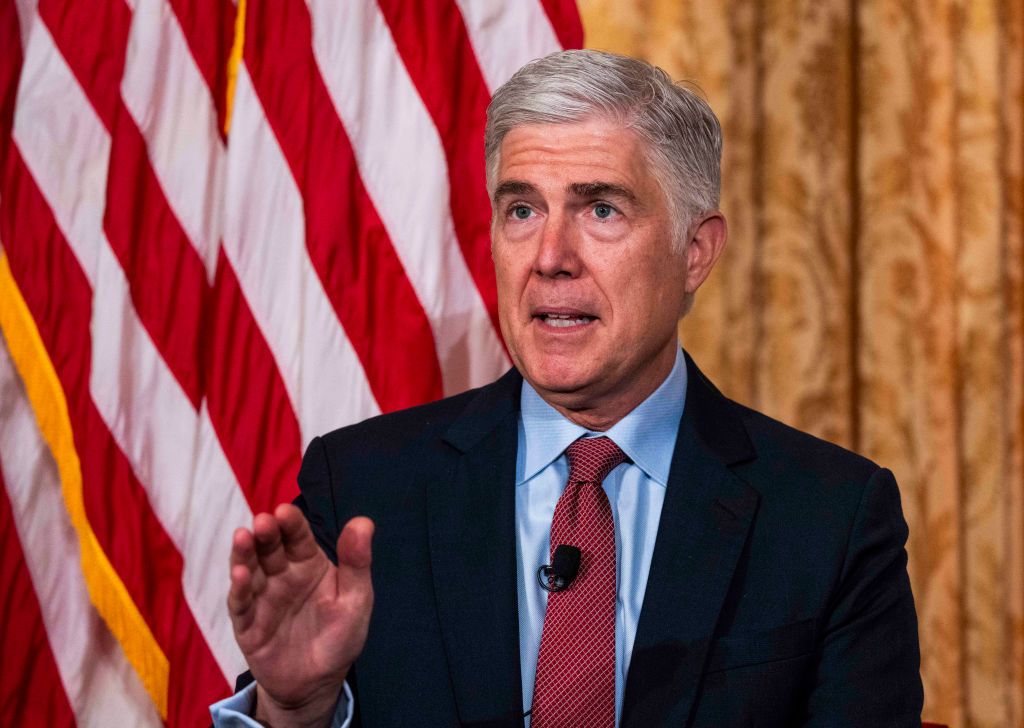
JUSTICE GORSUCH: “… Whatever the test is, is [it] always going to be de novo [from scratch] review?”
MR. CROSS: “It has to be de novo –”
JUSTICE GORSUCH: “Always. Okay.”
MR. CROSS: “– review because statutes have to be consistent –”
JUSTICE GORSUCH: “Assume I don’t buy that. Then what should I do?”
MR. CROSS: “Well, then I’m in trouble.”
— U.S. Bank National Association v. Village at Lakeridge, LLC (2017)
The post SCOTUStoday for Monday, April 13 appeared first on SCOTUSblog.