‘We’re gonna hang strong’: Black women in Congress face the next voting rights fight

Rep. Terri Sewell grew up steeped in the history of the Civil Rights Movement in Selma. She’s represented Alabama’s 7th District for over 15 years, one of the few Black women in Congress from the Deep South.


‘We’re gonna hang strong’: Black women in Congress face the next voting rights fight

Rep. Terri Sewell grew up steeped in the history of the Civil Rights Movement in Selma. She’s represented Alabama’s 7th District for over 15 years, one of the few Black women in Congress from the Deep South. But the Supreme Court’s latest ruling, undermining the voting rights protections she’s long fought for, could threaten her seat in Congress. 
“I know in my heart that the 16 years I’ve been representing the 7th Congressional District, I’ve saved hospitals, I’ve delivered money, I’ve delivered books,” she told The 19th on Wednesday. “I feel like I represent that district, and so we’re gonna hang strong and make sure that we fight against this. It’s going to be harder in red states, but this is a race to the bottom that we’ve entered into.”

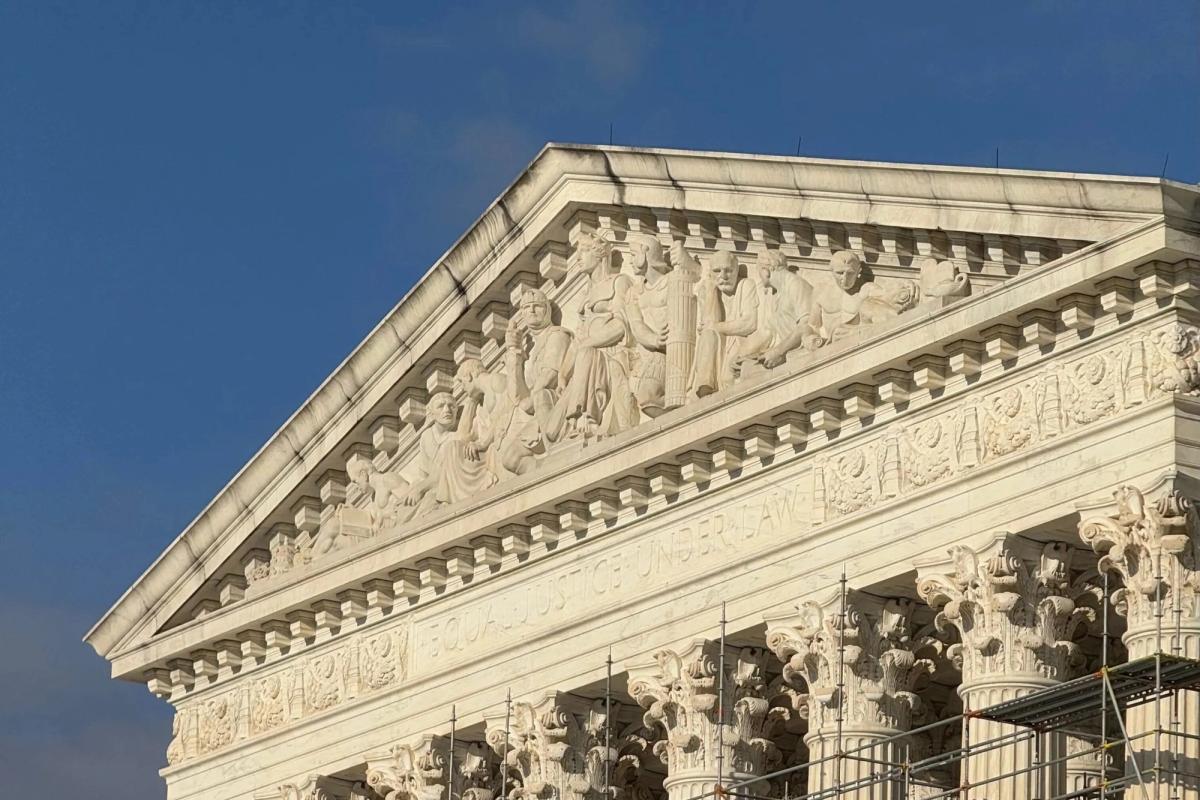
The Supreme Court this week struck down Louisiana’s congressional map that included a second majority-Black House district, labeling it an unconstitutional racial gerrymander and significantly limiting the ability for voters to challenge voting maps under Section 2 of the Voting Rights Act of 1965. The 6-3 ruling in the case, Callais v. Louisiana, paves the way for Republican-controlled states to eliminate majority-Black districts. 

“There’s no doubt that it’s devastating,” Rep. Yvette Clark, chair of the Congressional Black Caucus, told reporters Wednesday. “And the type of, we believe, avalanche, if you will, of redistricting that will occur as a result of this is state by state, but we know that the South is primed and pumped to really do some damage.”

Half a dozen Black women members of Congress who spoke to The 19th said that they see the ruling as a devastating blow to Black voters and the hard-fought victories of the Civil Rights Movement. But they also noted the success of Black politicians and Black women in being elected to non-majority-Black seats across the country. Only about a dozen of the CBC’s members, including Sewell, represent majority-Black districts. 

Sewell noted that when the Congressional Black Caucus was founded, it had just one woman member: Shirley Chisholm. Now, women make up 31 of the 60 members of the body. But a 2025 report from Higher Heights for America and the Center for American Women and Politics concluded that Black women “remain underrepresented at every level of government.” 

“It is already harder for us to raise money. It is already harder for us to represent districts across the country, and so now this just adds an extra hurdle,” Rep. Nikema Williams of Georgia, who represents the seat once held by civil rights icon John Lewis, told The 19th. “But what I do know is that Black people are resilient people, and we’ve always known that we had to work twice as hard to get just as far.”

Rep. Nikema Williams speaks into microphones outside the Capitol.
Rep. Nikema Williams speaks during a news conference outside the Capitol in Washington, D.C., on July 25, 2024. Williams represents Georgia’s 5th Congressional District, a seat once held by civil rights icon John Lewis. (Tierney L. Cross/Getty Images)

“Let’s not have a binary conversation about only Black people can represent Black seats, because when we do represent a district, the entirety of the district rises,” Rep. Sydney Kamlager-Dove of California said at the CBC’s Wednesday news conference. “This is a larger issue about snatching democracy from the hands of voters across this country, and continuing to demoralize and marginalize the Black vote.”

Williams noted that in Georgia, there’s been ongoing litigation over the state’s 2021 congressional maps, including her seat, and that early voting has already begun for the state’s May 19 primary elections.  

“We’re still doing the analysis to see what this means for districts across the country, especially those in the Deep South and those in districts like mine,” she told The 19th. “What I know is that the Supreme Court just said today that basically, fair representation is not the goal in these maps.”

The court, in a majority opinion written by conservative Justice Samuel Alito, ruled that plaintiffs must show intentional racial discrimination by lawmakers to challenge voting maps as racially discriminatory — a much higher bar than the previous standard, which only required plaintiffs to prove that voting maps diluted minority voters’ voting power. Justice Elena Kagan, in a scathing dissent, wrote that the decision “eviscerated” the law and “renders Section 2 all but a dead letter.”  

The decision supercharges a state-by-state redistricting battle kicked off by the White House last year. While it’s likely too late to redraw district lines for the 2026 midterms in most Southern states, lawmakers could eliminate majority-Black and safely Democratic districts ahead of 2028. 

The most imminently endangered members could be Reps. Cleo Fields and Troy Carter of Louisiana; the state has suspended its upcoming House primary elections in light of the ruling. President Donald Trump said Thursday that he pushed the governor of Tennessee to redraw Memphis’ majority Black seat, and some Republicans in Georgia are clamoring for a special session to redraw lines in the state, where there are four plurality or majority-Black seats. Gov. Kay Ivey of Alabama, for her part, said she won’t call a special session to redraw lines this year. 

Glynda Carr, president and CEO of Higher Heights, an organization dedicated to expanding Black women’s political power, said in a statement Thursday that the ruling is “a direct attack” on the political power of Black voters and communities and “an attempt to dilute the influence of Black women, who remain among the most consistent and consequential voters in this country.”

The Supreme Court’s decision Wednesday comes nearly 13 years after it struck down another provision of the Voting Rights Act, one that required states with histories of discrimination to obtain preclearance from the Justice Department. Sewell has long spearheaded legislation in the House, named for Lewis, to restore the preclearance requirement. 

Rep. Jennifer McClellan of Virginia, the first Black woman to represent the state in Congress, said it was “a mistake” for the Supreme Court to again use the Voting Rights Act’s success against racial discrimination to weaken its protections. 

“The Voting Rights Act wasn’t a magic wand that made that go away, and yet they’re using the fact that it was successful to effectively say, ‘We don’t need it anymore.’ That’s just not the case,” she said. “And I think in the short term, it is going to harm Black representation and the ability of minorities to elect candidates of their choice.” 

Rep. Jennifer McClellan raises her hand during a ceremonial swearing-in as family members stand beside her.
Rep. Jennifer McClellan participates in a ceremonial swearing-in with then-Speaker Kevin McCarthy and her family at the Capitol in Washington, D.C., on March 7, 2023. McClellan is the first Black woman to represent Virginia in Congress. (Tom Williams/CQ-Roll Call, Inc/Getty Images)

In the past 10 years, especially, more Black women — including Reps. Jahana Haynes of Connecticut, Lauren Underwood of Illinois and Emilia Sykes of Ohio — have been elected to Congress from majority-White exurban and rural districts.   

“I do know that Black women have been successful in districts like mine, where they’re majority-White, and so I feel that there’s hope and promise for us, even in spite of the odds, because we’ve been doing it,” said Sykes, who represents a competitive majority-White district.

“Black women know how to win all over,” Hayes said. “I think it’s overly simplistic to think that you keep changing the rules and it’s going to stop us from working as hard as we do to make sure people are represented.”

Democrats and CBC members are now discussing options to respond to the ruling. Sewell noted Wednesday that cases over racial discrimination in voting can still be brought under the 14th Amendment and said she’d support Democratic-controlled states drawing more aggressive maps to counteract the impact of GOP-controlled states eliminating majority Black districts in the South.  

“I can’t speak for my chairwoman, but I’ll take 52 seats from California and 17 seats from Illinois, because at the end of the day, they are rigging this election to try to win, and we just can’t sit back here and do nothing,” Sewell said at the CBC news conference. “We’re going to play their game, and we’re going to beat them at it.”

Need Support?

Find verified resources for reproductive healthcare, support services, and advocacy organizations.

Find Resources