The fact of the matter

A Second Opinion is a recurring series by Haley Proctor on the Second Amendment and constitutional litigation. On the ground floor of the Supreme Court building, a statue of the Supreme Court’s most influential chief justice, John Marshall, greets visitors with an outstretched hand.

The fact of the matter

A Second Opinion is a recurring series by Haley Proctor on the Second Amendment and constitutional litigation.

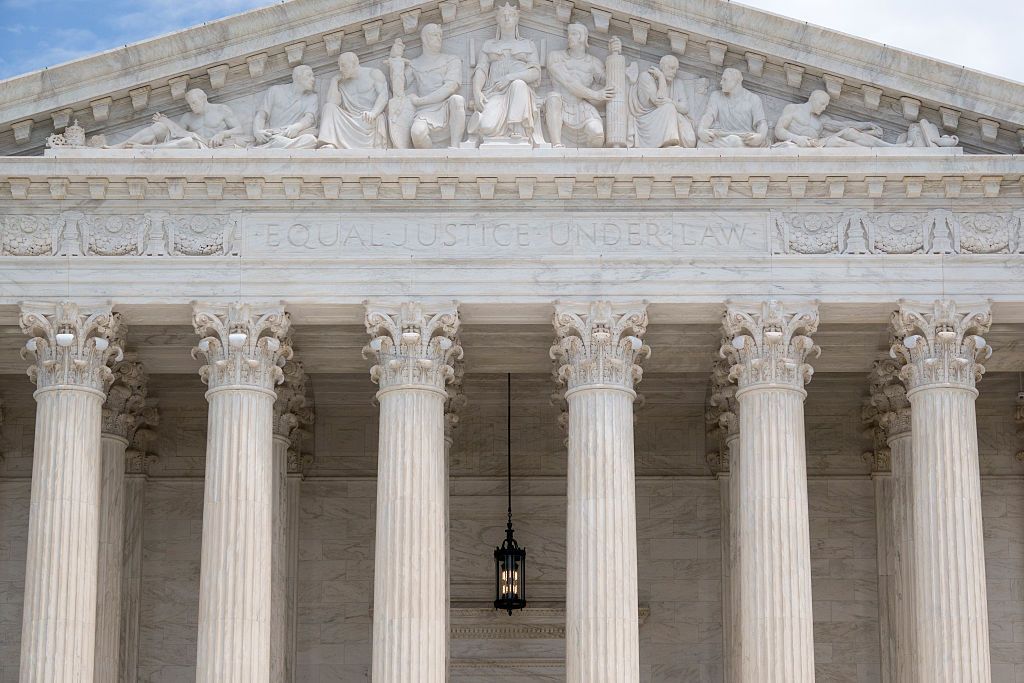
On the ground floor of the Supreme Court building, a statue of the Supreme Court’s most influential chief justice, John Marshall, greets visitors with an outstretched hand. On the wall behind him, in gilded lettering, is one of his most influential contributions to the U.S. Reports: “IT IS EMPHATICALLY THE PROVINCE AND DUTY OF THE JUDICIAL DEPARTMENT TO SAY WHAT THE LAW IS.”

True enough. The Supreme Court embraces this role enthusiastically, taking up only those cases that present “important federal question[s],” by which it mostly means important questions of federal law.

But often the cases that come before the court involve “important federal questions” that are more factual in nature. For example: does glyphosate, a key ingredient in Roundup, cause cancer? Last month, the court heard argument in an appeal from a jury verdict finding that it does. The parties have not asked the court to decide whether the jury’s finding was correct. Instead, Monsanto (Roundup’s manufacturer) argues that the jury was not entitled to make such a finding, given that a federal agency has already decided that glyphosate does not present enough of a cancer risk to warrant a warning label.

This type of fact – glyphosate does/does not cause cancer – is commonly called a “legislative fact.” That term distinguishes general facts about the world from “adjudicative facts,” which are the who, what, where, and when of individual cases. The “legislative fact” label nods to the role these inquiries might play in formulating public policy. Yet they sometimes come up in individual cases, in which individual parties are deeply invested in the answer. This month’s column is about who finds legislative facts and the role legislative facts play in Second Amendment litigation.

Who decides?

The Roundup case focuses with unusual clarity on a question that lurks in many of the cases that attract national attention: who decides factual questions of general import? Not, “did Frank W. Nix import tomatoes from the West Indies in 1886?” But instead, “whether tomatoes, considered as provisions, are to be classed as ‘vegetables’ or as ‘fruit’ within the meaning of the Tariff Act of 1883.” Not, “did Curt Muller require Mrs. E. Gotcher to work in his laundry for more than the ten-hour limit set by Oregon’s maximum hours law?” But instead, whether “long hours of labor [are] dangerous for women, primarily because of their special physical organization.”

The answer to that question – the one about “who decides,” not the ones about tomatoes or women’s physical capacities – is “it depends.” Sometimes, Congress acts on a “rational speculation” about the matter in passing a law, and courts must accept Congress’ finding even if it is “unsupported by evidence or empirical data.” Sometimes, a federal agency will make detailed findings of fact that reviewing courts must accept if they are supported by “substantial evidence.” Sometimes, the Supreme Court settles a question based on amicus briefs and independent research. Sometimes, as in the Roundup case, a jury draws its own conclusion based on evidence presented in a courtroom. This is to name just a few of the many ways our judicial system answers factual questions of general import.

Here is what is surprising: we do not have very clear rules about when each of the many available methods for settling questions of “legislative fact” is appropriate. One difficulty is that the term itself captures concepts on either side of the law-fact distinction that usually determines “who decides.” Some, indeed many, so-called “legislative facts” play a role in answering questions of law (e.g., knowing the ordinary meaning of “arms” in 1791 helps us understand what the Second Amendment means). Other “legislative facts” are relevant to questions of fact (e.g., knowing the coefficient of friction for wet asphalt helps us know whether John Doe lost control of his car he took the curve at 50 mph in the rain). To take just one instance of “who decides,” if I tell you that “law” is for the judge, while “fact” is for the jury, where do “legislative facts” go?

In arguing on behalf of Monsanto, Paul Clement repeatedly emphasized that the finding there had been made “by a single Missouri jury.” Glyphosate is “probably the most . . . studied herbicide in the history of man,” and there is a fairly widespread consensus among regulators that it does not cause cancer. Why, he suggested, should a handful of Missourians get to decide whether Monsanto labels it as a carcinogen?

On the other hand, Ashley Keller argued on behalf of plaintiff John L. Durnell, why should a 50-year-old agency finding prevent Durnell from trying to persuade a jury of his peers that his lymphoma was caused by his exposure to Roundup? Maybe that results in a “crazy quilt” of findings about Roundup’s risks from different juries, but “that’s just the consequence of our civil jury system, where you have individual cases or controversies.”

In Monsanto v. Durnell, the solution to this conundrum depends not on the justices’ own views about the best way to figure out whether glyphosate causes cancer, but instead on whether Congress has (wisely or foolishly) bound states to follow the federal agency’s determination. But in many other contexts, the Supreme Court’s answer to “who decides” has indeed “turned on a determination that, as a matter of sound administration of justice, one judicial actor” – or legislative or administrative actor – “is better positioned than another to decide the issue in question.”

That is not a good way to do things. As I have argued elsewhere, “who decides” should depend on what role a question plays in resolving the case or controversy, and in what procedural consequences follow from that role under the law.

Again, take Monsanto. Mr. Durnell needed to prove that glyphosate caused his cancer to prove his case against the company. That is a classic question of fact for a jury, and its susceptibility to generalization – that is, it would follow that glyphosate is a carcinogen – does not change its status as a fact. Sometimes, though, courts must make general factual determinations to answer questions of law – that is, to figure out the legal rule under which the case will be resolved. When this is the role that a so-called “legislative fact” plays in the litigation, different procedural consequences follow. The job of finding it goes to the judge, not the jury, and the judge is not limited to considering evidence presented in a trial-like setting.

Legislative facts that figure in questions of law are especially common in constitutional cases, and judicial handling of them has been lamentably inconsistent. Nowhere is this more apparent than in Second Amendment litigation.

Legislative facts in Second Amendment litigation

Under the Supreme Court’s decision in New York State Rifle & Pistol Ass’n v. Bruen, in which the court found there was a constitutional right to carry a firearm, facts about history have become increasingly important in Second Amendment litigation. As I explained in an earlier column, these historical facts are the type of “legislative facts” that are facts about law and should be treated as such. But what about modern day facts? These come up in Second Amendment litigation, too.

In United States v. Hemani – a case this term that poses the question whether the government can disarm a man who admits to using marijuana every other day – there are factual questions about the behaviors of habitual drug users. The answer to these questions matters because the court has held that the “Nation’s historical tradition of firearm regulation” permits the government to temporarily disarm individuals found “to pose a credible threat to the physical safety of another.” Can Congress make a categorical judgment that those who abuse drugs pose this sort of danger? If it does, then how closely should a court scrutinize that finding? Or does the Second Amendment demand that a jury “make an individualized finding about whether somebody’s use is impacting their day-to-day life” in a way that makes them a threat to others?

Or consider the many cases working their way through the courts in which parties challenge categorical bans on types of weapons (e.g., semiautomatic rifles) or their components (e.g., magazines). The Supreme Court has recognized that the nation’s historical tradition of firearm regulation forecloses bans on weapons that are “in common use.” Is the question whether an arm is “in common use” one the rights claimant must answer as a “question of fact” in the course of proving that his rights are being infringed? Or is it one the government must answer as a “question of law” in the course of proving that its ban fits the Nation’s historical tradition of firearm regulation?

The answer does not depend on our gut sense that these matters are factual in nature, or our beliefs about the most efficient way to settle them. It depends, instead, on the law, which in turn demands a careful assessment of their role in the case.

Take Hemani: The relevant historical tradition is comprised of regulations that involved an individualized determination that a person was dangerous. It is doubtful whether this historical tradition would accommodate a law that involves a categorical judgement – i.e., that all drug users are dangerous – regardless of the quality of congressional factfinding to support that judgment. Such a law simply would not fit the tradition of individualized assessment. Perhaps Congress could pass a different law, disarming individuals found to be dangerous due to their drug use. Under that law, though, the government would bear the burden to prove to a judicial factfinder (i.e., a jury), on a case-by-case basis, that the individual defendant presents a danger due to his drug use.

Arms bans are another matter. In District of Columbia v. Heller, the court acknowledged the existence of a “historical tradition of prohibiting the carrying of ‘dangerous and unusual’ weapons.” And it held that bans on weapons “in common use at the time for lawful purposes” – like handguns today – do not fall within that tradition. The tradition Heller recognized might tolerate a categorical legislative judgment that a type of weapon is “dangerous and unusual.” And the government may be able prosecute someone under such a law without persuading a jury that the individual firearm the defendant possessed was “dangerous and unusual.”

But in defending that law against a constitutional challenge, the government would have to satisfy the court that Congress’ judgment that that type of arm is “dangerous and unusual” is correct. Otherwise, the court cannot instruct the jury that a valid law prohibits possessing such an arm. A law banning arms that are in “common use” (and thus not “dangerous and unusual”) would be void, and a jury could not apply it to the facts of the case. Because the “dangerous and unusual”/“common use” analysis determines whether the law banning the arm can supply a rule of decision in the case, the inquiry – like the inquiry about the history of firearms regulation – is a question of law.

As it is, practice in lower courts is all over the map. Many lower court judges have treated questions about history and arms ownership alike as evidentiary matters, subject to procedures designed for questions of fact. And others have treated questions about a person’s dangerousness as matters of legislative judgment, to which courts must defer once it is encased in a law disarming a group of people. These practices do not simply violate the procedural rules that govern “who decides” matters of law and fact. Because procedural choices shape case outcomes, they have a significant impact on the substantive right claims at issue in the litigation. It matters a good deal to someone facing jail time for keeping and bearing arms (or speaking or worshiping . . . ) whether he can put the government to its proof that he has acted outside the bounds of his constitutionally protected rights.

Legislative facts are everywhere. The court’s Second Amendment cases present an excellent opportunity to provide clearer guidance about who finds them.

Need Support?

Find verified resources for reproductive healthcare, support services, and advocacy organizations.

Find Resources