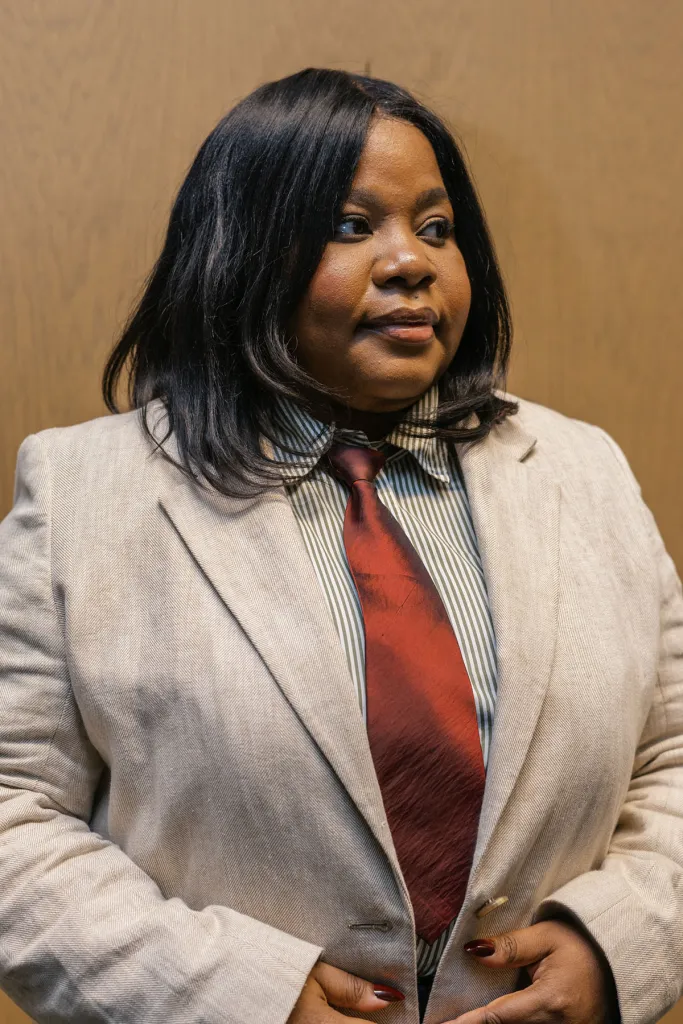
For decades, pioneering legal scholar and activist Kimberlé Crenshaw has shaped the language we use to understand systemic injustice—from coining the term “intersectionality” to helping launch the #SayHerName movement.
In her new memoir, Backtalker: An American Memoir, Crenshaw traces the personal and political experiences that shaped her work, while warning that the attacks on critical race theory, feminism and Black women are inseparable from the broader erosion of democracy itself.
In this wide-ranging interview, Crenshaw reflects on Anita Hill, Clarence Thomas, “intersectional failure,” the backlash against Black women leaders and the dangers of what historian Timothy Snyder calls “anticipatory compliance.” She argues that today’s political moment—from attacks on independent journalism to the dismantling of civil rights protections—demands a more expansive understanding of solidarity and resistance.
“The other side doesn’t want us to feel empathy,” Crenshaw says. “They’re taking our humanity away, the thing that makes us humans and not a machine.”
Crenshaw also speaks candidly about the personal costs of “backtalking” to power, the unfinished grief that continues to shape her activism, and why she still believes collective action and moral clarity matter.
“One step forward can lead to five or 10 steps back,” she says. “When we see the forces of retrenchment coming on the horizon, we must pick up every weapon we have to fight against it.”
The post Kimberlé Crenshaw: Fighting Trump-Era Misogynoir Requires ‘Backtalking’ appeared first on Ms. Magazine.