My name is John Q. Whiteman, and I want to begin this op-ed by saying: It’s about time.
For too long, I have suffered in silence.
Not complete silence. I have a podcast. But still.
I am a white man in America, and for the last several years I have watched as corporations, newsrooms, and institutions have published lengthy documents describing their intention to hire fewer people who look like me. They called these documents “diversity commitments.” They set “goals.” They tracked “progress.” My employer, the New York Times, met their targets—and then kept going.
I want to be clear that I support diversity. I have said this out loud many times, at dinner parties where there were actual Black people in attendance, in Slack channels, and once in a performance review where I also mentioned that I deserved a rating higher than “DOES NOT MEET EXPECTATIONS.”
I believe all people deserve equal opportunity. I just also believe that I personally deserved the deputy real estate editor position.
After working at the Times for 11 years, somehow I did not advance to the final round for the job I was supposed to get. I have thought about why, and I have reached a conclusion: The Times said they wanted more of some people and I am not any of those people—even though I am better than all of those people.
For years, there was no recourse for downtrodden white men like me. Title VII of the Civil Rights Act of 1964 technically prohibits employment discrimination on the basis of race regardless of which race we’re talking about. The Supreme Court said in 1976 that Title VII “prohibits racial discrimination against the white petitioners in this case upon the same standards as would be applicable were they Negroes.” It’s true! I looked it up.
But then certain federal courts of appeal required white men to show “background circumstances,” or evidence, suggesting that our employers are inclined to discriminate against the “majority.” The majority is me! This was an additional burden placed on me that Black plaintiffs did not face, which seems grossly unfair. Black people always have it so easy.
Finally, in June 2025, white people caught a break.
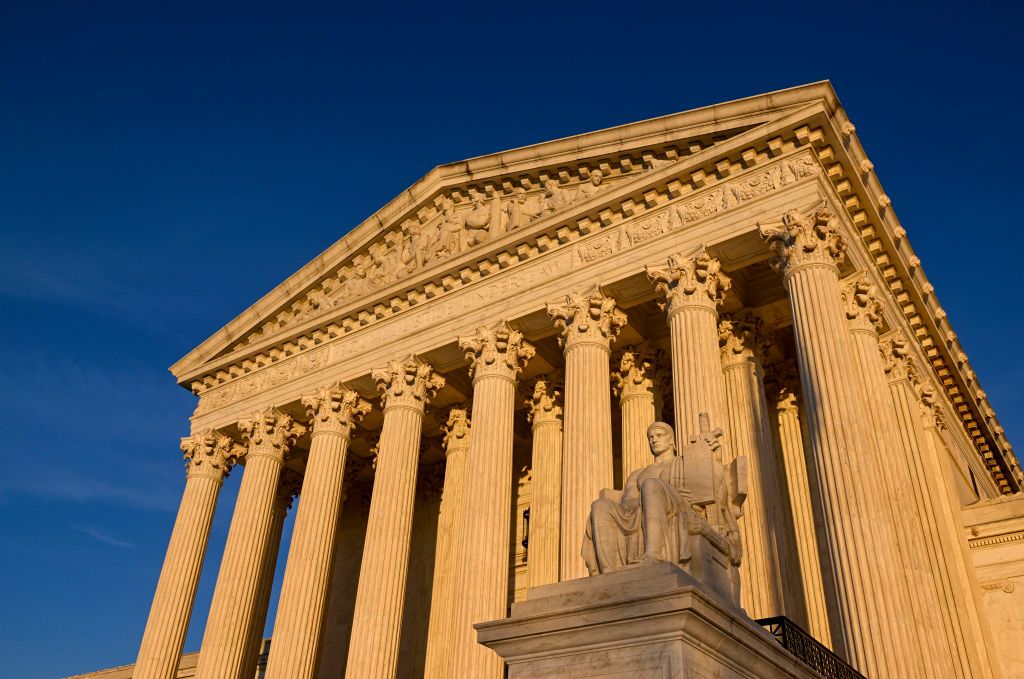
The Supreme Court unanimously decided in Ames v. Ohio Department of Youth Services that majority-group plaintiffs don’t have to clear that extra hurdle anymore. Justice Ketanji Brown Jackson wrote the opinion. President Biden appointed her after publicly committing to nominating the first Black woman to the Supreme Court. Some people called this a diversity hire. I’m not saying that’s what she is. That’s just what I’ve heard other people saying.
And then in December of 2025, Andrea Lucas, chair of the Equal Employment Opportunity Commission, or EEOC—which is the federal agency tasked with making sure that employers don’t discriminate against white dudes—took to social media to tell downtrodden white men everywhere that we matter.
“Are you a white male who has experienced discrimination at work based on your race or sex?” Lucas asked in a video posted on X.
I felt seen—seen in a way I had not felt since the last Times all-hands meeting, where a lady journalist kept making a really good point, so I waited for her to finish and then repeated what she had just said, but using way smarter words. People nodded in agreement.
They’d been rolling their eyes when the lady was speaking, so I know I was right to speak up. A male colleague even clapped me on the back afterward. I really enjoyed that. But the lady looked at me strangely, for some reason.
Lucas has also refocused the EEOC on intentional discrimination claims rather than so-called “disparate impact” cases, which allow plaintiffs to challenge practices that disproportionately harm Black workers without proving that anyone meant them to have that effect. President Donald Trump signed an executive order in April 2025 telling agencies to quit worrying about these disparate impact cases.
I know Black people weren’t happy about all this because I heard my Black housekeeper talking about it on the phone with someone I presume was also Black. She used to work for the federal government but she got downsized—one of something like 335,000 Black women to lose or leave their jobs last year. So now she cleans my kitchen. I feel good about being a job creator.
Anyway, my housekeeper was saying that ignoring disparate impact cases makes it harder to pursue discrimination claims on behalf of Black workers because they can rarely find documented evidence of explicit racist intent. There’s usually not a paper trail.
Apparently racists have gotten smarter since the days of Jim Crow. They stopped writing things down. (I still write things down—like all the things women say in meetings, so I can restate them and get approval from the other white guys at work. I do love a good clap on the back from a colleague.)
The EEOC has also lost nearly 500 employees since late 2025 and has its smallest staff in 45 years. I think it’s pretty great that the EEOC is using its limited resources to pursue discrimination claims on behalf of all Americans. The EEOC has demonstrated its renewed commitment to all Americans by suing the New York Times on my behalf for violating Title VII. Me, a white man!
The lawsuit puts it better than I could: The Times made “employment decisions on the basis of race and sex to achieve its desired demographic goals.” And “[a] necessary consequence of NYT’s intent to increase the percentage of non-White leaders would be a decrease in the percentage of White leaders.”
White leaders like me.
There should be more of us.
I just want what everyone wants. Equal protection under the law. And a podcast with better numbers than it currently has. These are, I think, related struggles.
John Q. Whiteman is a journalist with 11 years of experience at the New York Times. He applied to be the paper’s deputy real estate editor in 2023. He has a podcast about the male loneliness epidemic.
Before anyone emails me: Yes, this man is fictional. Mostly.
But the legal infrastructure animating him is not.
That’s what makes the backward slide into Jim Crow so dangerous. The point isn’t that white men suddenly discovered employment discrimination law. Title VII prohibits employment discrimination based on race, color, religion, sex, and national origin; it has always technically protected all workers.
The point is that under the Trump administration, the EEOC is repurposing the enforcement of Civil Rights laws away from systemic discrimination and toward protecting the feelings and career disappointments of already-powerful people: White people hold 88 percent of CEO positions at 100 of the U.S. stock market’s largest companies.
EEOC chief Lucas isn’t dismantling disparate impact enforcement because Black workers, women workers, disabled workers, or queer workers have finally achieved equality. She’s doing it because Donald Trump told her to. She’s hollowing out a federal agency designed to investigate employee complaints about racism and sexism in the workplace while redirecting its remaining power toward the proposition that diversity efforts are themselves a civil rights violation.
Together, we make reproductive justice visible.
Rewire News Group is a reader-supported, independent nonprofit newsroom. Membership keeps this reporting accessible to all.
The EEOC enforcement shift and last year’s Ames decision are two parts of the same project: strip out the doctrinal tools that account for context and history, and suddenly centuries of systemic social, economic, and political exclusion is morally and legally equivalent to a nine-year-old diversity commitment at the New York Times.
That’s what conservatives are doing. Collapsing context. Pretending this country doesn’t have a history of racism and anti-Blackness. Turning efforts to broaden opportunity into evidence of persecution against the people who still dominate most institutions.
Using civil rights law to help white folks sounds like a joke. But the punchline is the law is increasingly taking people like John Q. Whiteman very seriously.
The post White Men Are Finally Catching a Break: Opinion appeared first on Rewire News Group.